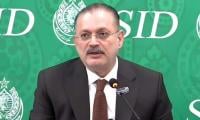
The unusually blunt exchange between the military’s media wing and the PTI leadership this week has laid bare a problem that has been festering for years but is now becoming impossible to ignore: Pakistan’s counterterrorism challenge in Khyber Pakhtunkhwa is being complicated not only by militancy on the ground, but by political ambiguity, mixed messaging and a disturbing reluctance to name the enemy. ISPR Director General Lieutenant-General Ahmed Sharif Chaudhry’s sharp criticism of the PTI leadership, holding it responsible for a “politically conducive environment” for terrorism in KP, is significant, stark and extremely worrying on many levels. His assertion that 71 per cent of terrorist incidents in 2025 were reported from KP, and that a political-criminal-terror nexus has been allowed to flourish, was meant as an indictment. Equally serious was his rejection of the KP chief minister’s claim that the army is deployed in the province for dollars or mineral wealth. Such allegations, coming from an elected chief executive of a province bleeding from terror, only end up corroding trust between institutions at a time when coherence is most needed.
And word from others in the party has been no less combative. Calling the military’s position a ‘self-created narrative’ raises more questions than it answers. For example, people have questioned why PTI officials seem to with to continue to speak in euphemisms when it comes to terror. The refusal this week by a special assistant to the KP chief minister, to categorically call the TTP a terrorist group, citing internal factions as an excuse, is a case in point. Such obfuscation is dangerous equivocation. This is not a trivial political difference. The TTP has been responsible for thousands of deaths, including soldiers, policemen and civilians. To hedge on its designation is a disservice to the victims and an insult to those who continue to lay down their lives in the fight against terrorism. It is true that Pakistan’s own policy history is chequered. The disastrous distinction between ‘good’ and ‘bad’ Taliban, and years of strategic ambiguity, helped create the very monster the state is now battling. But there is also broad consensus that the state has, belatedly, learned from these mistakes and adopted a clearer, harder line – including towards the Afghan Taliban regime for its support and facilitation of the TTP. Against this backdrop, the PTI’s persistence with ambiguity looks anachronistic and opportunistic. This does not mean that questions about large-scale military operations in KP should be silenced. On the contrary, any such action must have political ownership, transparency and consensus. The people of KP have paid a heavy price in past operations and deserve honest debate. But debate is not the same as denial. One can argue about how to fight terrorism without refusing to acknowledge who the terrorists are.
The problem is compounded by the growing confrontation between the centre and the KP government, as reflected in the unusually frequent press conferences by the military spokesperson. Such public sparring does not bode well for governance or stability in a province already under immense strain. Add to this the visible internal disarray within the PTI – exemplified by contradictory statements about party leadership and – and a picture emerges of a party struggling for coherence on multiple fronts. The people of KP, who are the primary victims of the TTP’s brutality, deserve better than mixed signals and political doublespeak. If the PTI believes it has answers, it should articulate them plainly. Confusion may serve short-term political tactics, but it is lethal in a war against terror.