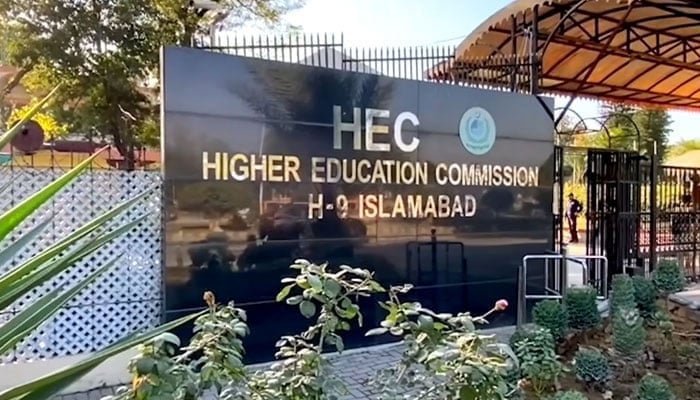
Despite the onset of the new year, the Higher Education Commission (HEC) continues to function without a regularly appointed chairperson, triggering growing concern and unease among academic and policy circles across the country. The post has remained vacant since July 29, 2025, with the affairs of the commission being managed on an ad hoc basis.
According to the HEC Ordinance, in case of a vacancy in the office of the chairperson, the controlling authority may appoint an acting chairperson for a maximum period of three months, during which a regular appointment must be made. However, more than five months have now passed, raising serious questions about compliance with the law and institutional governance.
Sources in the higher education sector note that the search and selection process has already been completed. A nine-member Search Committee, headed by the Federal Minister for Federal Education and Professional Training, Dr. Khalid Maqbool Siddiqui, conducted interviews and finalised recommendations suggesting three names, Dr Sarosh Lodi, Dr Muhammad Ali and Dr Niaz Ahmed Akhtar. Following the completion of the process, a summary containing shortlisted names was forwarded to the Prime Minister’s Office for final approval.
Academic stakeholders have expressed reservations over the continued delay, warning that prolonged ad hoc arrangements undermine institutional autonomy, strategic decision-making, and long-term policy planning in the higher education sector. They argue that key policy, funding, and regulatory decisions require the leadership of a duly appointed chairperson, as envisaged under the law.
The delay has also fueled speculation in policy circles, particularly as the appointment process is said to have reached its final stage weeks ago. While the government maintains that due process has been followed, academics stress that a further delay could adversely impact universities, research funding, and international academic engagement.
Observers have urged the Prime Minister’s Office to expedite the approval process to ensure legal compliance, restore confidence among stakeholders, and safeguard the stability and credibility of the country’s apex higher education regulatory body.