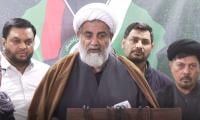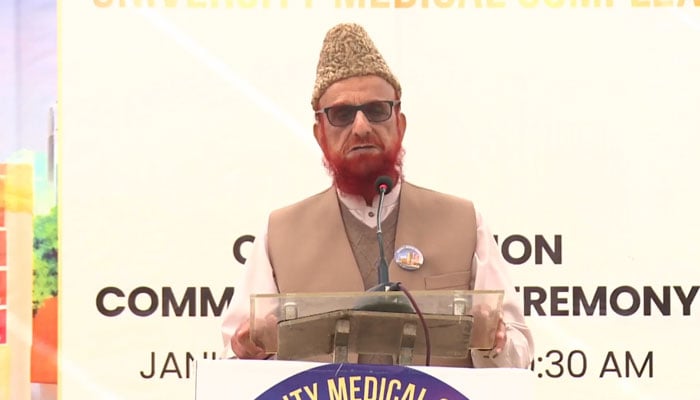
In a landmark step towards strengthening welfare-driven health care in Pakistan, religious scholar Mufti Muneebur Rehman on Sunday formally inaugurated the construction of the University Medical Complex (UMC).
The UMC is a state-of-the-art charitable hospital project located off University Road in Gulistan-e-Jauhar that aims to provide free medical treatment to over 200,000 needy patients a year after its completion.
The hospital is being developed by Imamia Medics International (IMI), a United Nations-accredited organisation comprising Pakistani-origin medical professionals, predominantly based in North America, with a longstanding record of humanitarian medical services in Pakistan and abroad.
Speaking at the groundbreaking ceremony on the project site, Rehman lauded the initiative, saying that the UMC would serve humanity without discrimination. He stressed that providing quality health care to deprived segments of society is fully aligned with the teachings of Islam and the message of the Holy Prophet Muhammad (PBUH).
He regretted that health care and education have been increasingly turned into commercial enterprises, thereby placing these essential services beyond the reach of disadvantaged communities.
He appreciated the IMI and its partner charitable organisations for envisioning the UMC as a not-for-profit tertiary-care hospital dedicated to serving deserving patients from underprivileged backgrounds.
Later, at a fundraising event, former caretaker Sindh chief minister Justice (retd) Maqbool Baqar described the UMC as a timely and much-needed initiative to address Karachi’s rapidly growing demand for quality health care. He hoped that the project would serve as a model for other welfare-oriented health and education initiatives across the country.
Baqar urged philanthropists and donors to actively support projects like the UMC to ensure meaningful relief for underserved families. He also stressed the importance of safeguarding the welfare spirit of the UMC throughout all stages of its development and operations.
Dow University of Health Sciences Vice Chancellor Prof Dr Nazli Hossain announced her institution’s full support for the UMC project, expressing confidence that it would successfully meet its social welfare objectives. She also commended the IMI’s sustained charitable healthcare services in underprivileged areas of Pakistan and other countries.
Religious scholar Mufti Fazal Hamdard appealed to philanthropists to generously support the UMC to ensure its early completion, saying that caring for humanity in distress is among the core principles of Islam.
IMI founder Dr Wajih Rizvi said the UMC has been designed as a comprehensive, multi-speciality healthcare facility offering emergency and trauma care, women & child health services, and advanced treatment for infectious and non-infectious diseases. In the long term, the UMC will also serve as a hub for medical education and research, he added.
“With Karachi poised to become one of the world’s most populous cities, the demand for quality health care far exceeds existing capacity. The UMC will help bridge this gap, particularly for low- and middle-income families who are increasingly priced out of private health care.”
Rizvi shared that the IMI’s vision for the UMC was shaped by decades of experience in operating 25 charitable clinics across Pakistan, which currently provide free medical care to approximately 150,000 patients annually.
He highlighted that the IMI’s UN accreditation, secured 25 years ago and upgraded to consultative status in 2006, reflects its credibility and sustained humanitarian impact.
He recalled the IMI’s frontline role in responding to major humanitarian crises, including the 2005 earthquake, recent devastating floods in Pakistan, and the Haiti earthquake, where the IMI was among the few Muslim-origin medical relief organisations to provide emergency medical assistance.
The fundraising session was conducted by actor Khaled Anam, during which philanthropists and donors pledged over Rs141 million for the UMC. Philanthropist Nadira Panjwani announced a generous contribution of Rs5 million in support of the project.
The launch of the UMC marks a significant stride towards accessible, compassionate and welfare-oriented health care, reaffirming the collective resolve to serve humanity through sustainable and inclusive medical services.