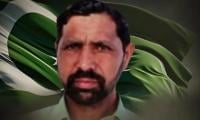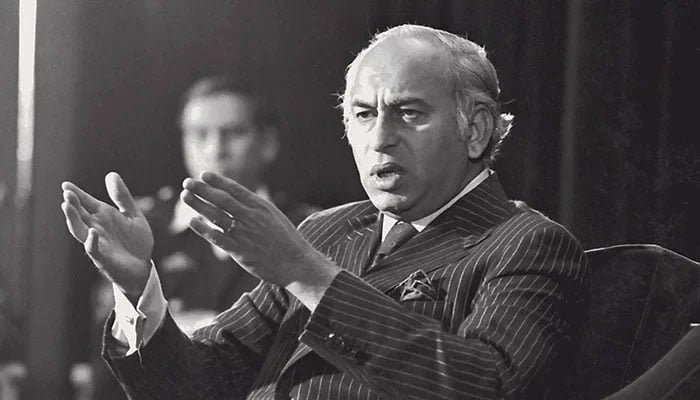
Nations lose wars, they lose territories as well—but true defeat comes on the day they lose courage. In 1971, Pakistan found itself in exactly such a situation. The country had been torn apart, thousands of soldiers and civilians had become prisoners of war, the world viewed Pakistan as a failed state, and the nation stood shattered—mentally, geographically, and psychologically. At such a moment, one man rose and stood upon the ruins of defeat to rebuild a nation. That man was none other than Shaheed Zulfikar Ali Bhutto.
A Leader Born for the Hour of Trial
Born on January 5, 1928, in the fertile land of Larkana, Sindh, Zulfikar Ali Bhutto would, in the years to come, become the voice of Pakistan’s people, a symbol of the state’s dignity, and an embodiment of national honor. Yet, in many ways, his true birth occurred after 1971, when he was entrusted with the leadership of a defeated nation. This was a time when assuming power was not an honor but the greatest test imaginable. Bhutto accepted this test, and history bears witness that he did not allow the nation to bow its head.
Simla: Diplomacy Backed by Courage
After the 1971 war, 93,000 Pakistani soldiers and civilians were held captive in India. The question confronting the nation was whether they would return—and if so, at what cost. Bhutto answered this question in Simla. He did not go to Simla as a representative of a victorious nation; he went as the voice of a wounded country. Across the table stood Indira Gandhi, armed with military victory and international support. What Bhutto possessed, however, was something far more valuable—political courage. He refused to trade national honor for an agreement. The Simla Agreement proved to be a diplomatic success: our prisoners returned, territories were recovered, and Pakistan emerged from international isolation. For a country that had lost half of itself in war, this was a monumental victory. Despite immense pressure, indifference from global powers, and strong internal opposition, Bhutto achieved what was widely considered impossible at the time. He not only secured the release of Pakistani prisoners but also launched special rehabilitation programs for them, providing jobs and compensation upon their return.
Defense, Dignity, and the Nuclear Resolve
Bhutto never accepted Pakistan’s defeat in the 1971 war as a permanent reality. He believed that if Pakistan failed to overcome its defensive weaknesses, history could repeat itself. It was at this critical moment that he made what remains one of the most powerful political statements in Pakistan’s history:
“We will eat grass, but we will make an atomic bomb.”
When Bhutto initiated the nuclear program, the world responded with sanctions and pressure. Yet he refused to retreat. Today, when we speak of nuclear Pakistan, we must acknowledge that its foundation was laid by Zulfikar Ali Bhutto’s resolve, courage, and foresight. If Pakistan’s defense is considered invincible today, its cornerstone was placed by Shaheed Bhutto.
The 1973 Constitution and the Politics of Inclusion
The list of Bhutto’s services to the nation is long, and among his greatest achievements stands the Constitution of 1973. Consider the challenge: a country freshly broken apart, provinces filled with mistrust, and a political environment plagued by uncertainty. Giving such a nation a unanimous constitution was no ordinary feat. Only a leader capable of bringing everyone to the table could accomplish it. Bhutto did not treat dissenters as enemies; he made them part of the system.
Bhutto’s politics revolved around the people. He did not fear them; he believed in them. “Roti, Kapra aur Makaan” was not merely a slogan—it was a promise that state resources would serve the people, not the elite. That is why even today, the mention of Bhutto’s name stirs deep emotions across the nation, because people see themselves reflected in that name.
A Leader Who Turned Crises into Opportunities
Zulfikar Ali Bhutto emerged on the horizon of history at a time when Pakistan needed not just a politician, but a leader—a builder and a courageous decision-maker. He was the first national leader to step out of elite corridors and into the hearts of the people. His politics was driven not by slogans, but by ideology; it combined passion with reason and emotion with wisdom. When we reflect on his achievements, it becomes clear that he was a leader who transformed crises into opportunities.
January 5, the birth anniversary of Zulfikar Ali Bhutto, reminds us that nations are built on hope and resolve. Bhutto gave us hope after defeat, courage after fear, and a path to strength after weakness.
His martyrdom on April 4, 1979, was a national tragedy. The death sentence handed to this great leader remains a question mark even today. With the passage of time, the realization grows stronger that it was not Bhutto alone who was hanged, but an entire ideology. Yet history shows that some people live on even after death. Zulfikar Ali Bhutto is one of them. Even today, whenever Pakistan faces a moment of crisis, a slogan inevitably rises from somewhere within the nation: “Jiye Bhutto.”
The author is the MPA and Sindh Government Spokesperson.