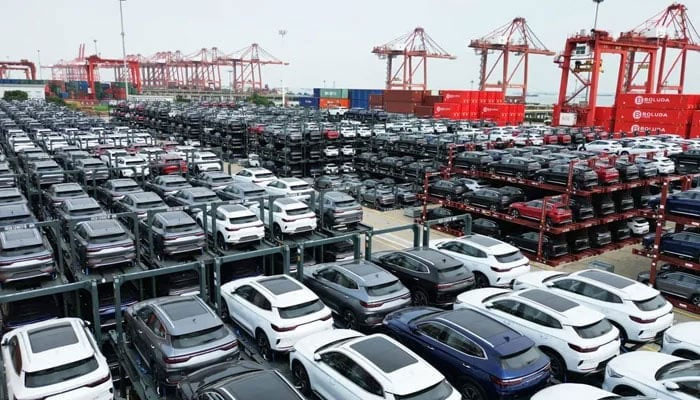
LAHORE: After two bruising years marked by import curbs, plant shutdowns and collapsing consumer confidence, Pakistan’s automobile sector finally entered cautious recovery showing signs of stabilization in calendar year 2025 but structural fault lines still exist
The recovery remained uneven across segments and fragile beneath the surface. The July–November period of FY2025-26 was particularly instructive, revealing both the industry’s latent potential and the policy distortions holding it back.
On the positive side, macroeconomic stability provided long-awaited breathing space. The relative stability of the rupee, easing inflationary pressures and a gradual decline in interest rates helped arrest the freefall in auto demand. For the first time in several years, buyers returned to showrooms not out of fear of price hikes but with cautious optimism.
The passenger car segment witnessed a modest uptick in demand during July–November 2025, particularly in entry-level and lower mid-range models. This improvement, however, was far below historical norms. One major reason was the State Bank of Pakistan’s cap on auto financing at Rs3 million, a threshold that does not cover even the lowest-priced locally assembled cars.
More damaging is the application of the same Rs3 million cap to project financing loans, payable over five years. Auto manufacturing projects typically have long gestation periods and heavy upfront capital costs. Such restrictive financing limits have rendered expansion, localisation and technology upgrades commercially unviable.
A notable positive development was the government’s shift away from arbitrary tariff protections for used cars toward non-tariff barriers (NTBs) such as safety and emission standards. This marks a structural improvement. For the first time, used-car imports are being regulated on quality grounds rather than blunt revenue considerations, a move broadly welcomed by the industry as pro-manufacturing and pro-consumer.
Despite a reduction in maximum tariff protection for local assemblers to around 15 per cent, this relief has been effectively nullified by Pakistan’s extraordinarily high cost of doing business, estimated by industry at around 22 per cent that have pushed local manufacturers into a 7.0 per cent negative cost position compared to regional competitors.
Auto vendors face a particularly distorted regime. Cascading duties on components and sub-components are not rebated, becoming embedded in costs. This perversely encourages the import of fully built or semi-knocked-down parts that could easily be produced locally if vendors were offered a level playing field similar to that enjoyed by suppliers in competing countries.
Pakistan’s EV policy, though ambitious on paper, remains skewed toward imports. The continued inflow of CBU electric vehicles has dampened prospects for technology transfer. Numerous EV components, ranging from body parts to electrical assemblies, can be localised even at current volumes.
The motorcycle segment emerged as the sector’s strongest performer in 2025. Conventional bikes, electric motorcycles and scooties all recorded robust demand, driven by affordability, urban mobility needs and limited public transport options. This segment faced no major policy bottlenecks, demonstrating how predictable regulation and market-aligned pricing can unlock growth even in constrained economic conditions.
The tractor segment tells a cautionary tale of flawed policymaking. With annual demand exceeding 60,000 units, the market should be booming. Instead, production remained under pressure due to a misguided subsidy scheme offering Rs1 million support on just 5,000 tractors through periodic computerized draws.
Many farmers with cash in hand postponed purchases all year, hoping to secure a subsidised unit. Only those in urgent need bought tractors at market price. A more rational approach would be to either eliminate the subsidy altogether or conduct a single draw at the start of the year
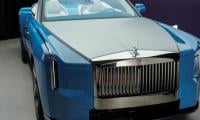
With 24 car manufacturers now operating in Pakistan, many offering competitively priced models packed with modern features -- largely Chinese -- the rationale for encouraging used-car imports has weakened significantly.
The auto sector’s performance in 2025, particularly during July-November, underscores a simple truth: Pakistan’s industry responds quickly to stability but is equally fast to stall under policy incoherence. Without localisation goals the sector’s recovery will remain hesitant -- promising, but perpetually incomplete.