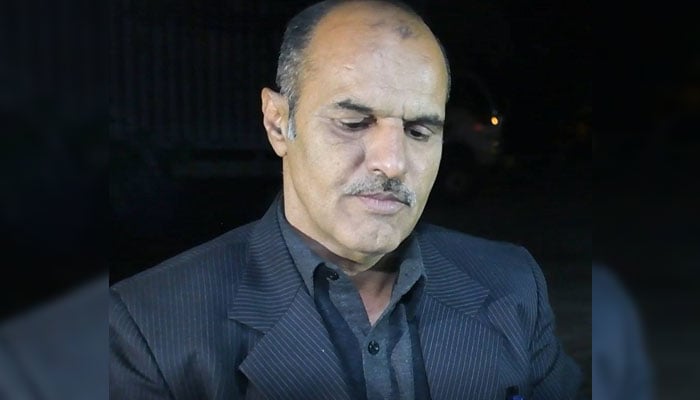
In the vast, shifting landscape of modern Urdu poetry, few voices have emerged as distinctly as that of Akhtar Usman. With a style rooted in social realism and an uncompromising gaze on the human condition, Usman stands out for his commitment to portraying the unvarnished truths of working-class life, rural hardship, and political disillusionment.
Originally from Dera Ghazi Khan, Usman’s poetry draws heavily from his Saraiki background, blending regional nuance with a sharp political consciousness. His verses are not crafted to please; they are meant to provoke, to bear witness, and to remember. With every stanza, he elevates the experiences of those often relegated to the margins — peasants, laborers, women — giving their silences a fierce eloquence.
In an era when much of contemporary Urdu poetry is either romantic or nostalgic, Usman brings a necessary edge. His work channels the tradition of resistance poets like Habib Jalib and Faiz Ahmed Faiz, yet it is unmistakably his own: rough-hewn, deeply personal, and unsparingly direct. He writes not from the balconies of academia, but from the street corners, tea stalls, and fields that form the backdrop of everyday struggle.
His first collection, “Baraad”, was received with quiet acclaim, marking the arrival of a poet who was not afraid to disrupt conventions. Since then, he has published several books, each offering a deeper dive into the lived realities of Pakistan’s underclass. Yet, despite critical appreciation, Usman’s poetry remains somewhat outside the mainstream literary circles — a fact that perhaps speaks more to the politics of literary recognition than to the merit of his work.
In readings and mushairas, his voice is deliberate and unpretentious, often pausing mid-verse as though weighing the words not for beauty, but for truth. For Usman, poetry is a moral act — not merely an artistic one. “I write because silence would be a betrayal, he once remarked in an interview. That ethos runs through his work, challenging readers to confront injustice not as abstract theory, but as lived pain.
Yet, it would be insincere to view Usman solely through the lens of resistance. His poetry is also deeply lyrical, even tender, in moments that explore love, memory, and belonging. He captures the texture of rural life with intimacy — the dusty winds, the songs of shepherds, the long waits for lost lovers. These human moments give his work depth and balance, preventing it from becoming purely polemical.
With Pakistan’s political and social fabric under constant stress, voices like Akhtar Usman’s offer both critique and clarity. His poetry is a mirror held up to society — cracked, perhaps, but unflinching.