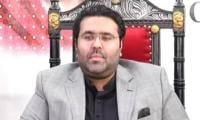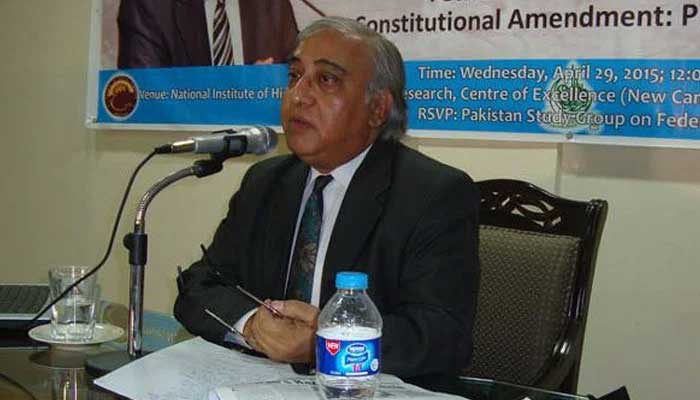
Prof Dr Syed Jaffar Ahmed has said that sixty per cent of the country’s population is under the age of thirty, with a large portion between fifteen and twenty-four.
As many as 25 million younger children do not attend school, he noted as he addressed as guest speaker a monthly meeting of Hamdard Shura Karachi, held at the Hamdard Corporate Head Office.
The topic of the event was ‘Pakistan’s Youth Population — Opportunities, Challenges, and the Path to Turning Them into National Strength’. President Hamdard Foundation Pakistan Ms Sadia Rashid attended among others and Gen (retd) Moinuddin Haider presided over the discussion.
Dr Syed Jaffar Ahmed noted that the chapter on fundamental rights in the constitution clearly states that education for children under sixteen is compulsory and free. “Laws have also been made in line with this constitutional provision. Despite this, such a large number of out-of-school children raises serious questions about the performance of both federal and provincial governments.”
He added: “Our entire education system suffers from wrong priorities and internal weaknesses. There is no sensible balance between the different tiers of education. Primary education receives little attention, and school enrolment is steadily declining, while the number of universities continues to rise. Population growth has not been controlled, and as a result, the existing educational infrastructure does not meet current needs. National priorities must be reset, placing the interests of the nation first. There is a strong need to promote skills development. Skilled young people can become valuable assets in the sectors of industry, agriculture, and manufacturing.”
Brig (retd) Tariq Khalil said: “The curriculum of religious seminaries must be reformed and brought in line with modern requirements. All of us must also play our part. Factories, industrial units, and corporate organisations should provide apprenticeships, training, and workshops for young people at matric and intermediate levels. Through this initiative, they can train students according to their technical needs and help them become skilled workers.”
Prof Dr Tanveer Khalid said: “National goals will only become clear when policies are made to support the strategies needed to achieve them. Pakistan’s progress is only possible through an educated and skilled nation. Through the internet, modern scientific knowledge is no longer controlled by a few countries. Information from around the world is now available online. Young people must be encouraged to develop curiosity and improve their abilities through self-learning.”
Dr Khalida Ghous said: “Unemployment creates restlessness and frustration among young people. In rural areas, the youth do not have opportunities to gain skills or progress in life. As a result, they move towards cities, increasing the population burden on urban centres. Young people need proper guidance and direction so they know how to move forward. Our children are unaware of the needs of the market and industry.”
Mubashir Mir, Engr Pervez Sadiq, Engr Ibn-ul-Hasan, Prof Dr Hakim Abdul Hanan, Cdre (retd) Sadeed Anwar Malik, Usman Damohi, Deputy Speaker Shura Col (retd) Mukhtar Ahmed Butt, and others said that young people should be encouraged to start businesses rather than rely solely on jobs. Universities should support students’ start-ups. Through social media and e-commerce, young people around the world are earning well. Our students are also talented, and we should support them.