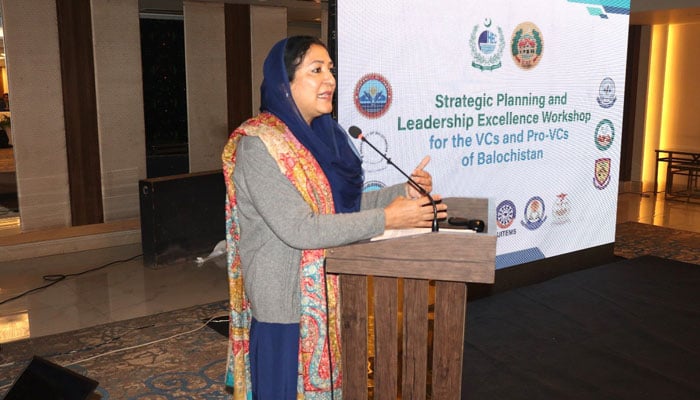
Islamabad:Minister of State for Federal Education and Professional Training Wajiha Qamar Thursday emphasised national ownership, capacity building and improved communication as key drivers for strengthening higher education and socio-economic development in Balochistan.
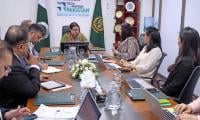
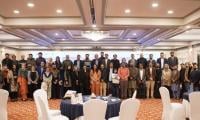
She was addressing the second day of the Higher Education Commission’s Strategic Planning and Innovation Workshop for Vice Chancellors and Pro-Vice Chancellors. The event, arranged by National Academy of Higher Education (NAHE) at HEC, focused on strengthening institutional capacity, fostering leadership and promoting collective ownership to address Balochistan’s higher education challenges.
The minister noted that bringing provincial representatives together allows for collective discussion of key challenges. She stressed that Balochistan’s potential required stronger media representation to counter misperceptions and bridge communication gaps.
Acknowledging long-standing provincial challenges, the minister highlighted infrastructural and access issues and noted that communication barriers often hinder collaboration between federal and provincial institutions. She expressed hope that such workshops provide a space to discuss, understand, and resolve these issues collectively.
The minister emphasised that the federal government continued to prioritise the province, especially in capacity building and scholarship facilitation. She voiced concern that scholarships allocated for Balochistan often remain unutilised, not due to a lack of talent, but because students from remote areas faced language, presentation and standardised-test barriers compared to peers from urban centres.
The minister reaffirmed the federal government’s commitment to providing targeted support, skill development, test preparation and communication training, encouraging vice chancellors to ensure full utilisation of both local and international scholarships. Syed Arsalan, head of Counter-Terrorism Section at the United Nations Office on Drugs and Crime, discussed the transformative potential of social enterprises in creating economic opportunities and reducing youth vulnerabilities.