The security and defence policy and implementation framework of modern China have been devised by drawing lessons from past experiences. China has especially learned from the century of humiliation, during which it made a strategic mistake. China was under the impression that the Seas would act as natural defence lines. Thus, China believed that the East China Sea protected its eastern flank, and the South China Sea secured the southern flank. Hence, China did not invest much in developing its navy and naval infrastructure. This allowed the West to attack and seize territory within China. This ultimately led to the century of humiliation.
Moreover, China tailored policies and implementation frameworks to current needs. It has attempted to close all loopholes. However, this time, China made two miscalculations, if not strategic mistakes.
First, China does not interfere in other countries’ internal affairs or show hostility toward any nation. Therefore, it expects the world to respect it and believes no country will interfere in China’s internal affairs or act hostile toward China. However, this is a miscalculation, since hegemonic powers do not respect these principles. Instead, they prefer to interfere and see it as their right, especially to counter and contain rising powers that could challenge their dominance. As a rising power, China is no exception. They take every opportunity to interfere in China’s internal affairs under the guise of issues like human rights violations and democracy.
They have identified many entry points, including Hong Kong, Tibet, and Xinjiang, but Taiwan stands out among all. The Western powers have been interfering in Taiwan since the founding of China, even they ignore the Cairo agreement, which requires all parties to return Taiwan to China. However, they are playing it smart by not officially recognizing Taiwan, while simultaneously promoting Taiwan as a sovereign state.
The USA policy on Taiwan exemplifies this strategy. It has signed multiple agreements with China to reaffirm its commitment to the One China policy. The US explicitly states that it will maintain only commercial and unofficial ties with Taiwan. However, in practice, the US maintains a relationship with Taiwan that is equivalent to that between two sovereign states. For instance, the USA supplies weapons of mass destruction and advanced defense technology to Taiwan, turning it into a significant threat to China. Additionally, top US political leaders, including the Speaker of the House of Representatives, have visited Taiwan. A group of US senators also visited this year. It encouraged separatists by claiming that Taiwan has the right to remain free, which goes against the One China policy consensus shared by the US and China.
The EU follows the US’s lead, lacking formal diplomatic relations but engaging in close cooperation, akin to state-to-state interactions. Apparently, the EU presents Taiwan as a trade, economic, and technological partner, but behind the scenes, it collaborates with the US to enhance Taiwan’s military capabilities. This is part of their China-containment policy. The EU has accelerated its efforts since the 2019 EU policy, which designates China as a systematic rival.
They are also pressuring regional countries to become hostile toward China. India, Japan, and the Philippines are the most prominent examples. Japan has grown hostile toward China and is threatening to install SAM missiles at Yonaguni Island. It all started with comments from Japanese Prime Minister Sanae Takaichi. She said an attack on Taiwan could trigger the deployment of Japan’s self-defense forces. This statement conflicts with international norms and values; Taiwan is an internal matter of China.
Second, in the modern world, narratives are as vital as military power or other tools of strength; in fact, the success story begins with narrative construction. We have seen that Western powers leverage their narrative-building capabilities to influence global events. They created various slogans and tools, such as democracy, liberal values, human rights, and social media. They are using the same narrative slogans and techniques regarding the Taiwan issue. First, they aimed to shape a democratic image of Taiwan and connect it with liberal values. This was intended to elicit sympathy among Western citizens and to gather support for an independent Taiwan.
Second, they portray China as an aggressor that aims to seize a democratic nation by spreading various slogans and allegations, such as claiming China is expansionist. China seeks to control the South China Sea, the East China Sea, and the Strait of Taiwan, which account for over 50% of container traffic. Therefore, China poses a threat to the liberal and democratic order of the world.
They have deployed the Penta-Complex (military-industry-academia-NGO-media) to achieve their objectives. The Penta-Complex functions systematically to promote anti-China and pro-Taiwan separatist rhetoric. The military-industrial complex manages the entire process behind the scenes, while on the surface, independent sources (think tanks, media) appear to be working. The industry supplies financial resources, the military provides data and outreach, academia (universities and think tanks) creates content or justification, academia and NGOs serve as the public face, and the media act as cheerleaders, spreading material on a larger scale.
The most dangerous tools of the Penta-complex are think tanks and social media. First, because of social media, borders have become increasingly irrelevant. You can’t fully protect people from propaganda or disinformation; VPN systems make it very difficult. The most concerning aspect of social media is that if they can’t find people within the country, they deploy people from other countries using fake identities and names to do the job.
Second, think tanks, especially non-governmental ones, play a crucial role in shaping a narrative for the State through the guise of independent sources. They feed this narrative to the media and social media platforms. The media and social networks then use the think tank’s narrative to appear credible.
From the discussion above, we can draw two conclusions. First, many countries in the West and the region are not reciprocating China’s policy of non-interference and zero hostility. Instead, they consider it a weakness; they attempt to exploit it for their own benefit. The Taiwan issues provide clear evidence that the West and regional countries consider patience and restraint as a weakness. Second, in the modern world, narrative-building is essential for shaping the global image, achieving strategic goals, and undermining opponents. Unfortunately, China has not invested sufficiently in narrative building, the role of think tanks in shaping and spreading narratives, and the tools for dissemination.
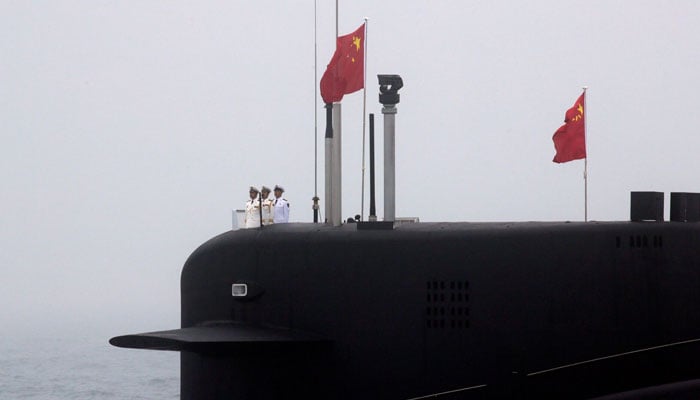
In this context, China must refine its policies and take concrete steps. It’s worth noting that China has begun revising its policies and started responding to aggressors in its own language. For example, after the Japanese PM’s statements, China is demonstrating its military strength and signaling to its opponents what would happen if they continue to interfere with China’s internal affairs.
However, China needs to do more in narrative-building. For that purpose, China should develop new, dynamic, independent think tanks (TTs). For that purpose, China must invest in building an image of “new type of TTs with Chinese characteristics as independent TTs”. China should also establish similar TTs in other countries that operate without government control or interference. The responsibilities of these TTs should be broadened, and narrative-building should become a core part of their work.