LAHORE: PMLN President Nawaz Sharif approved the Gujranwala Mass Transit Project here on Thursday. He, along with Punjab Chief Minister Maryam Nawaz and Federal Minister for Defence Khawaja Asif, chaired a meeting.
Nawaz said the Mass Transit Project was a long overdue right of the people of Gujranwala, which they should have received long ago. He expressed satisfaction over development initiatives launched by the Punjab government, noting that it would significantly benefit the public and contribute to the city’s progress.
Provincial Minister for Transport Bilal Akbar briefed the leadership about the project. He said that the Gujranwala Mass Transit Project was a landmark public-service initiative designed to provide modern and efficient transport facilities to citizens. This project will span more than 30 kilometres, running from Eminabad to Gakkhar. More than 51,000 passengers will benefit from this landmark project daily after it gets operational. He highlighted that mass transit system would feature 40 electric articulated buses, ensuring an eco-friendly and comfortable travel experience for the general public in Gujranwala city.
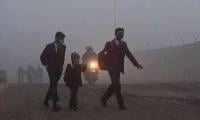
Meanwhile, Maryam Nawaz directed constituting a steering committee to eradicate forced child labour across the province. According to a notification, the 15-member steering committee will be chaired by Senior Provincial Minister Marriyum Aurangzeb, while former Member National Assembly Mohsin Shahnawaz Ranjha has been appointed as co-chairman of the committee. Provincial ministers from School Education, Investment & Commerce, Industries & Trade, Social Welfare & Bait-ul-Maal, Skills & Small Industries Development departments will serve as its members.
Additionally, provincial secretaries Home, Labour & Human Resource, School Education, Industries & Commerce, Social Welfare, Skill Development & Entrepreneurship departments, along with Chairman PITB and DIG Police have also been included in the committee. The committee will map all sectors across Punjab to identify industries or areas where forced child labour is prevalent. Special data will be collected from industrial units, brick kilns, agriculture, fisheries, workshops and auto-repair sectors. A province-level central data bank integrated with AI and GIS technologies will also be established.
The committee will determine priority districts, sectors and hotspots where child labour exists and will propose alternatives for children currently subjected to forced labour. It will formulate immediate, medium-term and long-term strategies to eliminate forced child labour and prepare implementation mechanisms for these strategies.
Its responsibilities also include developing awareness plans for parents, teachers and all segments of society, besides creating performance-evaluation criteria for institutions involved in combating forced child labour. Punjab has become the first province to introduce such comprehensive measures. These initiatives were expected to significantly improve Punjab’s global ranking regarding child protection and labour eradication.