ISLAMABAD: Senator Sherry Rehman has declared that pollution is a serial killer which claims more Pakistani lives each year than terrorism, with the latest World Health Organisation figures confirming 256,000 annual deaths from toxic air.
Chairing the Senate Standing Committee on Climate Change, Chairperson Senator Sherry Rehman expressed strong disappointment over the lack of credible data, incomplete statistics and unverified numbers. “It is unfortunate that the Ministry of Climate Change and EPA could not make a credible presentation on the subject despite three months’ notice. The Clean Air Policy made in 2023 was neither updated nor referenced,” she said.
Throughout the meeting, Senator Rehman repeatedly questioned the credibility and preparedness of Environmental Protection Agency’s presentation. “There are no stats, no numbers, no data. You’re unable to give a proper presentation. This is not credible—you have jumped straight to mitigation without explaining the problem. This is a kindergarten-level presentation. I will not review something like this again.”
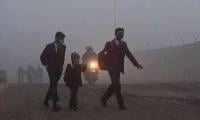
When briefed that only 800 vehicles were inspected out of 50,000, Senator Sherry Rehman expressed concern at the extremely low enforcement. She also questioned why Islamabad has only one air quality monitoring station, stating that “an air monitor should be installed at every two km.” She added that Lahore now shares rankings with Delhi in global pollution indices, with toxic air reducing life expectancy by 3.7 to 4.6 years. Pakistan remains the third most polluted country in the world.
Sherry said “smog affects 11 million children under five in Punjab’s worst-hit areas. Children breathe twice as fast as adults, making them more vulnerable to respiratory disease. Air pollution costs Pakistan $22 billion annually, nearly 6.5pc of GDP according to the World Bank.” She stressed that transportation is now the single largest contributor, adding that dust — a major pollutant in Lahore — remains overlooked.
Punjab’s DG EPA briefed the committee on their smog “war room”, low-cost sensors and enforcement measures. He reported that Punjab’s source apportionment study shows that 83.15pc transport, 9.07pc industry, 3.9pc agriculture, 3.6pc waste burning, 0.14pc commercial, 0.11pc domestic sources were responsible for pollution while 178 private low-cost sensors were installed, 8,005 industrial furnace feeds monitored live, AI-based systems under development for automated pollution alert and 44 air quality monitoring stations were across the province.
On the use of expensive mist machines (“artificial rain” systems), Senator Rehman questioned their effectiveness: “This is very expensive technology, and the impact is not very high.” Moreover, she also questioned why brick kilns were being demolished rather than transitioned to zig-zag technology, as decided earlier at the federal level. “These are low-income groups. Instead of abolishing them, support them toward cleaner technology.”
The Senate Standing Committee on Climate Change also discussed public health impacts with the NIH. The elderly, children and those with cardiovascular or pulmonary diseases are most at risk. Respiratory infection spikes remain unexplained. She highlighted “Influenza vaccines and testing kits were unavailable in ICT until recently.” She also questioned the Ministry of National Health Services’ role: “Do you have any power to enforce anything? What is your ministry doing? What is your work exactly? You couldn’t even tell me your mandate despite spending 14 billion annually.”
Balochistan’s EPA DG identified brick kilns, crushing plants, deforestation, dust, and transportation as major contributors. Senator Rehman requested clear data on the total number of crushing plants and expressed dissatisfaction at the lack of quantifiable numbers.
The chairman also directed revised, data-backed presentations from Sindh and Balochistan, a full, credible plan for Karachi, verified statistics and proper air quality monitoring frameworks and a clear breakdown of enforcement mechanisms and health impacts. Expressing her disappointment, the senator stated: “This reflects poorly on all of us.
Pakistan’s pollution crisis requires urgent, credible, science-backed action. We cannot continue with unprepared presentations when lives and public health are at stake.”