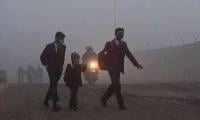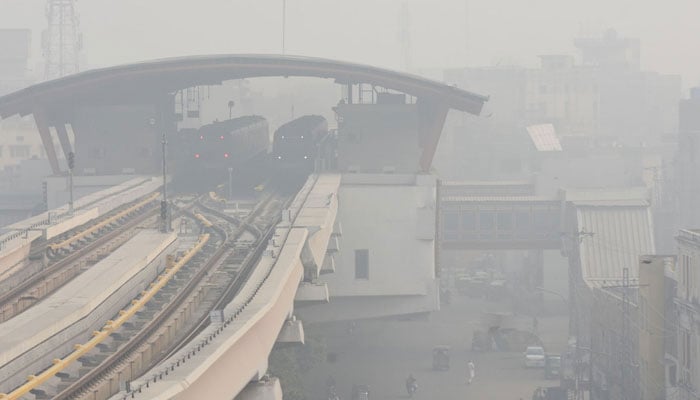
With the onset of smog season in Punjab – particularly in Lahore – terms like ‘climate crisis’, ‘resilience’ and ‘smog mitigation’ dominate conversations in academic, development and policy circles alike.
The health impacts of poor air quality are widely discussed, from rising respiratory illnesses to strained hospital systems. Yet, amid these debates, one critical area of public health often goes unnoticed and is in fact the hidden casualty of climate and environmental hazards – maternal and child health.
Smog and other manifestations of a changing climate are not only polluting the air we breathe; they are silently shaping the health and nutrition of mothers and children long before these impacts appear in hospital statistics.
A recent report by Unicef, titled ‘Impact of Climate Crises on Maternal and Child Nutrition in Punjab’, points out how the current climate crisis is giving way to another health emergency in the form of a child nutrition crisis. With recurrent episodes of heatwaves, flash floods, prolonged droughts and hazardous smog intensifying with each passing year, the province’s breadbasket is on the verge of depletion, as food production is disrupted, leading to poor dietary intake and, consequently, worsening maternal and child health.
Rising temperatures in the form of heat stress lead to disease, water scarcity and altered ecosystems, coupled with the evils of air pollution in the form of higher AQIs caused by increased levels of PM2.5 and CO2 particles in the air engulfed in smog damage crop, livestock, and fishery productivity. All of these have a direct bearing on the nutritional quality of staple crops, potentially increasing the likelihood that children will be affected by zinc, iron, and protein deficiencies in the years to come.
Pregnancy complications and risks associated with pre-term babies and low-birthweight infants also increase manifold when pregnant women are exposed to higher temperatures and rising AQI levels, especially in areas prone to such climate vulnerabilities, including metropolitan cities like Lahore and Rawalpindi and the districts of the southern Punjab region, such as Lodhran, Sadiqabad and Bahawalpur.
Studies have suggested that the PM2.5 present in smog significantly impacts maternal and child health, increasing the risks of adverse birth outcomes like stillbirths, low birth weight, preterm birth and impaired infant development, and contributing to maternal conditions like gestational diabetes and pregnancy-induced hypertension.
With current AQI readings exceeding safety limits yet again in Lahore and other major cities, pregnancy itself has become a risk factor for the mother’s as well as the unborn baby’s health and life expectancy. At the same time, public health concerns are exacerbated with a surge in respiratory illnesses like asthma, impaired lung development, and potential long-term effects on the nervous, cardiovascular and immune systems, with children facing the brunt of such catastrophes.
Punjab already faces persistent nutrition challenges, with the latest MICS data revealing the prevalence of stunting at 27.3 per cent and wasting affecting 10.2 per cent of under-five children, thereby slowing down progression toward SDG 2.2 indicators of ending all forms of malnutrition by the year 2030. Spatial analysis of key climate and health indicators reveals that climate-vulnerable districts of southern Punjab, such as Rajanpur, DG Khan, and Bahawalpur, face a double burden of disease, including recurrent floods and heatwaves, as well as poor performance on health and nutrition indicators.
In light of this, environmentalists, public health experts and policymakers need to view these two issues in relation to one another, as recurrent environmental shocks push families in vulnerable districts into poverty and food insecurity, thereby limiting children's and pregnant women’s access to healthcare.
This happens because it is a common practice among these households to cut back on meals in times of crop failure, which is now rampant due to these recurring climate shocks. Consequently, this climate stress -be it in the form of flash floods and/or hazardous smog- translates directly into inter-generational health loss as women end up skipping antenatal visits while children lose dietary diversity leading to adverse health and nutrition outcomes. The current situation calls for the government and development partners alike to rethink the two crises as one climate and health emergency and join forces across environmental protection agencies as well as health departments to develop what the WHO calls a “climate resilient health system”.
A climate-resilient health system requires reimagining health infrastructure such that they can withstand the present-day realities of smog, heatwaves and floods, and retrofitting existing health facilities. To achieve these, we need to move beyond rhetoric and begin with cross-sectoral integration between health and environment departments, in which budget frameworks are designed along the climate-health-nutrition nexus.
If our mothers and children are to thrive in a peaceful and healthy environment, we need to invest in climate-smart health governance, and Punjab should lead, given its size and degree of exposure.
The writer is a health and population consultant.