The Karachi University Teachers’ Society (KUTS) on Monday rejected the proposed bill seeking to alter the administrative structure of the International Centre for Chemical and Biological Sciences (ICCBS) and announced the observance of a black day, accusing the Sindh government of attempting to “split” the University of Karachi (KU).
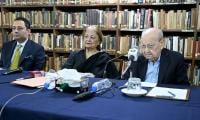
Addressing a press conference at the KU Staff Club, KUTS President Dr Ghufran Alam, Secretary Dr Maroof bin Rauf, ICCBS Professor Shah Hasan, and other representatives alleged that former ICCBS director Prof Dr Iqbal Chaudhry was the “mastermind” behind the controversial International Centre for Science Bill 2025, while the current director, Dr Raza Shah, had “chosen silence” on the matter.
The KUTS leadership declared that the bill was “harmful to the higher education system” and warned that it had triggered serious concern not only among scientists in Pakistan but also within the international scientific community. They said numerous scholars worldwide had written to Sindh Chief Minister Syed Murad Ali Shah, urging him to withdraw the bill currently under consideration by the provincial cabinet.
The Society demanded that the Sindh government immediately withdraw the bill and initiate broad consultations involving all stakeholders — including donors, the KU Syndicate, the KU Senate, the Higher Education Commission (HEC), Sindh HEC, and the Charter Inspection & Evaluation Committee — to formulate a mutually acceptable solution that ensures the ICCBS remains part of the University of Karachi while enabling the growth of both institutions. The KUTS representatives questioned how “billion-rupee assets” could be handed over to individuals contributing “only a few crore rupees,” adding that the proposal contradicted the principles of educational governance envisioned by former prime minister Zulfikar Ali Bhutto.
They pointed out that the share of two prominent donors — Nadira Panjwani and Aziz Jamal — amounted to “less than one percent,” while the major contributions had come from the Ministry of Science & Technology, Sindh HEC, the Sindh government, Dr Atta-ur-Rahman, the family of Jameelur Rahman, and Dr Yasmeen. However, most of these donors had allegedly been sidelined in the drafting of the bill.
They KUTS representatives emphasized that the ICCBS is built on 100 acres of the KU land, housing assets worth an estimated Rs100 billion, including 27 buildings — only four of which were funded by Pakistani donors, again representing “less than one percent” of the centre’s value.
Dr Ghufran Alam announced that KU teachers would hold a major consultative meeting on Wednesday to brief faculty members on “all facts and implications” of the legislation. On Thursday, all elected and non-elected staff and teacher bodies will be invited to formulate a joint strategy against what they termed the “division of the University of Karachi.”
Expressing confidence that the provincial government would review its position in the interest of academic autonomy and democratic norms, KUTS urged the Sindh government to withdraw the bill. However, they warned that if the government failed to do so, KUTS, after consulting the Federation of All Pakistan Universities Academic Staff Associations (FAPUASA), may decide on its next course of action through a general body meeting.