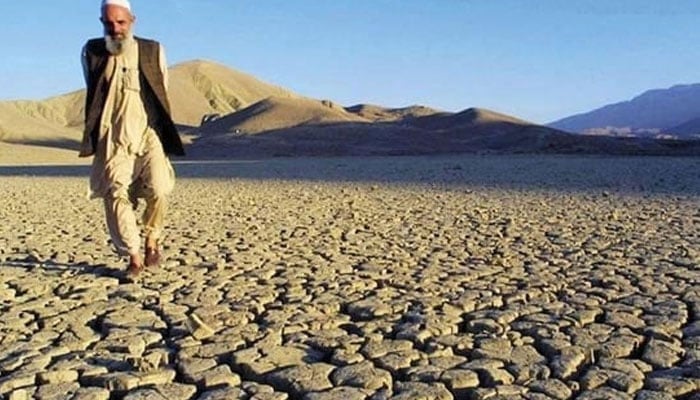
Institutionalised mismanagement is not just an economic concern in Pakistan. It shapes how we govern, how we plan and,ultimately, how we respond to climate change.
The IMF’s latest assessment estimates that Pakistan loses up to 6.5 per cent of its GDP annually to corruption and elite capture. Around Rs5.3 trillion has reportedly been recovered in just two years, pointing not only to financial loss but also to structural weaknesses in governance.
The IMF’s 186-page Governance and Corruption Diagnostic Assessment confirms that these issues are not isolated, but institutionalised across public administration, procurement, regulation and implementation. These weaknesses sit at the heart of Pakistan’s climate vulnerability.
This year, COP30 just took place in Belem, Brazil, surrounded by the Amazon. The location symbolised not just ecological richness but also how governance, indigenous participation and national planning shape credible climate leadership.
Global discussions are shifting from vulnerability alone toward capacity, reform, and implementation readiness. Yet Pakistan’s message remained largely unchanged, centred on emissions minimalism and historical injustice. While those points are valid, when repeated without meaningful reform, they risk sounding like a static narrative that highlights only impact, not intention.
One major area of underinvestment that weakens our climate readiness is human development. Climate resilience does not begin in conference rooms abroad, but in classrooms, hospitals, local councils and communities. A country that underinvests in education, health and civic awareness cannot build climate capacity, cannot plan for long term adaptation, and cannot implement nature based solutions effectively.
Education is where scientific literacy, environmental awareness and civic responsibility take shape. Health systems are critical for managing climate related illnesses, heat stress, disaster response and community resilience. When these sectors remain neglected, climate vulnerability becomes a social vulnerability. This is why climate policy must not be seen only through a finance or technology lens, but through a human development lens.
Climate financing is important and Pakistan must continue to engage with global climate diplomacy. Foreign policy and climate policy now intersect more closely than ever, especially through the Loss and Damage Fund, the Green Climate Fund and the Global Shield against Climate Risks. But financing without governance reform will not deliver meaningful change. Funding requires readiness, transparency, national ownership and institutional trust. These are areas Pakistan must strengthen, not just to secure climate finance, but to use it credibly.
This is why Pakistan needs an internal climate reflection, a National COP. Not a symbolic gathering, but a structured national platform where provincial governments, parliament, the private sector, academia, civil society, indigenous communities and local administrations come together to diagnose domestic barriers to climate action.
A National COP would not be about speeches, but about reform. It would address climate budgeting, land use planning, data reliability, local adaptation strategies, community participation and enforcement capacity. For Pakistan, such a process could be more transformative than multiple appearances at international COPs because it confronts the root of our climate challenge: not just climate change, but the capacity to respond to it.
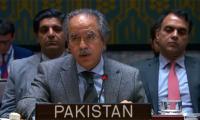
As Pakistan prepares for COP31 in Turkey, we must tell a different story. Not only of what climate change has done to Pakistan, but also of what Pakistan intends to do for itself. A story that moves from vulnerability to readiness, from reaction to transformation, from dependence to partnership. The global community listens not just to those affected, but to those preparing.
What happens at home matters most.
Climate resilience is not achieved in international negotiations alone. It is built in policy reform, institutional discipline, local planning and human development. Pakistan must arrive in Turkey not only as a vulnerable nation, but as a nation ready to adapt, reform and build. Only then will climate financing become more than a compensatory mechanism. It will become a foundation for long-term national transformation
The writer is an environmentalist.