I have watched the rise of Pakistan’s sugar industry with dismay. What began as an agro-based industrial promise has, over the years, turned into an economic cancer -- metastasizing across our political system, financial institutions, regulatory bodies and even the very conscience of governance.
This is not just about sugar but about power. It is about how a single industry can become a metaphor for everything that is broken in Pakistan: state capture, elite impunity, institutional decay, regulatory theatre, bureaucratic farce, and public helplessness. We have created an industry that feeds not just on sugarcane, but on public funds, political influence, bank loans and taxpayer misery. Every year, sugar prices are manipulated through artificial shortages, opaque exports, and hoarded stock. Every Ramazan becomes a ritual of economic violence against the poor. And every government pretends to be shocked, then does nothing.
The heart of this deception lies in the hands of a few. Over 80 sugar mills across Pakistan, the majority owned by ruling families and political elites in Sindh and Punjab, operate not as businesses but as protected fiefdoms. There have been no mergers, acquisitions or hostile takeovers because there is no competition. There is no incentive to innovate, modernise or diversify. The only investments this industry excels at are political insurance and offshore real estate.
And enabling this corruption is our banking sector -- one of the silent co-conspirators of this heist. Commercial banks, fully aware of the fictitious nature of stock declarations, extend credit lines worth billions against unverifiable or exaggerated inventory. These loans are often recycled, used for speculation, hoarding and worse -- money laundering through fake export invoices and benami accounts. One stockpile can be pledged to three different banks. Nobody verifies. Nobody audits. Everybody profits.
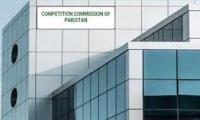
Banks are not the only facilitators. Regulatory institutions have become institutional jokes. The Competition Commission of Pakistan has done little more than issue toothless press releases. The SECP, which should be regulating market distortions in sugar and cement as vigilantly as it monitors NBFCs or REITs, has maintained a studied silence. These institutions have either been captured, co-opted or rendered irrelevant by political design.
The state, rather than regulating, actively participates in manipulation. The Trading Corporation of Pakistan (TCP), in theory a tool for stabilising market supply and supporting farmers, is in practice a weapon for skewing demand and subsidising politically connected millers. Sugar is exported when domestic prices are rising. Imports are delayed until stocks dry up. Public money is used to fund artificial profits.
But the betrayal is not just at the top. It is everywhere, woven into the daily humiliation of the ordinary citizen. The price control mechanisms at the local level have become tragic spectacles of incompetence and cruelty. Assistant commissioners and deputy commissioners, riding luxury vehicles far beyond their pay grade, parade through markets with sirens blaring and media in tow, threatening small shopkeepers for minor price differences. These retailers are at the lowest rung, selling goods already priced by suppliers far above their means. Yet they are harassed, penalised and made scapegoats, while the real profiteers are hosted at weddings and ministries. What kind of state humiliates the weak and shelters the powerful?
These local officials are not experts in price economics. Many are appointed not for merit, but for loyalty, lineage, or pliability. The culture of administrative showmanship has replaced
genuine enforcement. The public watches these televised visits like a bad play -- aware that nothing will change, but too exhausted to protest.
Worse still is the disjointed, fragmented mess that we call our economic governance. There is a Ministry of National Food Security. A Ministry of Industries. A Ministry of Commerce. A Ministry of Production. A Planning Commission, a Ministry of Finance, and sectoral regulators all working in silos, none with a coherent vision for agricultural transformation, industrial reform or food pricing. Each ministry guards its turf, passes the blame or simply shrugs. Is there a single integrated national plan -- a 10-year, let alone 25-year roadmap -- for agriculture and food security? Have farmers, economists, industrialists, civil society and
the public ever been consulted in one room?
We do not suffer from a lack of ideas. We suffer from a lack of honesty and courage.
Pakistan’s sugar industry could be a blessing. Sugarcane is sugar and can also produce ethanol, electricity, organic fertilisers, even biodegradable plastics. The potential for vertical integration is immense. But such transformation requires investment, innovation, and commitment -- none of which the current crop of mill owners are interested in. Their business model is simple: extract profit, evade tax, manipulate policy and invest in Dubai.
While the UK and many other countries shift towards healthier sugar alternatives such as sugar beet, enforce strict health taxes and reduce consumption, Pakistan is encouraging overproduction of a product directly linked to diabetes, obesity and cardiac disease. We subsidise what others penalise. We celebrate what others warn against.
The health cost alone is staggering. Sugar-related illnesses are silently devastating our public health system. The economic cost is multiplied by the environmental burden of cultivating water-intensive sugarcane on prime irrigated land, which should be used for cotton, pulses or food grains. Our cotton crop is shrinking. Our farmers are suffocating. And yet the state continues to incentivise the wrong crop, in the wrong place, for the wrong reasons.
Governments have come and gone, each claiming reform, each bowing before the sugar barons. Musharraf’s technocratic regime empowered them. Imran Khan’s government exposed them, but then let them walk. The NAB cases revealed massive tax evasion, manipulation of export quotas, fake invoices and money laundering via TTs sent under the names of papad-walas and falooda-walas. Yet these revelations were never pursued with the vigour they deserved. The cases faded and the mills flourished.
And here we are: it is 2025 and we still don’t have a working track and trace system. We still haven’t implemented a proper Point of Sale (POS) regime. We still allow goods to be sold off the books. We still let subsidies flow without an audit. The system is not broken. It is rigged.
Pakistan’s sugar story is less a market problem and more a moral collapse. A state that protects cartels, punishes the poor, and serves the rich has no future. A government that cannot appoint 20 qualified professionals out of 62 key regulatory seats has no right to speak of reform. And a nation that watches this unfold year after year, with growing despair
and shrinking hope, must one day ask: How did we let sweetness become tyranny?
The time has come not just to regulate sugar, but to reform the system that protects it. To punish not the shopkeeper, but the syndicate. To make banks accountable, not just profitable. To demand a national plan, not a patchwork of press conferences. And to remind ourselves: this is not about sugar but justice. Because in this country, sugar is no longer a commodity. It is a crime.
The writer is a political economist, public policy commentator, and advocate for principled leadership and regional cooperation across the Muslim world.