In the shadows of Pakistan’s booming industrial hubs, millions of women power the country’s informal economy -- often unseen and unprotected.
Their labour sustains critical circular economy systems from waste collection to textile upcycling and plastic repurposing. Yet, they remain trapped in economic precarity, denied fair wages, social protection, and decision-making power.
This International Women’s Day, under the theme ‘Accelerate Action’, the call is clear: a just circular economy is impossible without women's full recognition and empowerment in the informal sector.
Despite making up 74 per cent of Pakistan’s informal workforce, women experience systemic exclusion, gender-specific vulnerabilities and economic marginalisation. Their work is undervalued, their earnings are lower than men’s, and they face exploitation at multiple levels -- from middlemen controlling supply chains to unsafe working conditions in waste-picking and home-based industries.
This deep-rooted disparity is not just an economic issue but a social and environmental one, affecting the very foundation of Pakistan’s sustainability efforts. The circular economy, which thrives on resource efficiency and waste reduction, is fueled by the unpaid and underpaid labour of these women. Yet, they remain absent from national policy dialogues and decision-making processes.
The scale of their contribution becomes evident when we examine Pakistan’s waste and recycling sector. In urban centres like Karachi, Lahore, and Islamabad, thousands of women work as waste pickers and recyclers, manually sorting through trash heaps to extract plastic, paper and metal. Their efforts divert millions of tons of waste from landfills annually, reducing environmental pollution and feeding the country’s informal recycling networks. However, they operate in hazardous conditions -- without protective gear, formal contracts or health insurance.
Shockingly, women waste workers earn 40-60 per cent less than their male counterparts, despite shouldering the same labour-intensive tasks. They also face increased risks of harassment and violence in public spaces while collecting recyclables, further exacerbating their vulnerability.
The textile industry, a major pillar of Pakistan’s economy, tells a similar story. Contributing over 60 per cent of the country’s exports, this sector generates massive amounts of textile waste but this waste doesn’t make its way to landfills.
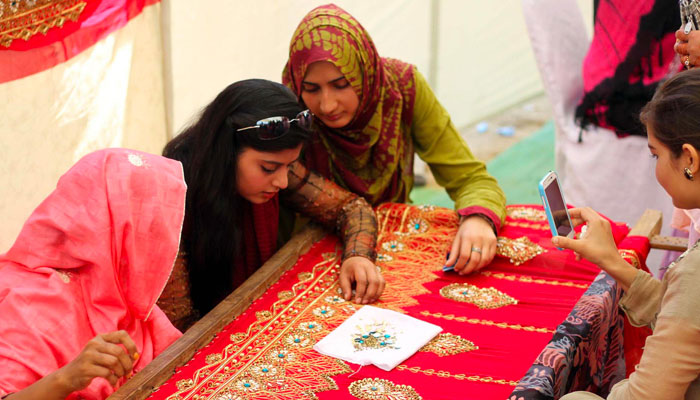
In response, women in informal home-based enterprises are repurposing discarded fabric into new garments, patchwork quilts, reusable bags, and upcycled fashion. Their work not only reduces textile waste but also preserves Pakistan’s centuries-old artisanal heritage. Yet, these women struggle to access finance, market linkages, and digital skills needed to scale their impact. Without formal business registration or legal recognition, they remain invisible in supply chains and vulnerable to exploitation. The transition to a circular economy must ensure that these women are not merely participants but key stakeholders with equal access to resources and opportunities.
Plastic pollution further highlights the indispensable role of women in the informal sector. Many women-led micro-enterprises have emerged as pioneers in innovative plastic repurposing techniques. They convert discarded plastic into eco-friendly handbags, woven mats and sustainable home decor, creating economic opportunities while reducing environmental harm. However, Pakistan’s plastic waste regulations largely focus on large-scale corporate actors, leaving small-scale women recyclers, waste collectors and managers without financial or technical support. As a result, despite their critical role in mitigating plastic pollution, these women remain locked in cycles of poverty.
The informal economy has long been viewed as an economic safety net, but for women, it is often a trap. Their exclusion from social protection, finance, and decision-making structures prevents them from advancing in the very industries they sustain. To truly accelerate action towards a gender-inclusive circular economy, the government, private sector and civil society must collaborate to ensure that women in the informal sector are not just recognised but actively supported. This begins with integrating informal women workers as key stakeholders in the upcoming National Circular Economy Policy, ensuring minimum wage protection, social security and legal rights.
Beyond the recognition, financial inclusion is critical and in this context, microfinance institutions and commercial banks must develop gender-responsive financing models tailored for women waste managers, textile upcyclers, and women-led plastic recycling enterprises. Large-scale manufacturers and retailers must incorporate women-led circular businesses into their supply chains, moving beyond tokenistic CSR initiatives to long-term procurement partnerships. Circular economy incubators should be established to provide women with technical expertise, mentorship, and direct connections to global markets.
At the same time, corporate ESG frameworks must integrate provisions around private-sector investment in women-led circular enterprises. Ensuring that women entrepreneurs working on circularity and waste have access to e-commerce platforms and digital marketplaces will further bridge the gap between informal work and mainstream economic participation. By facilitating direct procurement from women’s cooperatives, the influence of exploitative middlemen can be eliminated, allowing fair market access for female entrepreneurs.
The issue of occupational safety and social protection cannot be ignored. Women working in waste collection and recycling must have access to safety gear, health insurance, and daycare facilities to balance work and caregiving responsibilities. Legal protection against workplace harassment must also be extended to informal workers in circular economy industries. To support long-term empowerment, investment in vocational training programmes focused on sustainable product design, waste valorisation, and digital entrepreneurship is essential. These initiatives will equip women with the skills needed to transition from precarious labour to leadership in sustainable businesses.
A just circular economy cannot exist without gender justice. The contributions of women in the informal sector must be elevated from invisible labour to leadership roles in sustainable industries. This International Women’s Day, Pakistan must commit to accelerating action by embedding gender equity in its circular economy transition. Women are not passive beneficiaries of sustainability -- they are drivers of innovation, stewards of circularity, and architects of a regenerative future.
The time for fragmented, symbolic reforms is over. The future of Pakistan’s circular economy depends on whether we choose to empower the women who already sustain it. Let’s accelerate action -- because a circular economy without women is simply incomplete.
The writer is an environmental scientist. She leads the programme on ecological sustainability and circular economy at the Sustainable Development Policy Institute (SDPI), Islamabad.