A law on paper does not change a woman’s reality. Implementation does, writes Dr Rakhshinda Perveen. Read on…

Can laws improve a woman’s life in Pakistan? It is a question I have carried for years through court corridors, classrooms, police trainings and drawing rooms. The UN puts the global stakes in stark relief: women currently hold only 64 per cent of the legal rights that men hold worldwide, and at the current pace of progress, it will take 286 years to close those gaps. Pakistan is not an outlier in this story.
My honest answer, after watching policies being drafted, passed, celebrated and quietly forgotten, is this: laws are necessary but they are not magic. A law on paper does not change a woman’s reality. Implementation does. Access to justice does. Rule of law does.
Ask a woman waiting outside a police station or a domestic worker crossing a court case without money for a lawyer, whether the law alone changed her life. You will see the gap. But the gap is not only theirs. I have watched urban, educated women - activists, feminists, women who argue for others’ rights for a living - choose silence when it comes to their own. The personal cost of fighting, even when you know the law is on your side, is something the law cannot fix.
Yet, to say laws do not matter would be imprecise and imbalanced to every woman who has used one to reclaim something. They genuinely matter - but only when they move beyond symbolism.
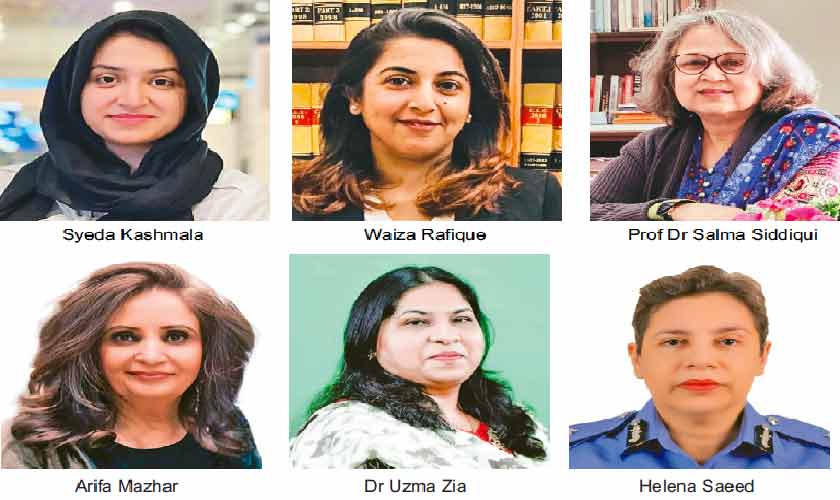
In this regard, this scribe talks to six women who know the system from the inside. Read on…
Implementation:
The real battlefield
Syeda Kashmala, a High Court Advocate based in Islamabad with over six years of litigation experience in family, criminal and human rights law, calls it a ‘grey area’. “Yes, laws can improve life - but only when they move beyond paper and begin to shape behaviour.” She points to the Protection of Women Against Harassment at the Workplace Act, 2010. Before that law, harassment in offices was brushed aside as ‘adjustment’ or ‘misunderstanding’. After 2010, every public and private organisation was required to form an inquiry committee. Employers became legally accountable. Silence was no longer the only option. Something subtle shifted: power.
The same logic applies to the Sindh Child Marriage Restraint Act, which raised the minimum age of marriage for girls to 18. Child marriage did not disappear, but it became prosecutable. Families now face a legal standard that cannot simply be negotiated away in a jirga. In the Dua Zehra case, a father fought through the courts to bring his daughter home.
“He was eventually successful because the law existed,” Kashmala says. “Without it, there would have been no remedy at all.”
Waiza Rafique, an Advocate of the High Court, internationally published author and human rights and gender justice expert, frames the issue precisely. “Laws can improve the lives of women in Pakistan, but only if they are implemented in their true sense and supported by adequate resources, trained institutions and political will. Legislation can guide society toward equality, but when laws are made without inclusive consultation or are poorly implemented, they risk failing the very people they are meant to protect,” she explains.
Arifa Mazhar, Chief Executive of Strengthening Participatory Organisation (SPO) and the first woman to lead it, brings over 32 years of experience in rights-based development and gender equality. “Legislation is the first and foremost step that binds a society to follow. I believe laws absolutely can change the lives of Pakistani women but the real impact depends on enforcement, awareness and social attitudes,” elucidates Mazhar.
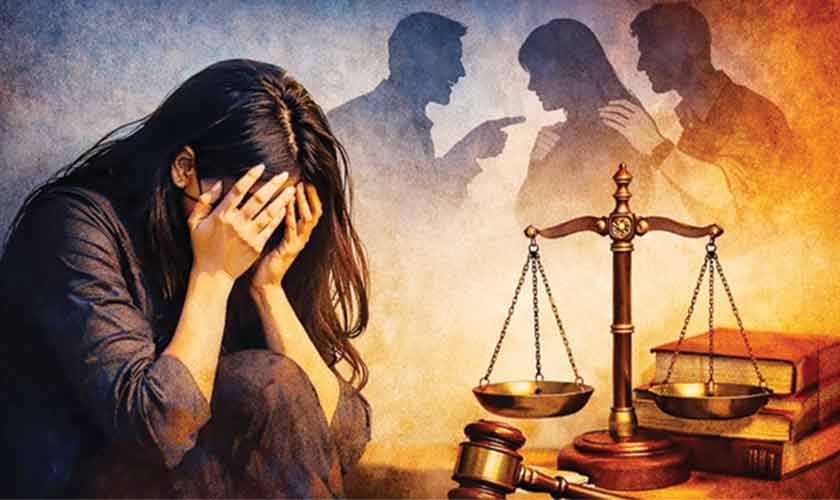
The legislative record bears her out. The Protection of Women (Criminal Laws Amendment) Act 2006 reformed the Hudood Ordinances; the Punjab Protection of Women Against Violence Act introduced shelters and legal aid; reserved seats in the assemblies gave women a formal voice in lawmaking; and the Muslim Family Laws Ordinance gave regulated rights over marriage, divorce and inheritance. However, despite legal entitlement to inheritance, women own hardly one per cent of property in Pakistan. Most forgo their share - some under explicit family pressure, others due to conditioning to appear obedient and selfless. Early and forced marriages persist. Awareness of legal rights remains dangerously low and economic dependence on male relatives means that even when a woman knows her rights, exercising them can cost her the roof over her head. “Justice needs to be accessible and affordable. Without enforcement and awareness, laws remain on paper,” adds Mazhar.
According to Helena Saeed, Additional Inspector General (retd) and former UN Police Commissioner, “If we were to implement the existing laws in letter and spirit, it would provide considerable security to the women of Pakistan.”
Pakistan already has laws on inheritance, harassment, domestic violence, child marriage and rape. The problem is not always the absence of legislation; rather it is weak enforcement, poor investigation, delayed trials and political interference.
A woman’s journey through the justice system is exhausting. Filing an FIR is a battle itself. Investigations are often compromised by bias, court cases drag on for years and legal fees are draining. Throughout the process, she must simultaneously handle family pressure, community stigma and financial insecurity. Under these conditions, even the strongest law can feel impossibly distant. Procedural delays and the absence of legal aid mean justice is often delayed.
“Pakistan’s legislative record is comprehensive. The Acid Control and Acid Crime Prevention Act (2011), the Prevention of Anti-Women Practices Act (2011), the Prevention of Electronic Crimes Act (2016), the Zainab Alert Bill, the Punjab Women’s Inheritance Rights Bill (2025), the Domestic Violence Act (2026) and Supreme Court rulings on Khula (2025) together represent a substantial body of protective law. The problem is that the reach of these laws has not kept pace with the scale of the need,” observes Dr Uzma Zia, an economist specialising in macroeconomic policy, international trade and gender issues.
“Rising urban and rural poverty is an overlooked driver of this gap. Economic vulnerability deepens women’s dependence on the very households that may be the source of the violation. When leaving means losing income, shelter and children’s security,” she adds.
Yet, Dr Zia points to cases where the law has intervened with real effect. In July 2024, Saniya Zahra, a 20-year-old pregnant mother of two, was found dead in Multan, hanging from a ceiling fan under suspicious circumstances. Her family immediately raised concerns, and a case was registered against her husband, his brother, parents, and two sisters under sections 302, 148, and 149 of the PPC. The court found her husband guilty of murder and sentenced him to death in 2025. The system was slow and imperfect and required a family willing to fight, but it held.

“The situation will improve, but only if implementation is taken seriously and if women are given the economic footing to actually use the rights they are legally owed,” expresses Dr Zia.
Prof Dr Salma Siddiqui, a clinical psychologist and academic, brings a different lens – one rooted not in legislation or economics but in the psychology of change itself. Her concern lies in the conditions under which Behaviour Change Communication (BCC) can truly work.
“In a society where people struggle to meet basic needs, face inadequate education and experience powerlessness on a daily basis, behaviour change strategies require much more. Awareness campaigns and legal literacy drives cannot carry the weight alone in communities where survival itself is precarious. Where people are fighting for food, shelter and basic dignity, asking them to also navigate and challenge the legal system requires something closer to a social movement than a communications strategy,” points out Dr Siddiqui.
“Legislation offers a framework. But awareness, education and a genuine sense of community belonging are what enable that framework to be claimed by the people it was written for. BCC must be mandatory, continuous and rigorously evaluated inside state institutions - not optional, not limited to one-off workshops and not the sole responsibility of civil society organisations running on shrinking donor budgets,” she stresses.
The real gatekeepers
of justice
After taking their comments, one thing is clear: legislation is only one layer. Changing intensely imbedded patriarchy requires parallel social transformation and that transformation must begin inside institutions - not only within communities.
The real gatekeepers of justice are in courtrooms, police stations, parliament buildings and newsrooms. A judge who believes a woman provoked her attacker. A police officer who tells a survivor to reconcile with her abuser. A lawmaker who votes for protective legislation and enforces none of it in their own constituency. A journalist who frames ‘honour killings’ as tragedy rather than crime. These are the people who determine whether a law breathes or gathers dust. Until their thinking shifts, laws will remain doors that exist but do not open.
What Pakistan needs is not more isolated pilot projects but a single, state-led national mechanism that aligns prevention, protection, prosecution, and rehabilitation under one coordinated framework. Ministries, police, judiciary, civil society and media must operate under a common strategy - not as competing silos, each chasing their own donor priorities. Prevention and response must go together. Reform must be systemic, or it will remain symbolic.
I have seen women reclaim property because the law was there. I have seen harassment cases where someone was held accountable. I have seen courts intervene where families had already decided outcomes. We need more law, yes - but we also need better law: loopholes closed, procedural delays reduced, bail conditions that allow abusers to return home reviewed and evidentiary standards that dismiss a woman’s testimony finally challenged.
Laws that protect the powerful while wearing the face of neutrality are not progressive legislation. They are obstruction dressed in legal language. And we need to stop asking women to come to justice. Justice has to come to them. Inheritance does not require a courtroom; it requires a revenue officer who does their job. Divorce, custody and guardianship are rights a functional state can and should deliver locally and accessibly - without a woman having to first survive the system that failed to protect her.
Door-to-door rights delivery is not charity. It is the minimum a state owes its citizens. Laws are not the finish line. Neither is awareness. The finish line is a woman who is treated as an equal citizen without having to fight for it. I have seen enough small victories to believe we can get there.
Dr Rakhshinda Perveen is a published author and a gender justice expert. She can be reached at [email protected]