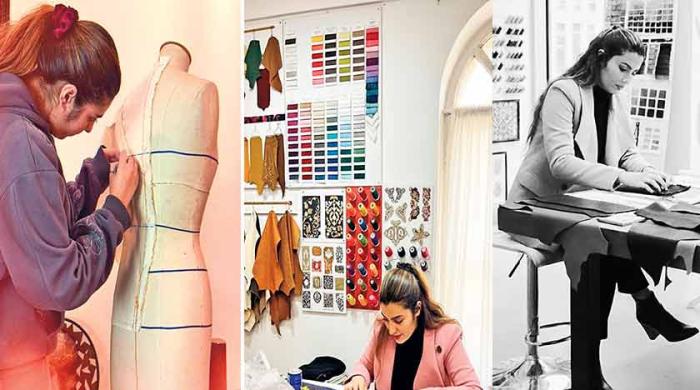
March is recognised as Women’s Month. This week, You! pays tribute to those women who are the silent contributors to our society. Read on…
March reminds us of the power of women. When they gather, a power circle is activated, forming the colours of the rainbow. Throughout this month we applaud women who are achievers and are visible. But there are hundreds and thousands of women who work day and night and receive little recognition. Beyond the stages and speeches, countless women carry invisible responsibilities that hold society together. Their labour is unpaid, their sacrifices unrecorded and their resilience often misunderstood.
From homes to hospitals, from classrooms to communities, women give silently so that others may rise. Behind every confident professional, there is a mother who stayed awake through exam nights. Behind every healed patient, there is a female doctor who stood for hours despite exhaustion. Behind every functioning household, there is a woman whose work begins before sunrise and ends long after everyone has gone to rest.
Their hands may carry books, surgical instruments, cleaning tools or cooking utensils - yet each role carries dignity. Their contributions may not appear in economic reports, but they are visible in educated children, healthy families and stable communities. This week You! takes a look at some of the unsung heroes of our society. Read on…
A devoted educationist
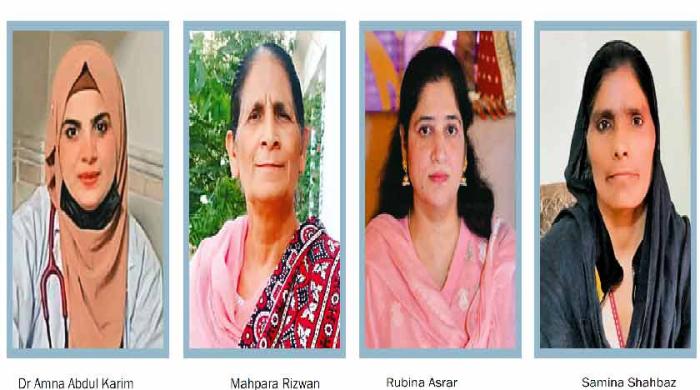
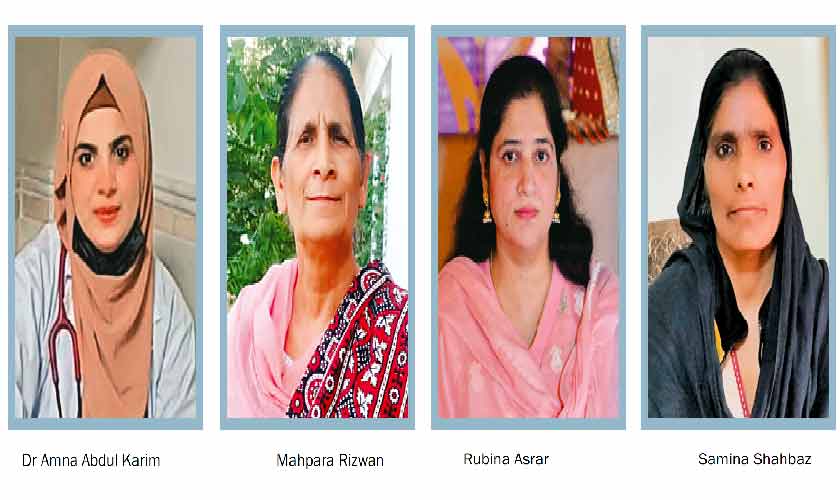
For forty years, Mahpara Rizwan has been working tirelessly as an educationist in an attempt to uplift the standard of education in Sindh. As an educator and government officer, she not only teaches but also plays her role in spreading awareness. In communities where sending girls to school is often questioned, she knocks on doors, sit with hesitant parents and patiently convince families that educating daughters is not a burden but a breakthrough.
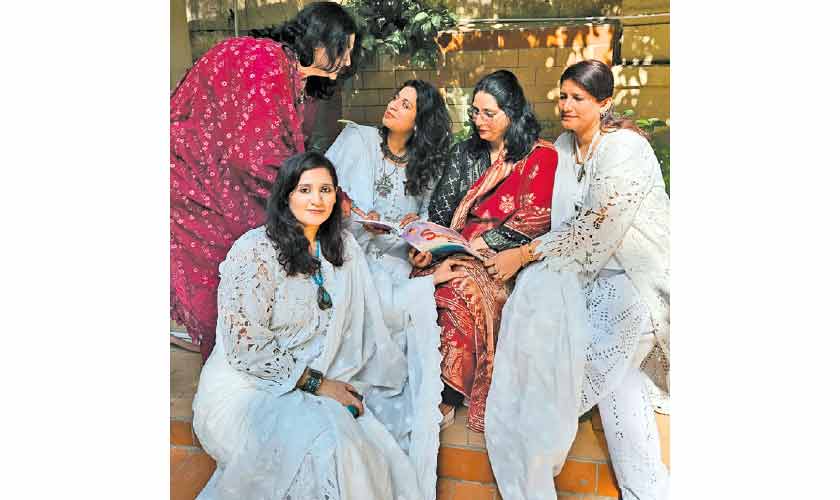
In the most challenging neighbourhoods of Lyari - a place marked by poverty and narrow winding streets - she works relentlessly to bring girls into classrooms. The roads are difficult to navigate and resources are scarce, yet she persists.
During the floods, when schools were destroyed, she spearheaded Temporary Learning Centres, ensuring that children’s education would not be disrupted. In those moments of crisis, she became a beacon of hope, showing that even in devastation, resilience could be taught alongside reading and writing.
Alongside her professional service, she has represented young girls through the Pakistan Girl Guides Association, carrying the voices of marginalised students into spaces where they are rarely heard. Her work is not loud, yet profoundly transformative. Mahpara knows how to balance her professional and personal life. As a mother, she has raised six children while sustaining a demanding career.
A dedicated doctor
The white coat commands respect, but few ask what it truly costs a woman to stand for hours in an operating theatre, make life-and-death decisions and return home carrying responsibilities that never pause.
In Pakistan’s demanding healthcare system, Dr Amna Abdul Karim represents not only medical excellence but also silent endurance. Her duties stretch beyond ordinary limits: 24 to 36 continuous hours in emergency rooms and surgical wards. She handles critically injured patients, performs major emergency surgeries and leads resuscitation efforts while families wait with trembling hope.
There are nights when blood stains her gloves and seeps into her shoes during complex procedures. There are moments when exhaustion presses against her body, yet her mind must remain sharp. “During duty hours, there is no space for personal thoughts. A surgeon thinks only of saving life,” she says. Then she removes the surgical mask, washing away the hospital’s visible stains - but not the weight of responsibility. She steps back into society, where a different test begins.
There are days when she returns home after saving lives, her body drained, her shoes marked by emergency care, yet she smiles at her family - not because she is untouched by struggle, but because she refuses to let struggle define her. Her strength is disciplined.
Dr Amna’s story reflects thousands of Pakistani women who break myths daily in hospitals, classrooms and homes. They carry professional excellence and personal responsibility simultaneously, often without institutional protection.
A selfless homemaker
In our society, success is measured by titles: doctor, surgeon, financial expert. But we rarely acknowledge those who raise them. Rubina Asrar is a mother of six. She is not highly educated, has no professional title and has never delivered a conference speech. Yet, her success can be seen through her children. Four of her children are doctors. One is a successful plastic surgeon. Her eldest son is a financial expert.
Behind their success stands a woman who worked from dawn to dust in the kitchen, in the courtyard and in the silent spaces of responsibility. Her day began with lighting the fire for cooking, cleaning, managing limited resources, ensuring uniforms were ready and teaching discipline without formal training.
In Pakistan, approximately 80–85 per cent of adult women are engaged as housewives or in unpaid home-based work. Female labour force participation remains between 14.5 per cent and 20.7 per cent. Women spend nearly 19.9 per cent of their time on unpaid care work, compared to only 1.8 per cent for men. Yet, these women are often described as ‘not working’ which is not correct.
Ms Rubina’s services were unpaid, but not unproductive. She invested her youth in raising educated citizens. She carried emotional burdens silently, sacrificed personal comfort, navigated financial limitations and endured physical exhaustion. And still, society sees her as “just a housewife.”
Her work does not generate a salary; it generates stability. It does not appear in GDP calculations, but it manifests in hospital wards and professional boardrooms through her children.
Unpaid care work is not the absence of contribution. It is the foundation of contribution. Women like her are nation-builders without designation.
A quintessential domestic worker
Our lives, especially as working women, often feel incomplete without house help. We depend on them for managing our homes, caring for our children and maintaining daily routines. Without their support, balancing professional and domestic responsibilities becomes extremely difficult.
Despite being such important contributors, they rarely receive the respect they deserve. In many cases, they are treated unfairly, sometimes even like servants rather than workers. Unfortunately, there are limited government policies that adequately protect their rights, wages and dignity.
Samina Shahbaz is one such woman. She works from house to house to feed her children and provide them with a good education. Her only dream is to see her children grow into respectable citizens of society. Her labour is physical, exhausting and continuous. Yet her determination remains unshaken. Women like Samina are not merely domestic workers; they are mothers carrying the weight of survival and hope at the same time.
A mother, a teacher, a doctor and a maid - these women are the engine of our society, silently contributing to its progress.
The writer is an educationist and researcher. She can be reached at [email protected]