This week, You! pays homage to some of the women achievers of 2025 who have received accolades for commendable work in their respective fields . Read on…

Today women are breaking glass ceilings and stereotypes - proving that one’s gender does not stop you from achieving greatness despite all barriers. Their stories create roadmaps not only for young women but also men, revealing that nothing can stop you if you don’t let it. Keep pushing ahead and you will find your goals and reach your destinations.
Women who set the tone for today’s achievers:
“If they don’t give you a seat at the table, bring a folding chair.” - Shirley Chisholm.
In 1968, Shirley Chisholm made history when she became the first African-American woman to be elected to Congress. Chisholm words reveal the struggles and rejections she faced on her journey to achieve this - not a small feat for a woman in any society.
It is a powerful reminder to all women that even though their journeys are never going to be easy, they will be deprived of equal treatment and equity. They will just have to keep preservering if they want to succeed.
Women often have to do something extraordinary, setting the bar higher than anyone else, to get noticed or acknowledged for what they have done.
Which brings us to the question: Have you ever heard of Aspasia of Miletus?
No! Really?
Well, many may not have heard of her name either. Unfortunately for women, this extraodinary woman was lost under the dust of anonymity despite her great achievements. And she is probably not the only one - thousands of women have been forgotten.

Fortunately for Apasia, she has been rediscovered because of one of her most celebrated students, Socrates. Almost everyone has heard of Socrates and his famous student Plato, and Plato who was also the teacher of Aristotle.
Socrates carved his name in history when he willingly drank poison after being sentenced to death by the Athenian court in 399 BCE ‘for impiety and corrupting the youth’.
However, historian Dr Roy Casagranda brought Aspasia back to life in one of his lectures introducing her as Socrates’ teacher. Aspasia was a philosopher and infleuntial fighure in Athens.

Even today, many great women are ignored and their work is lost. This may be because they are too busy trying to continue their work and proving themselves and are not focussed on becoming popular. They are not celebrated and most of the time they allow others - mainly male peers - to take credit for their work while they selflessly carry on.
OUR OWN TRAILBLAZERS OF 2025
Ayesha Habib: She has proved that the sky is not the limit for women. Ayesha was selcted for the Space Studies Programme (SSP) 2025 - becoming the first Pakistani selected by the International Space University. SSP is a rigorous, interdisciplinary nine-week course designed to cover comprehensive aspects of space sciences and technologies. SSP 2025 took place in the greater Seoul Metropolitan area, South Korea, from 30th June to 22nd August 2025, and brought together great minds in engineering, space science and policy from across the globe.

Originating from Mandi Bahauddin, a small town traditionally uninvolved in major scientific breakthroughs, Ayesha’s inspiring journey demonstrates the transformative power of dedication, passion and perseverance. Ayesha is Pakistan's pride and nothing can stop her from reaching for the stars.
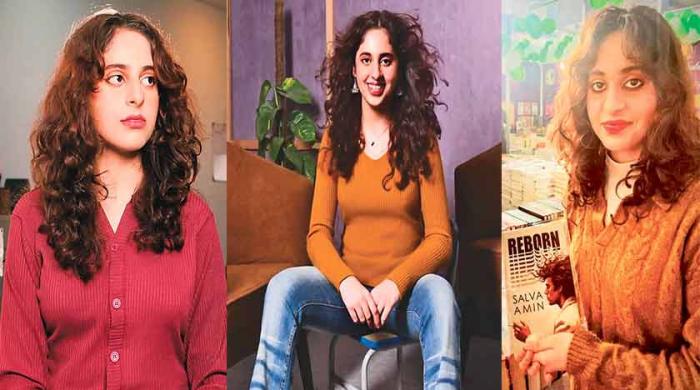
Alishba Khan Barech: A novelist from Balochistan, she won the ‘Young Woman of the Year’ award at the Global Women Changing the World Awards 2025 ceremony in Londonin April. She was recognised for her powerful voice in literature and activism, particularly in reshaping narratives about her home province.
Alishba - the youngest self-published author from Pakistan hailing from Balochistan’s Nushki - was announced as one of the 12 finalists for the award in February and was selected from a pool of 751 nominations across more than 50 countries.

The award not only honours outstanding women making a meaningful impact across diverse fields including literature, education, advocacy, sustainability, leadership and innovation but also aims to amplify women’s voices and contributions worldwide, and to “awaken hearts and recapture dreams” through collective empowerment. Alishba’s recognition on the international stage is a testament to her work revolving around dominant narratives related to her province.
Apart from being the country’s youngest novelist and memoirist - having written her debut novel at the age of 11, memoir at 14 and self-published author at 16 - she is also an activist and has worked as an ambassador of the United Nations Children’s Fund (Unicef) Pakistan for mental health and polio eradication. Alishba, also the first female Pashtun from Balochistan, South Asia, to secure a merit scholarship to the John Locke Summer University.
Dr Maheera Abdul Ghani: Women in science are moving ahead, leaving a trail of achievements and paving a path for other women. Dr Maheera Abdul Ghani won the 2025 ‘Nature Inspiring Women in Science Award’ for mentoring young women in STEM (Science, Technology, Engineering and Mathematics) through her co-founded organisation, WinSci Pakistan.
This global award celebrates women advancing science and those creating pathways for girls and young women to enter STEM.
Dr Maheera Abdul Ghani is the first woman from Pakistan to earn a PhD in Material Science and Metallurgy from the prestigious University of Cambridge, where she now works as a postdoctoral researcher focusing on wafer-scale dielectrics for atomically thin semiconductors. Her dedication to excellence propelled her into one of the most challenging fields of research -2D materials - which are essential to overcoming critical hurdles in modern electronics.

Alongside her research, Maheera is a committed advocate for equity in STEM. She founded WinSci Pakistan, an initiative supporting young girls in Pakistan through STEM courses, mentoring programmes and scholarships. The award recognises WinSci Pakistan’s mission to uplift the next generation of women scientists and innovators. Women like Dr Ghani prove that women can excel in anything they put their minds to, breaking stereotypes as they forge ahead.
SP Ayesha Butt: Pakistani police have many shining stars to make our country proud. One such person is SP Ayesha Butt, who has been conferred with the ‘Excellence in Performance Award 2025’ by the International Association of Women Police (IAWP). SP Ayesha Butt received the award at the 62nd Annual Conference in Glasgow, Scotland, in September. She brought this great honour for her country.
According to a Punjab Police spokesperson, over 300 women police officers from more than 40 countries participated in various award categories. The IAWP President, Julia Jaeger, personally handed over the award to SP Ayesha Butt, who is currently serving as the City Traffic Officer (CTO) in Gujranwala. She was selected for the award in recognition of her outstanding performance in traffic safety policing and community engagement, significantly improving police-public relations.
This award is presented annually to a female police officer from around the world for her extraordinary service to her community.
Rabel Sadozai: A marketing and sustainability professional, she received the ‘Sustainability Leader of the Year Award’ at the Women Leading Change Awards Asia-Pacific 2025’ in Hong Kong for her influential role in promoting sustainable practices in Pakistan’s agricultural sector.

Rabel Sadozai’s recognition underscores her exceptional leadership in transforming Pakistan’s agriculture and fertiliser industry through sustainable innovation, gender inclusion and climate action. Under her guidance, Fatima Fertiliser became the first company in Pakistan to officially partner with the United Nations Development Programme by adopting the Sustainable Development Goals Impact Framework.
Farah Gul Rahuja: She is the Co-Founder of PakGPT, Pakistan’s first localised conversational AI model. Unlike traditional AI systems, PakGPT is engineered to function offline, on low bandwidth and in regional languages - a game-changer for communities with limited internet access. From Balochistan to interior Sindh, PakGPT is helping citizens access vital information, educational resources and even health guidance in their native tongues.
Her initiative earned a Top 10 ranking at the World Youth Development Forum (WYDF) in Suzhou, China. Competing against 200 global projects, she earned the Global Excellence Action Award at the World Youth Development Conference 2025 for co-founding PakGPT,
In 2024, she was honoured as a Global Youth Leader in AI Innovation at the World Internet Conference (WIC) in Wuzhen, China. Selected among 18 leaders from 180+ countries, Farah showcased how AI can uplift marginalised communities.
Hijab Ajmal: Khyber Pakhtunkhwa celebrated a historic achievement as athlete Hijab Ajmal won the province’s first-ever gold medal in sailing at the 35th National Games Karachi 2025. Competing in the Women’s Sailing (Laser Radial) category at Karachi Yacht Club, she demonstrated exceptional skill and determination to secure the top position.
WOMEN WHO WERE AWARDED THE NOBEL PRIZE IN 2025

Maria Corina Machado: She has been awarded the Nobel Prize “for her tireless work promoting democratic rights for the people of Venezuela and for her struggle to achieve a just and peaceful transition from dictatorship to democracy”. In 2002 she cofounded Sumate, an organisation that worked on electoral transparency and monitoring.
She was elected to the Venezuelan National Assembly in 2010, and was the opposition
leader (2011-2014) and by 2014 she was removed from office.
She went on to lead the Vente Venezuela opposition party and then helped to establish Soy Venezuela alliance. By 2023, she was ready to run for president and announced her candidacy for
the 2024 presidential election but was blocked from doing so.
Mary E. Brunkow is a senior programme manager at the Institute for Systems Biology in Seattle. She was awarded the Nobe Prizel in Physiology or Medicine (2025) for her work on the immune system in autoimmune diseases. Brunkow, an American biologist, shared the Nobel Prize with Fred Ramsdell, an American biologist, and Shimon Sakaguchi, Japanese immunologist.
Brunkow received her doctorate in molecular biolgiy from the Princeton University in 1991.

Brunkow, Ramsdell and Sakaguchi work made the groundbreaking discovery of “peripheral immune tolerance,” identifying the FOXP3 gene and regulatory T cells (Tregs) that prvent the body’s immune system from attacking itself. Their discovery has helped in the development of new treatments for autoimmune diseases, cancer and in transplants medicine.
The writer is a senior journalist with focus on gender justice. She can be reached at [email protected]