Print Story
X




A lay Lahori can find no rhyme or reason in the shifting weather patterns
| I |
n the closets of Lahore, the transition from winter woollies to lawn has hit a stalemate. The ironed cotton shirts for the afternoon heat are being swapped for light jackets by midnight, as a sudden, unannounced wind rattles the windows almost every other day.
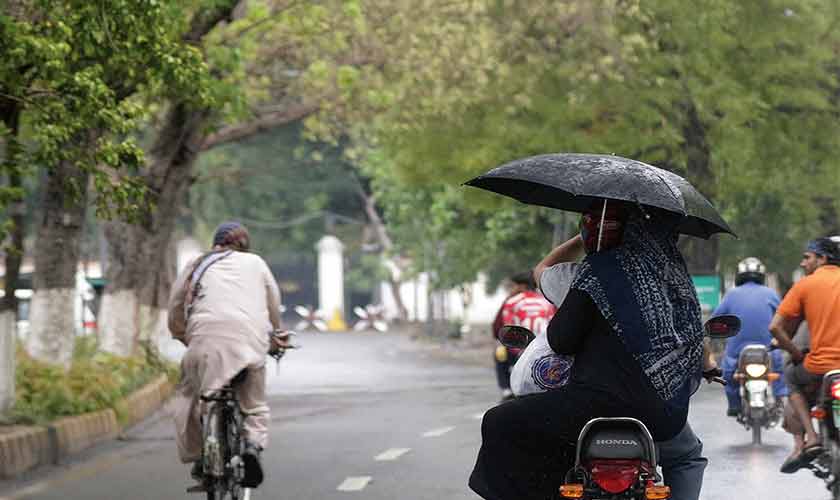
Step outside and the visual cues are just as contradictory. At midday, the sun bites with a June-like ferocity, sending pedestrians scrambling for the shade of the neem trees. By 4 in the afternoon, the sunlight dissipates and the temperature drops ten degrees in an hour.
A lay Lahori can find no rhyme or reason in these weather patterns. This has been an unusual April so far.
While the Pakistan Meteorological Department issues clinical bulletins about “upper-level troughs” and “meridional flow,” the residents of the city have developed their own vernacular for this atmospheric glitch.
In the manicured gardens of suburban Lahore, a gardener who has spent forty years with his hands in the dirt, looks at the sky with a sense of profound betrayal. He isn’t interested in “low-pressure systems.” To him, it is a matter of broken trust. “The bahaar (spring) used to be an unsurprising arrival,” he says, wiping a wet trowel on his dhoti.
“Now, the flowers don’t know whether to bloom or hide. I planted the summer seeds because the calendar said so, but the soil is cold and damp from the midnight rain. I never thought we’d be living through such sorrowful days.”
Inside the bright and airy aisles of a local mart, the confusion is reflected in the inventory. “It’s a logistical nightmare,” laughs Ali, who manages a grocery store in a busy commercial block of DHA.
“Last week, everyone was buying ice creams and cold drinks because of the heat. Then the rain started, and suddenly, they’re asking for ginger and green teas for their sore throats. We are stocking for July and March at the same time. The customers walk in wearing lawn and leave shivering because the wind turned while they were in the biscuit aisle.”
For Mrs Saleem, a permanent fixture of the neighbourhood social circuit in the Model Town area, the weather is a moral barometer. “In my day, you knew when to take the quilts out and when to pack them back up,” she says, gesturing to a heap of laundry that has been moved indoors three times in one day. “Now, it’s all bay-mausami.
“People say it’s [due to] the lack of trees and all these new housing schemes, but I think it’s a warning. Nature is telling us that we’ve pushed it too far. You can’t have AC weather and blanket weather in the same twelve hours without thinking it’s the consequences of something we have done wrong.”
Zain, who recently returned from a three-year stint in London, finds the irony particularly amusing. “I came back to escape the unpredictable English rain and soak up some predictable Pakistani sun,” he says, looking out at a sky that looks remarkably “like a London October” (his words).
“Except that this is weirder. In London, it’s just grey. Here, it’s bipolar. You wake up to a heat-wave, have a tropical monsoon at lunch and a chilly autumn breeze by dinner. It feels like the city I left behind has been replaced by a climate simulation that’s malfunctioning.”
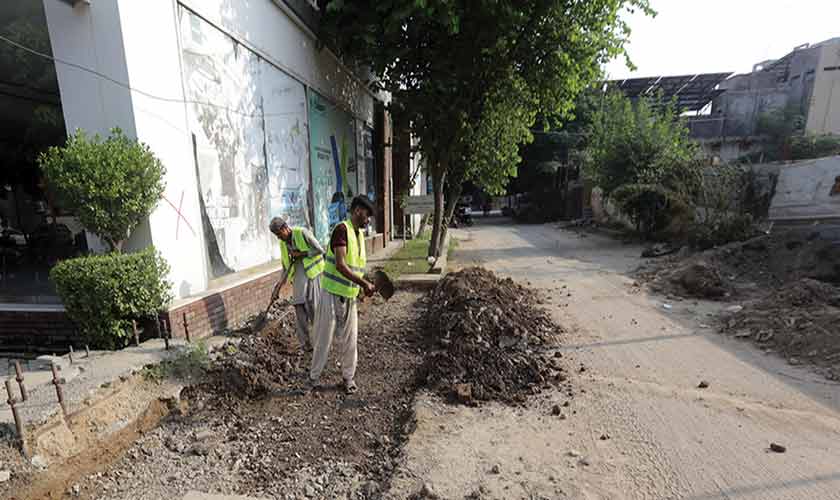
At mid-day, the sun bites with a June-like ferocity, sending pedestrians scrambling for the shade of the neem trees. By 4 in the afternoon, the sunlight dissipates and the temperature drops ten degrees in an hour.
Perhaps no one feels the ‘stalemate’ more than Ahmed, a Yango driver navigating the potholes of a rain-slicked city. “The news says these are ‘western disturbances;’ we call it the ‘AC Tax’,” he jokes grimly, adjusting his jacket. “If I turn the AC on, my passengers complain that it’s too cold; if I turn it off, they say the sun is burning through the glass.
“The radio talks about climate change as if it’s something happening in the future, but I’m seeing it in my fuel tank today. This isn’t just a temporary disturbance; is it?” he asks.
| I |
f you switch off the street-side chatter and tune into the bulletins of the PMD, the poetic confusion of the city is replaced by the rigid vocabulary of atmospheric science. To the experts, the rattling windows and midnight cold are not a mystery; they are a symptom of a planet in transition.
The official headlines for April 2026 have been a relentless stream of warnings. The PMD has characterised this month’s rainfall as ‘abnormal,’ driven by a sequence of particularly aggressive “western disturbances” — weather systems originating from the Mediterranean that have overstayed their welcome in the upper reaches of Pakistan.
While the public looks for local causes, the data points outwards: a fading La Niña, the cooling cycle responsible for these lingering, unseasonable rains; and a burgeoning El Niño, the warming phase that is already threatening a record-breaking summer furnace.
The news cycle has been a dizzying flip-book of extremes. On Monday last, the ticker at the bottom of the screen warned of “urban flooding” and “hailstorms” in Lahore that could devastate the standing wheat crops — a looming food security crisis. By Wednesday, the same news cycle had pivoted to a “heatwave alert,” where temperatures are expected to touch 40°C.
To the news anchors, this is a “climate emergency.” To the National Disaster Management Authority, it’s a logistical hurdle of flash floods and landslides in the north.
In the space between the satellite imagery and the street corner, a deeper realisation is taking root. The news is telling us that the climate has become unrecognisable. The predictable rhythms of the subcontinent are being replaced by a permanent state of atmospheric whiplash, where the only thing we can forecast with certainty is uncertainty itself.
Tomorrow, the sun will rise with a summer glare and the ironed cotton shirts will be reached for once again. However, the light jackets will stay on the hook by the door, just in case.
In a city where the sky has lost its rhythm, we no longer trust the morning to tell us what the night will bring. We are a people living between umbrellas and air conditioners, waiting for a forecast that might never arrive.
Nadia Ahmed Uqaili is a content strategist with over five years of global agency experience. She also writes short fiction on Substack. She can be reached at [email protected]