Print Story
X




It took four arduous years, but Dr Khadija Ghafoor says she was determined to fight for justice
| “H |
ad I known that laws against harassment and blackmail exist, I would have taken legal action much earlier.”
For Dr Khadija Ghafoor, a resident of Sargodha Road, Faisalabad, the realisation came after enduring a traumatic ordeal. It took four years in court.
In August 2022, she filed separate cases with the FIA Cyber Crime Wing and the Women Police Station against ten people, including an industrialist, Sheikh Danish Ali, his daughter Anna Ali Sheikh and his personal secretary Maham Fatima.
According to the FIRs, after she refused a marriage proposal, Sheikh Danish had her abducted at gunpoint from her home and attempted to rape her. She was taken to his residence, where she was subjected to violence, humiliation and coercion.
The accused filmed the incident and the video later went viral on social media. Following strong public outrage and pressure from human rights organisations, the police and the FIA registered cases and arrested Sheikh Danish and other suspects.
Recently, special judge (FIA court) Kaneez Faiza Bhatti gave a verdict in the cybercrime case registered under the PECA Act. The main accused, Sheikh Danish, was sentenced to a total of 14 years and 9 months of rigorous imprisonment and a fine of Rs 12.1 million. Co-accused Maham Fatima was sentenced to nine years and nine months of imprisonment and fined Rs 6.15 million.
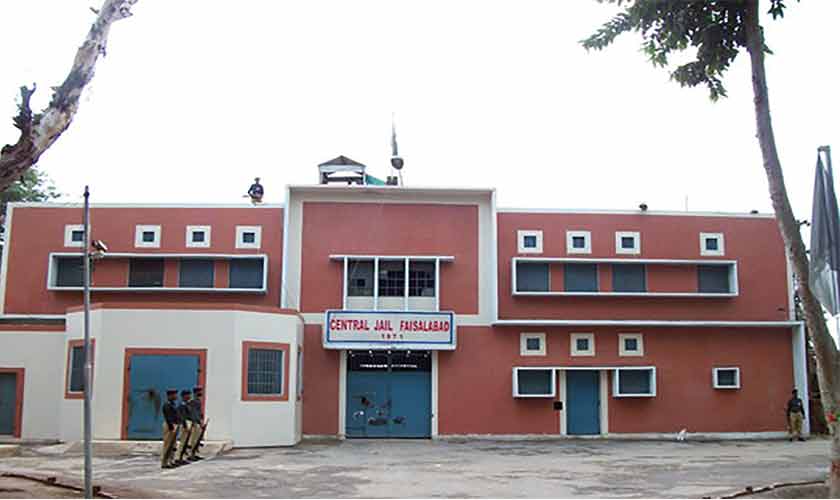
The court also ordered Sheikh Danish to pay Rs 10 million in compensation to Dr Khadija Ghafoor. Following the verdict, the bails of Sheikh Danish and Maham Fatima were revoked and both were taken into custody from the courtroom and sent to Central Jail, Faisalabad.
According to the detailed judgment, Sheikh Danish was convicted and sentenced under multiple sections of the PECA Act, including Section 21 (five years imprisonment and Rs 5 million fine), Section 16 (three years and Rs 5 million fine), Sections 20 and 21 (three years each with Rs 1 million fine), as well as shorter sentences under Sections 4 and 3.
Maham Fatima was also convicted under various PECA provisions, including Section 21 (three years and Rs 3 million fine), Section 16 (2 years and Rs 2 million fine) and additional sentences under Sections 16, 24, 3 and 4.
The court acquitted Anna Sheikh, daughter of Sheikh Danish, and two other accused, giving them the benefit of doubt.
Dr Ghafoor had been a final-year medical student at the time of the incident. She says that she was living with her elderly mother at the time. Her two brothers were residing in the UK and Australia.
“I was friends with Anna Sheikh. I used to visit her house. Her father developed an interest in me and sent a marriage proposal, which I declined.”
After she turned down the proposal, she says, armed men abducted her on August 9, 2022. She was taken to Sheikh Danish’s house, where she was subjected to severe humiliation. Her hair and eyebrows were shaved with a blade and her ordeal was recorded.
“He then took me into a separate room at gunpoint and tried to undress and rape me. He later let me go, saying that he was keeping videos of me,” she said.
Dr Ghafoor has since completed her degree and is now practicing as a dentist. She describes the past four years as “the most difficult period” of her life.
“I advise women not to remain silent in the face of harassment or abuse. They should stand up for their rights so that the negative elements in the society can be brought to justice.”
“During the legal battle, my education suffered greatly. I had to approach the Lahore High Court to be allowed to appear in the final exams. Even my degree was issued on court orders. The accused tried to intimidate me into abandoning my studies and the case,” she says.
She says that she had repeatedly informed Anna Sheikh, that her father was pressuring her over marriage proposal. She says instead of restraining her father, Anna sided with him and tried to prevent her from speaking out.
“During the trial, the accused tried to defame me by making false allegations about my character. They failed to prove them in court. They also tried to destroy my career. People often forget that there is a higher power. By the grace of God, I am now a successful dentist. He has granted me justice in this case as well,” she said.
She says that another case, registered at the Women Police Station, is still pending before the court of Additional Sessions Judge/ Special Judge Anti-Rape Court and FIA Faisalabad, Kaneez Faiza Bhatti. She expresses hope that the accused will receive even stricter punishment in that case, in accordance with the law.
“I advise women not to remain silent in the face of harassment or abuse. They should stand up for their rights so that negative elements in the society are brought to justice,” she says.
Jawahra Ehsan, a clinical psychologist says that, after this incident, several similar cases were reported at Dar-ul-Aman, Faisalabad. She points out that the case took nearly four years, likely causing the survivor to repeatedly relive the trauma.
She also highlights the general lack of awareness in the society, particularly among young girls, about their legal rights and available remedies in such situations. “There is an urgent need to promote awareness, especially in girls’ schools, colleges and universities, with continuous reinforcement,” she says. ”Much gender-based violence goes unreported due to lack of family support.”
She says the issue has a strong social dimension. There is a culture of victim-blaming, shame and silence that discourages survivors from reporting abuse. “Where society is supportive and institutions respond promptly, victims feel empowered to come forward,” she says.
She says promoting body safety education, encouraging open communication within families, teaching assertiveness and boundary-setting to young girls and strengthening awareness about digital safety are vital.
It is important to note that many perpetrators of violence against women evade punishment due to lack of reporting or weak prosecution.
According to a recent report by Sahil, a non-governmental organisation that compiles data on violence against women and children, such cases increased by 34 percent over the past year. In 2025, a total of 7,071 cases were reported, including 1,546 murders, 1,345 abductions, 1,169 cases of physical violence, 877 rapes, 680 suicides, 449 injuries, 316 harassment cases, 284 so-called honour killings and 41 acid attacks.
The report reveals that, in 32 percent of rape cases, the perpetrators were known to the victims. 18 percent of the case involved strangers. In 12 percent of cases, husbands were the alleged perpetrators. In 20 percent of cases, the rapists remained unidentified.”
78 percent of the cases were reported from the Punjab, 14 percent from Sindh, 6 percent from Khyber Pakhtunkhwa and 2 percent from Balochistan, Islamabad, Azad Kashmir and Gilgit-Baltistan. According to Sahil, this indicates that reporting rates in provinces other than the Punjab remain low.
Sonia Javed, executive director of the Association of Women for Awareness and Motivation says that addressing gender-based violence requires a comprehensive and systemic approach.
“Legislation must be strong, courts must be efficient, police must be sensitised, survivors must be protected and the society must be educated. The government needs to shift from reactive responses to a proactive, prevention-focused national strategy, supported by accountability mechanisms and measurable targets,” she says.
She also says that merely announcing policies or forming commissions is not enough. “Sustained efforts, adequate resources and unbiased implementation are essential to effectively curb violence against women,” she says.
The writer has been associated with journalism for the past decade. He tweets @naeemahmad876