Print Story
X




From April 7, markets and shopping malls were ordered to be closed by 8 pm.
| T |
he fuel supply situation in Pakistan is expected to improve following the announcement that key parties to the Gulf conflict have agreed to a ceasefire. Meanwhile, the steps taken by the government for energy conservation are in place to maintain strategic energy reserves.
The federal government had, last week, announced a comprehensive energy management plan amid the looming fuel crisis caused by the continuing Iran-America war. The steps included early market closures, restrictions on commercial activity and a push for remote work and online education.
Under the directives effective from April 7, markets and shopping malls across the Punjab, Khyber Pakhtunkhwa, Balochistan, Islamabad, Gilgit-Baltistan and Azad Jammu and Kashmir were ordered to be closed by 8 pm. Restaurants, bakeries, tandoors and other food outlets were asked to shut down by 10 pm. Wedding halls and marquees were ordered to close by 10 pm. Similar restrictions were imposed on private events organized at homes. Medical stores and pharmacies were exempted from the restrictions.
On April 7, Islamabad markets witnessed announcements by police and from nearby mosques instructing people to close down businesses in line with the government notification to save energy. However, very few markets complied with the announcements, a police official said.
The austerity measures have drawn mixed reactions from the public and the business community, with many questioning their effectiveness. Some traders say early closures are hurting business activity without addressing the underlying supply crisis. Some citizens argue that fuel conservation should not rely on what they describe as “symbolic steps.” They says structural reforms are needed in energy management and transport systems.
“Businesses are already down amid rising inflation. Now the government is telling us to close down shops earlier. How will we earn something and make our bread and butter possible?” Muhammad Hanif, a shopkeeper in Aabpara market, asked.
Many people have welcomed the move as well, saying it will save energy. “Everywhere in the world shops and markets are closed soon after sunset. But in Pakistan we conduct business till late at night,” said Shakeel Akhtar, a resident of Islamabad.
Defence Minister Khawaja Muhammad Asif suggested taking advantage of “365 days of sunshine” by operating markets during the daytime. “Our markets open at 1 pm and close at 1 am. The practice has no parallel in the world,” Asif said on X, adding, “God has given our country 365 days of sunshine. Yet, we turn on the lights in the dark to do business.” He said that if markets set the right business hours then — with Karachi excluded — 3,500 MW of electricity could be saved. “Tough circumstances call for tough decisions,” he added.
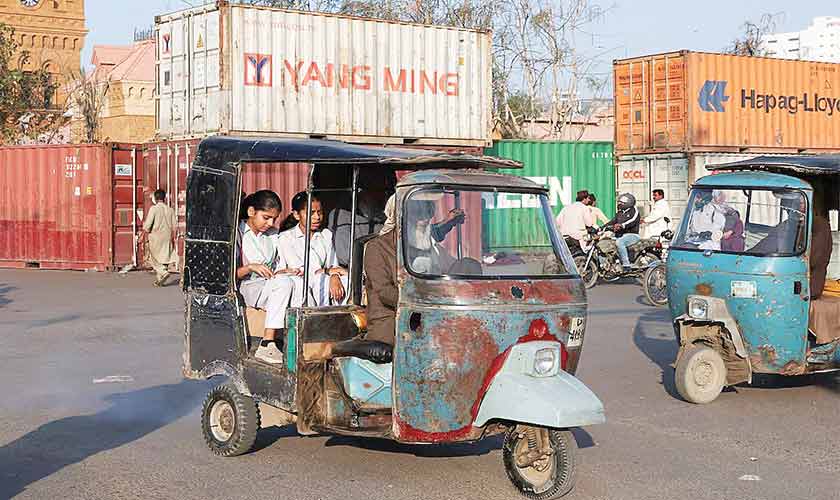
Energy experts say Pakistan has a history of implementing similar conservation measures during crises, including early market closures and reduced working hours, particularly during periods of high oil prices or electricity shortages.
In addition to restricting commercial hours, the government has also announced measures such as fuel subsidies for motorcycles, promotion of work-from-home arrangements and a temporary shift to online education to reduce fuel consumption. Pakistan has also fixed record-high fuel prices.
Energy experts say Pakistan has a history of implementing such conservation measures during crises, including early market closures and reduced working hours, particularly during periods of high oil prices or electricity shortages. While such steps have yielded short-term reductions in consumption, their long-term impact has often been limited due to weak enforcement, public resistance and lack of complementary structural reforms.
Economist Nadeem-ul Haque, says, “Smart lockdown is announced to save energy; stores and restaurants close early. Thousands of people will lose income. But that is okay so long as VIP protocols and bureaucrats’ fleets operate at will. Of course, we are building roads like mad. Won’t they use cars? We are giving subsidies like mad to lobbies like EV importers, farmers etc.”
Another analyst has said, “The problem is not just consumption patterns but also systemic inefficiencies, including transmission losses, poor urban planning and reliance on imported fuels.”
Despite criticism, officials maintain that immediate demand-side management is essential in the current situation, where supply disruptions are largely beyond Pakistan’s control. The government is expected to continue monitoring the situation and may introduce additional measures if the crisis persists, particularly if disruption in the Strait of Hormuz continues to affect global oil flows.
Finance Minister Muhammad Aurangzeb last week warned that the global energy crisis could last for months even after a ceasefire. “Even if the cessation [of hostilities] is achieved, it will take weeks, even months, to normalise because the energy infrastructure has been targeted and continues to be hit. Therefore, we have to plan,” he said.
Aurangzeb had informed the National Assembly that the government was continuously monitoring the situation, including the rise in fuel prices, freight and insurance costs and vessels carrying crude oil. “We need to move towards building strategic reserves, beyond this crisis,” he said.
The author is a staff reporter. He can be reached at [email protected].