Print Story
X




Philosophical approaches to conscience and pragmatism as viewed in history and politics
| L |
ee Kuan Yew, Singapore’s founding father and first prime minister, remarked in a 2007 interview with The New York Times: “We are pragmatists. We don’t stick to any ideology. Does it work? Let’s try it and if it does work, fine; let’s continue it. If it doesn’t work, toss it out, try another one. We are not enamoured with any ideology.”
The term “pragmatism” is rooted in the Greek word pragma, which signifies “action” or “deed.” Hilary Putnam, the author of Pragmatism: An Open Question, notes that the essence of the pragmatic view is the primacy of action—a principle he describes as “perhaps, the central” tenet of the pragmatic tradition.
Horace Standish Thayer, author of Meaning and Action: A Critical History of Pragmatism, explains that pragmatism—a school of philosophical thought that dominated America during the first quarter of the Twentieth Century—is founded on the principle that the utility, efficacy and practicality of ideas, policies and proposals are the standards of their value. He emphasises that action takes precedence over belief and experience over principles, further clarifying that ideas derive their meaning from their results and their truth from their verification. Consequently, he writes that ideas are essentially tools and plans for action. Richard Rorty, author of Objectivity, Relativism and Truth, explains that for pragmatists, beliefs are “tools for handling reality.”
Conscience can be understood as our inner sense of duty. According to this perspective, conscience inclines us to act in alignment with the moral principles or beliefs we already hold, as Alberto Giubilini explains in the Stanford Encyclopedia of Philosophy. The subjective nature of conscience suggests that its motivating force arises entirely from within the individual, rather than from sanctions imposed by an external authority, Giubilini further clarifies.
For Immanuel Kant, “every human being, as a moral being, has a conscience within them originally.” He posits that conscience is one of four “natural predispositions of the mind… for being affected by concepts of duty,” alongside moral feeling, love for one’s neighbour and respect for oneself. Rousseau offers a motivational account of conscience rooted in positive emotion: while reason provides us with the knowledge of virtue, it is conscience—through a sentiment of love for that virtue—that compels us to act morally.
The self-evaluative process of conscience often generates remorse or other negative feelings—such as guilt, shame or fear. Our desire to avoid this form of self-punishment can become a powerful motivating force, inclining us toward moral conduct. In international politics, leaders and government officials often justify an immoral or pragmatic approach by invoking “national interest,” attempting to soothe their hearts and unsuccessfully, lull their consciences to sleep.
Former US secretary of state, James Baker, advised adopting “principled pragmatism,” meaning a willingness to reach compromises that satisfy both sides without sacrificing principles. Sometimes, there is an effort by an individual or an entity to promote and protect ethical conduct in international relations. Sometimes this effort succeeds; at others, it fails.
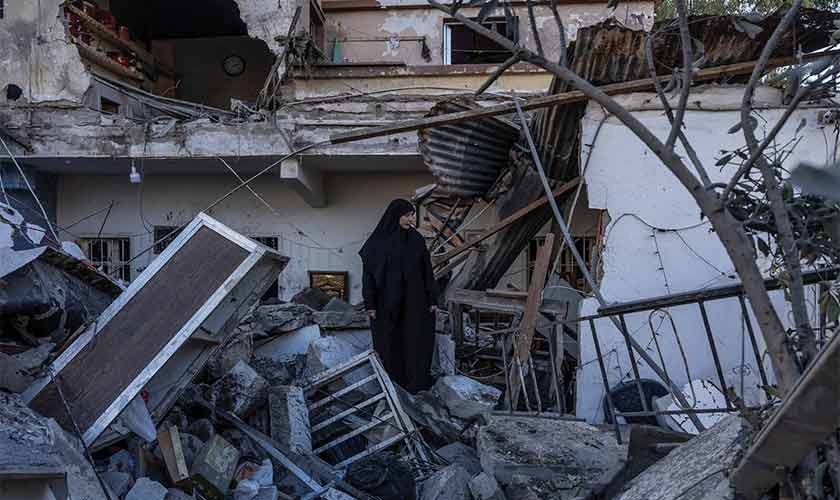
The end of global afflictions such as war, domination and bullying is only possible when international actors base their conduct and actions on the voice of their conscience.
Some actions of Abraham Lincoln and Woodrow Wilson stand as examples of such successful efforts. For instance, Abraham Lincoln was supportive of immigration and saw America as a “free and open” destination for those seeking opportunity. Similarly, Woodrow Wilson’s most significant proposal was that wars should be prevented through a new international organisation.
A recent example of failed efforts can be seen in the latest episode involving the Pentagon and Anthropic. Anthropic told the Pentagon that its ethics would have to be followed for the use of the company’s AI products. The Pentagon reacted angrily and labelled the company a threat to national security. The company has since filed a court case against the Pentagon action.
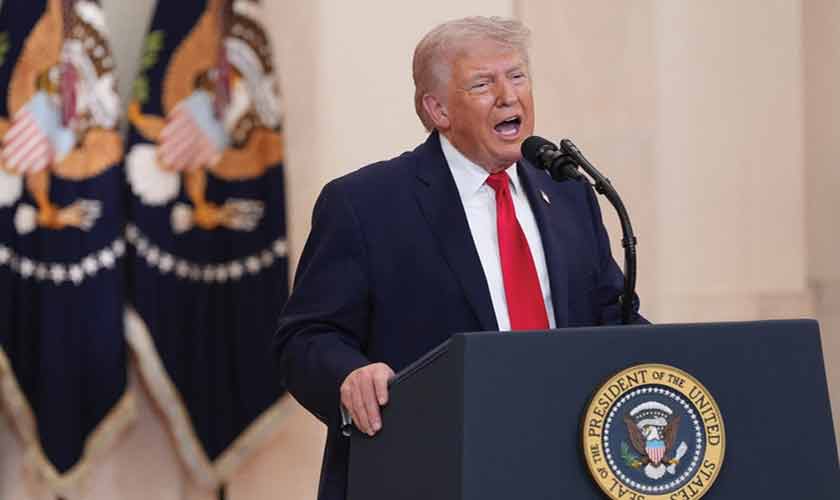
If we take the long view—spanning hundreds of thousands of years—the importance of conscience and ethics in global politics has grown. In the past, we have seen greater cruelty and barbarism in international relations. But this journey of the voice of conscience and ethics does not appear to be one of continuous progress. It has faced temporary setbacks and failures. Currently, we are passing through such a phase as President Trump’s America has dealt heavy blows to the voice of conscience in international politics. President Trump is playing a dangerous role in weakening global institutions, international law and values.
But those who wish to see human conscience and ethical values flourish in international politics need not lose hope.
The end of global afflictions such as war, domination and bullying is only possible when international actors base their conduct and actions on the voice of their conscience. The human community cannot succeed in tackling challenges like hatred, enmity, ignorance, poverty, environmental pollution and climate change until leaders are persuaded, inclined or compelled to listen to the voice of conscience and make their decisions accordingly. Over time, conscientious and ethical attitudes and values have been fostered across different societies, both horizontally and vertically.
However, challenges remain. Addressing these challenges requires more serious efforts at individual and collective levels, as well as at state levels.
Educational systems at societal and national levels need to be reoriented in this direction. Curricula and teaching methods need to be reformed in such a way that conscience and awareness are developed within learners, producing citizens who promote conscience and awareness at national and international levels, rather than destructive pragmatism.
Dr Azam has a PhD in politics and international relations and is currently an assistant professor in the Department of Politics and International Relations at the University of Sargodha.
Dr Muhammad Abrar Zahoor heads the History Department at University of Sargodha. He has worked as a research fellow at Royal Holloway College, University of London.