Print Story
X




What compelled Islamabad’s latest military operation in Afghanistan
| P |
akistani authorities have termed their military expedition in Afghanistan as an ‘open war.’ Major compelling factors that led to this military intervention include a series of terror attacks in Pakistan, failure of peace talks between the two countries, border violations, reports about Afghanistan-India cooperation, but above all, a strategic recalibration that equates the Afghan Taliban and the Tehreek-i-Taliban Pakistan as the same entity.
Afghan Taliban, once labelled as a strategic asset by Pakistani policymakers, remained a source of conflict between Pakistan and the US for almost two decades. The US and Afghan governments led by Hamid Karzai and Ashraf Ghani accused Pakistan of supporting the Afghan Taliban against the Allied Forces. When the Taliban took over the interim government after the exit of Allied Forces from Afghanistan, some Pakistani leaders celebrated this transition as their victory, believing that their policy of developing a strategic asset in the form of Taliban had finally borne fruit—Pakistan would be controlling Kabul through the Taliban regime. However, the calculation proved inaccurate. Soon after, the Afghan Taliban started ignoring Pakistan’s repeated demand to take action against terror networks operating from Afghan soil against Pakistan.
Pakistan repeatedly provided dossiers to the Taliban authorities about the presence of militant sanctuaries on Afghan soil. Every time there were denials from the other side of the border.
This scribe has, on multiple occasions, reminded the Pakistani government that the Tehreek-i-Taliban Pakistan and the Afghan Taliban are closer to being one entity because of their strong ties than otherwise. The TTP constitutes a massive chunk of the Taliban forces. In the end, Pakistani authorities were forced to acknowledge this reality. The ISPR and other state functionaries now admit that there is no difference between the TTP and the Afghan Taliban.
Soon after assuming power, to the surprise of many, the Afghan Taliban had started violating the Pakistan-Afghanistan border through military activities—a message to Pakistan that its ‘strategic asset’ was getting out of control.
Last October, Taliban Foreign Minister Amir Khan Muttaqi visited India, and the two sides pledged cooperation in several sectors. This was a serious blow to Pakistan after decades of support to the Taliban.
In October 2025, minor armed clashes between the two countries turned into a small-scale war after Pakistan carried out air strikes on TTP facilities in Afghanistan. In retaliation, the Taliban attacked several Pakistani posts alongside the border. Türkiye and Qatar immediately stepped in for mediation. Several rounds of talks were held but remained inconclusive. The two sides stuck to their guns.
Meanwhile, terrorist operations by Afghan-backed groups in Pakistan saw a surge that compelled Pakistan to take direct action.
The long-contested Durand Line remains a flashpoint between the two neighbours. Pakistan fenced the border; the Afghan Taliban objected. Taliban’s repeated border violations are perceived as an effort to keep the issue alive as well as help terrorists cross into Pakistan.
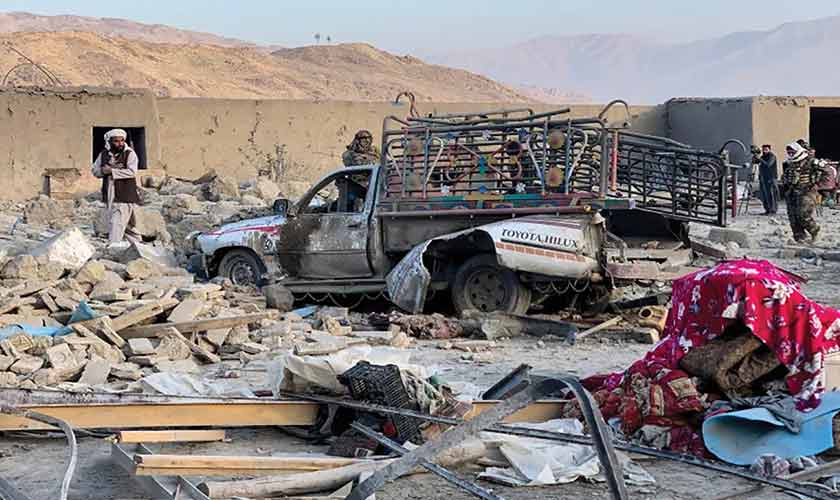
Another issue is the repatriation of illegal Afghan refugees from Pakistan after it found evidence that many refugees were providing logistical support to TTP terrorists. Pakistan had earlier hosted millions of Afghan refugees for decades. In 2023, the government launched a crackdown on undocumented Afghan migrants, citing security concerns. It continues to date. Pakistan has repatriated over 200,000 Afghans to their homeland. Kabul has criticised the move, calling it a forced deportation.
These factors increased pressure on already strained ties between the two countries.
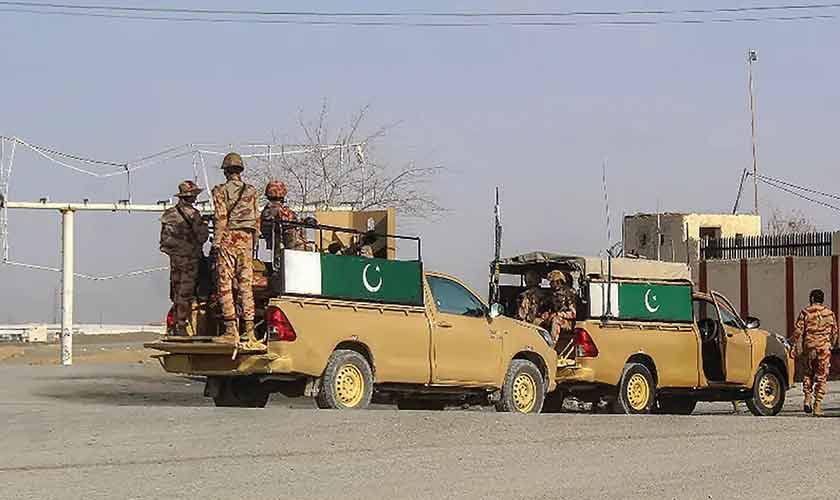
Then, following deadly terrorist attacks in Islamabad and other parts of the country, Pakistani authorities decided to target TTP leaders’ hideouts and training camps in Afghanistan. For this, airstrikes were conducted. Kabul responded with retaliatory attacks. Defence Minister Khawaja Asif and ISPR DG Gen Ahmad Sharif then declared the clashes an ‘open war.’ Pakistan has named its campaign against Afghan Taliban Operation Ghazab lil-Haq.
Despite clear claims of having attacked only TTP camps, Islamabad sees Kabul as having opted for a war as part of a bigger plot. It senses that India and some other international players are behind Kabul’s policy of sponsoring terrorism against Pakistan.
Security sources say that Pakistan has sensed a broader conspiracy behind the Taliban’s anti-Pakistan policies. They say that Pakistan carried out multiple attacks inside Afghanistan and told Kabul that only terror networks were being targeted in the air raids. However, the Taliban responded in a different way. This indicated that they wanted to engage Pakistan in a war.
Pakistan also foresees a possible threat from India in the coming days. It is alert on all borders, particularly in the wake of the US-Israel attacks on Iran.
In this connection, the government has convened an all-parties conference in Islamabad to discuss the US-Israel-Iran War and Operation Ghazab lil-Haq.
Rana Sanaullah, the prime minister’s special assistant, told Geo TV, “Pakistan has achieved its goals and eliminated several terrorist camps in Afghanistan. Now, we are consolidating our gains.”
He said Pakistan demanded that the Taliban regime provide verifiable evidence about their action against terrorists, but they did not. “We have achieved our goals.”
Meanwhile TTP terrorists kept targeting Pakistani security forces and civilians. The Taliban have not stopped their attacks in the border areas despite suffering heavy losses. Kabul has also adopted a strategy of propaganda. Türkiye has again sought to mediate. However, it seems that the war will go on.
The writer is a journalist, teacher of journalism, writer and analyst. He tweets at @BukhariMubasher.