Print Story
X

| I |
n 2024, three Grades 7 and 8 students of a trust school for the marginalised said they wanted greater exposure to machine learning courses. They were generously placed by the Information Technology University in a summer programme. The students had already obtained online course certifications using shared mobile phones at home. Now they wanted more—more than the curriculum, school or the classroom offered. They were asking for enabling of their future. Since then, I have met with many young students and teachers across Pakistan who seek access to information technology and artificial intelligence opportunities not as a privilege but as a routine entitlement. They want to learn to be optimally productive in an age of AI acceleration. The National AI Policy 2025, if well-integrated and implemented in sector policies and plans, offers this possibility for all Pakistani citizens.
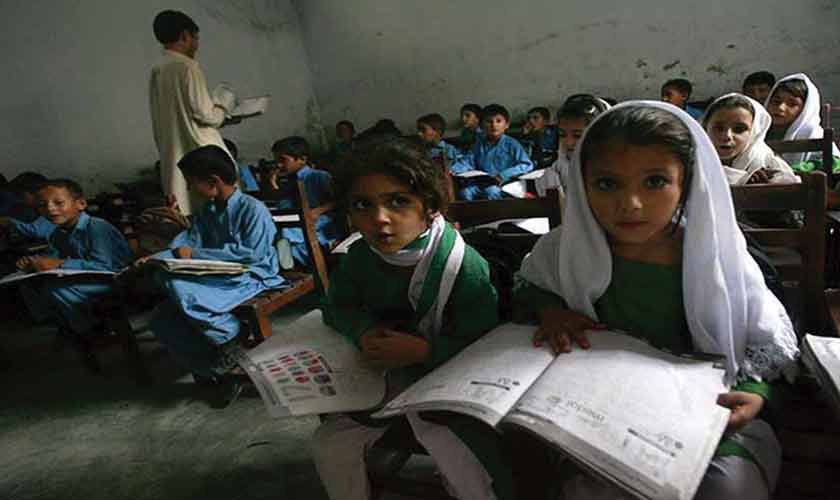
Pakistan is at a crossroads of perils and possibilities, with a staggering population growth rate of 2.55 percent per year, 23-26 million out of school children and low learning levels among those in school. Even for those in a classroom learning poverty is alarming: millions of students reach fifth grade without the ability to read a simple story or perform basic two-digit division. Recognising this challenge, five Foundational Learning Policies were finalised in 2024-25. In a country where the education budget hovers at 1-2.2 percent of the GDP, traditional solutions like building thousands of new brick-and-mortar schools is an impossible goal. We need disruptive solutions at scale with out of the box innovative financing options, positive incentives to support solid outcomes and impact.
A hope is emerging from the digital horizon. Artificial intelligence should not, and must not, be viewed as an elitist sci-fi replacement for humans, but as an intelligent assistant, a round-the-clock, multilingual tutor that has read every book ever written and can explain a concept as many times as a child/ student or a teacher needs to hear it.
The great leveler
The true potential of AI in Pakistan lies in its ability to act as a social leveler. Historically, high-quality education has been a luxury reserved for the elite in Lahore or Islamabad. AI-powered platforms like Taleemabad, Sabaq UNESCO, Beaj, Rehan Schools, One Million Teachers, Deafreach, STEP, Sightsavers, TCF and Idara-i-Taleem-o-Aagahi working with the Ministry of Federal Education and Professional Training, provincial Education Departments, Education Foundations and the private sector are rapidly changing the narrative through inclusivity and universalism to reach the last mile.
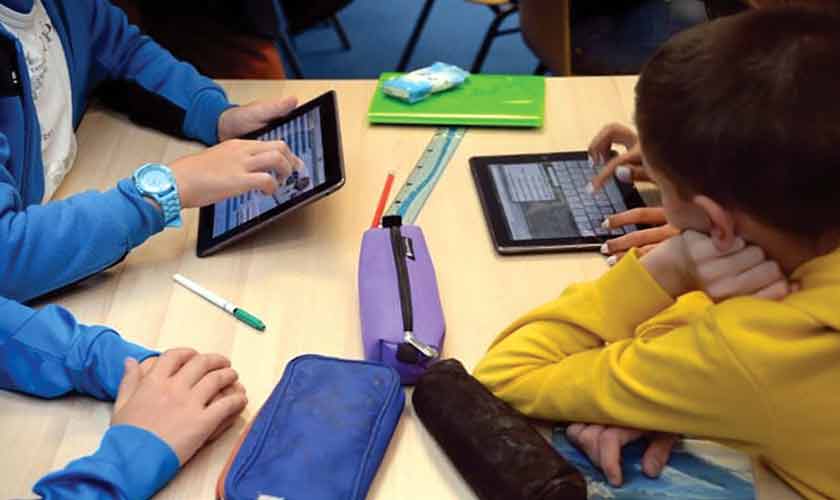
Through a basic smartphone, a girl, a teacher and parents in a remote village of Balochistan, Sindh, Khyber Pakhtunkhwa, Punjab, Gilgit-Baltistan and Azad Jammu and Kashmir can now access the same high-quality language, science or math instruction as her counterparts in an expensive private school with personalised learning.
In an overcrowded government classroom with 40-60 students and multi-grade schools, individual attention is impossible. AI learning systems, with well-supported teachers, can adapt to a child’s pace, identifying struggling spots and providing customised exercises until they master the topic. For the millions left outside, AI-powered “micro-schools,” “speed schools,” and community learning hubs offer a scalable way to bring the school to the child.
We must address the fear among teachers. AI is not here to replace the human heart of education; it is here to empower it.
Mandatory competency
We must stop treating AI as a niche subject for computer scientists. It should be seen as a foundational competency. AI literacy is the language of the 21st Century. Pakistan’s National AI Policy 2025 correctly identifies this, aiming to train one million professionals and introduce AI concepts into early STEM education, schools and universities.
In the modern workplace, AI is an economic engine. It is already being used by Pakistani freelancers, in e-commerce to compete globally. Our graduates need the ability to direct and work alongside AI, in the global job market. Native language AI assistants (Meta AI in Urdu/ Sindhi/ other languages) allow non-English speakers to compete in global freelance markets, democratising skills.
Reality vs ambition
The road to a Digital Pakistan is fraught with structural hurdles. The most pressing of those is the digital divide. While 96 percent of households have mobile access, only 7 percent own a computing device like a laptop. Internet penetration remains uneven, particularly in rural areas. For AI to be a game-changer, it must be “offline-first.” Initiatives that use WhatsApp bots or offline digital libraries are crucial, as they bypass the need for high-speed internet and expensive hardware. Furthermore, we must address the fear among teachers. AI is not here to replace the human heart of education; it is here to empower it. By automating administrative burdens like grading and attendance, AI frees teachers to focus on what they do best: mentoring and emotional support.
Ethical guardrails
As we embrace this technology, we must not be blind to its risks. Our education system must teach students/ teachers not just how to use AI, but also how to question it. Protecting student data privacy and safety is another non-negotiable; without strict enforcement of laws like the Personal Data Protection Bill, our children’s learning journeys could be exploited.
Global and national resolve
The first two months of the year began with a bang for global and national AI transformative narratives at the World Economic Forum 2026 in Davos, the India AI Impact Summit in New Delhi and the Indus AI Week in Islamabad. They resonated with the key message that AI is no longer a corporate elective but a core pillar of a reskilling and upskilling revolution for human-centric capabilities and creativity. AI is not a tool but a co-worker transitioning to agentic workflows. We need to ensure more indigenous foundation models of AI to reflect local cultural and linguistic contexts. Countries in the Global South are moving towards a democratic AI diffusion strategy embedding AI literacy and tools into the real economy, including health and education, research and investment to address infrastructure and scale bottlenecks to unleash economic growth.
Equity bridge in rising inequalities
AI is a double-edged sword that could either polarise or equalise Pakistani society. The risk of rising inequality (44 percent population below $4.2 a day income) and the digital divide especially benefiting urban technology islands, leaving rural areas without power and devices even further behind, is real. Women, less likely to own smartphones or having access to shared devices in households, may become further excluded from AI driven learning and livelihood options. With the opportunity of universal tutoring, AI can provide a world-class teacher in every pocket, helping the 25 million out-of-school children leapfrog traditional infrastructure deficits.
National AI Policy 2025 envisions a $2.7 billion AI market by 2030 anchored in inclusive growth. UNDP cautions that without proactive governance, technological progress can mask widening internal disparities. The choice before us is clear.
Encouragingly, action is under way. AI is being introduced in school curricula and professional development in Islamabad, the Punjab and progressively in Khyber Pakhtunkhwa, Sindh and Balochistan as a core and cross disciplinary competency.
The urgency to integrate AI into general education stems from several practical realities:
Critical evaluation: Without formal guidance, learners often uncritically accept AI-generated content, which may contain misinformation or hallucinations.
Career protection: AI-literate workers are in higher demand and often earn higher salaries because they can effectively combine machine efficiency with human judgment.
Unique human skills: Education must now prioritise skills that AI cannot replicate—such as empathy, ethical reasoning and complex problem-solving—while teaching students how to collaborate with AI to augment these capacities.
Policy momentum must translate into equitable implementation. Pakistan needs a coordinated AI learning and earning alliance across government, private sector, NGOs and financers. The government must enable ease of operations for financers supporting the AI -Tech frontier for K-12 and skills. Country partnerships will help localise a range of AI tools for learning, professional development and assessments in Urdu and regional languages, invest in solar-powered and offline-ready infrastructure, integrate AI literacy and support teachers through AI co-pilot models that enhance, not replace, human instruction in the most underserved communities.
We cannot afford to be a spectator in the AI revolution. With millions of children out of school and not learning, we do not have the luxury to wait and see. AI is not a magic wand, but if governed responsibly and deployed inclusively at speed, it can become a digital lifeline ensuring that every Pakistani child has a fair chance to learn, compete and thrive.
The writer is the CEO of Idara-i-Taleem-o-Aagahi and a Pakistan Learning Festival founder. She can be reached at [email protected].