Print Story
X




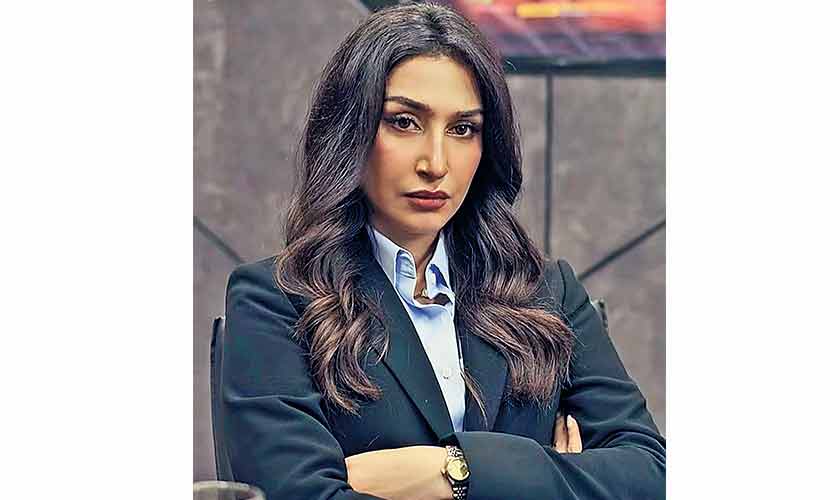
Actor Hira Tareen talks about why she lauched HIRU, a conscious beauty label as well as her reasons for playing complicated female characters across television dramas and films.
| K |
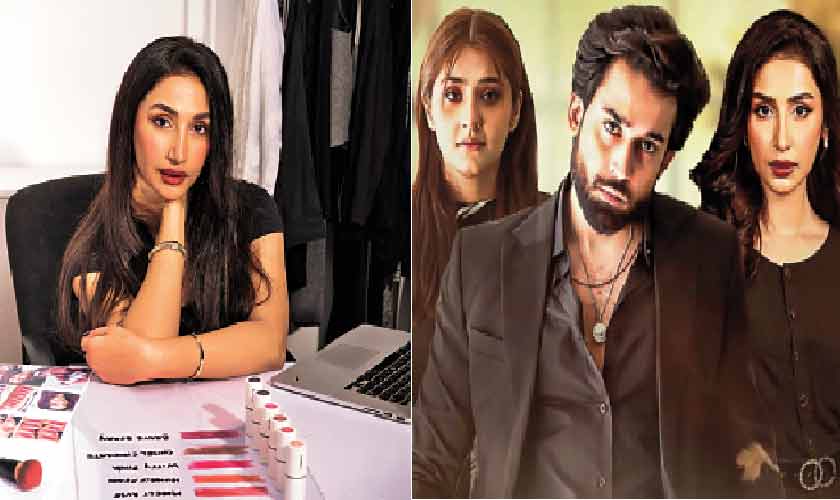
nown for her range and composure, Hira Tareen has carved out a visible space in Pakistan’s entertainment industry. Over the years, she has taken on roles that lean into moral ambiguity rather than melodrama. From the independent professional navigating marital discord in Khaas to the single mother in Piya Naam Ka Diya, her choices have favoured internal conflict over theatrics. In Fasiq, she portrayed a woman living with a physical disability, a performance that relied more on restraint and emotional dexterity than on sheer histrionics. From Ishq Murshid to Goonj, her characters are often controlled, observant and quietly complex.
Her film work includes the award-winning Seedlings and more recently, the Fawad Khan-Mahira Khan starrer, Neelofar. While cinema has not been her primary space as an actor, she has maintained a presence in it even though Pakistani cinema remains unsteady in terms of film releases and box office figures.
Beyond acting, she has launched HIRU, a beauty brand built around what she describes as a “clean, conscious and caring” philosophy. In this interview, she talks about her approach to varied roles and what it means for women empowerment, typecasting, the difference between cinema and television and what prompted her to launch a beauty brand.
Instep: In Goonj, you portray Zartash, a corporate executive who prioritises institutional stability over an employee’s harassment claim. How did you approach a character many viewers might see as complicit?
Hira Tareen (HT): I don’t see her as a villain. I saw her as someone operating within a system that rewards silence. When women enter spaces not built for them, survival often becomes the priority. Zartash learned to survive by adapting and unfortunately that adaptation often manifests as silence. As an actor, I am less interested in defending her and more in understanding her. The discomfort is the point.
Instep: Do you think characters like Zartash reflect how women in power can sometimes become gate-keepers of the very patriarchy they once fought to survive?
HT: Absolutely. If we only portray powerful women as morally infallible, it becomes dishonest. Gatekeeping isn’t exclusive to men, sometimes the fight to reach a certain position isolates you. That isolation can harden you. I think audiences are mature enough to sit with that contradiction.
Instep: Given the gravity of the subject matter in Goonj, what was the most difficult scene to film?
HT: The quieter ones. Scenes where nothing is said but everything shifts. Holding that restraint is more chall-enging than overt confrontation. Those heavy pauses stay with you because they feel so haunting and close to real life.
Instep: From Ishq Murshid to Khaas and now Goonj, you are often cast as the polished antago-nist or the sophisticated outsider. Is that typecasting?
HT: Casting begins with perception. I’m aware of that. But I have also played characters that sit far from that image. For instance, my role as Nadra in Mere Ban Jao belonged to a world entirely different from the kind of roles people associate me with. I’ve also portrayed a woman navigating life on crutches, where the entire performance was anchored in physicality. At this stage in my career, I am drawn to roles that are layered and human. If the script offers depth, the rest follows.
Instep: You played a woman with disability in Fasiq. How did you prepare for it?
HT: With research and humility. Representation carries responsibility. It cannot be superficial.
Instep: How do you avoid repetition when scripts feel similar?
HT: I focus on backstory. Even if circumstances resemble previous roles, people respond differently in similar situations. Small behavioural choices can change everything. I focus on layering small choices into my performance to make each role feel distinct. Ultimately, those subtle details distinguish one role from another.
Instep: How has your training shaped your process?
HT: My time at KD Studio in Dallas gave me structure, it taught me the power of silence. Dialogue isn’t always necessary to carry a moment. Working in Pakistan gave me speed and resilience. You learn to stay emotionally grounded even when production condi-tions are demanding. That discipline has shaped my method more than anything else.
Instep: What kind of stories are missing from Pakistani television right now?
HT: Stories where women are allowed to exist without being moral lessons. I would like to see women who are flawed, ambitious and contradictory, not get punished for it. Whether I am acting in these stories or eventually producing them, that is the kind of work that truly excites me.
Instep: What would bring you back to cinema in a larger way?
HT: I’ve actually engaged with cinema in meaningful ways. Seedlings was a particularly special project for me and I recently made a brief but significant appearance in Neelofar. So, I don’t feel disconnected from the medium. It would take a strong script. I believe Pakistani cinema is still evolving. I am not looking for scale for the sake of it. I am looking for sub-stance.
Instep: You have spoken about wanting to explore short films. Why does this particular medium appeal to you?
HT: Short films allow focus. You can tell a tight, contained story without stretching it across months of broad-cast. That economy appeals to me.
Instep: Would you direct or produce your own scripts?
HT: Possibly. Directing doesn’t feel like a leap for me, it feels like something that has always existed in the back-ground of my career. Even before I began acting, I was already thinking in terms of visuals, composition and pacing. While the ambition is there, it would only happen with the right project. Directing demands full comm-itment.
Instep: You recently described the industry as a “green flag that can get greener.” What needs to change?
HT: Female characters need room to fail without narrative punishment. Growth does not always come through suffering or graceful redemption. Our stories need to reflect that reality.
Instep: What led you to launch HIRU?
HT: I felt there was a gap between international brands which felt like outdated stock and local options didn’t always feel intentional or personal. I wanted formulas that felt light, adaptable and practical. Makeup should enhance, not conceal. It’s beauty that lives with you, not on top of you.
Instep: In an industry often accused of gatekeeping beauty secrets, how does HIRU aim to shift the conversation around beauty?
HT: Transparency. I want women to be empowered and to make informed decisions about what they apply to their skin. We speak clearly about ingredients and sourcing. With HIRU, I want women to understand their products without feeling confused or patronised. Consumers deserve that clarity.
Instep: How did your profe-ssional styling experience shape the products?
HT: Years in the makeup chair teach you what lasts and what fails. I focused on comfort, blendability and shades that suit skin tones. Trends fade. Function remains. That philosophy of “adaptive beauty” is something I am carrying forward into every product we develop.
Instep: You’ve mentioned that HIRU was shaped by your “online family.” How much did your YouTube community influence the brand?
HT: A great deal. My community shaped this brand more than anything else. I tested products during development and listened carefully. The textures and shades were refined through that feedback. My community helped me narrow down the final colour palette and refine our packaging decisions. My focus has never been on simply doing more, it’s about choosing better. I prefer thoughtful launches over frequent ones.