Print Story
X




The same message underpins the literary works of Ghani Khan and Ahmad Faraz who chose two different languages as their medium
| S |
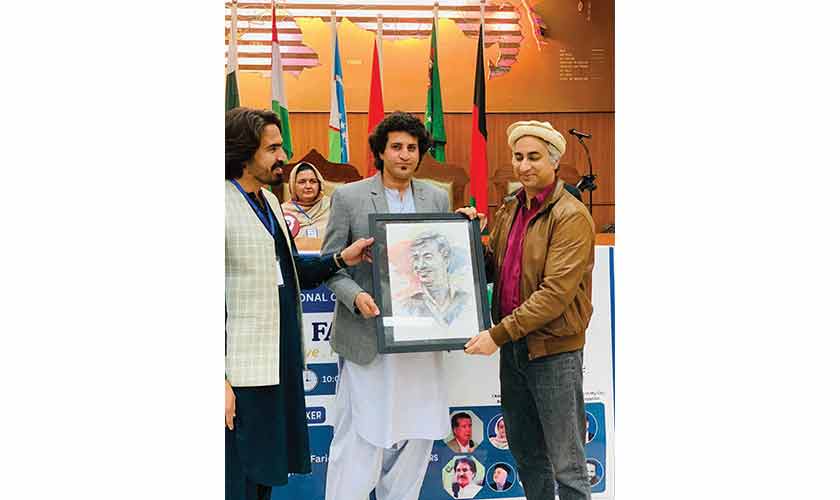
cholars, students and the literati gathered at Area Study Centre of the University of Peshawar on Friday to pay homage to the contributions of poets Ghani Khan and Ahmad Faraz to the canon of Pashto and Urdu literature.
The event was jointly arranged by Area Study Centre and the administration of Government Degree College, Naguman, to commemorate the two poets and the spirit of humanism that they both imbibed in their words.
The speakers said Ghani Khan, dubbed the “architect of awakened human soul” and Ahmad Faraz, called “the architect of love” at the event - had their own ways of expressing their thoughts, politics and philosophy through poetry and prose.
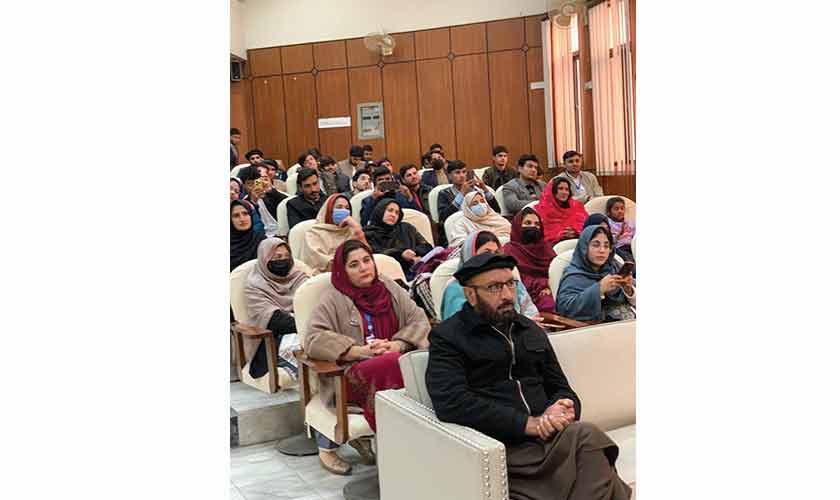
A large number of teachers, students, poets and writers attended the ceremony. Poet Rahmat Shah Sail and Dr Qibala Ayaz, former dean of arts at the Peshawar University presided over the event.
The speakers highlighted various aspects of the two poets’ work, describing the ways they had enriched Pashto and Urdu with their advocacy of humanism, peace, romance and resistance that remains relevant in today’s polarised world.
Ghani Khan (c. 1914-1996) was a Pashto poet, philosopher, artist (painter and sculptor) and occasional politician.
Born in Hashtnagar (Utmanzai, Charsadda), he was the eldest son of the legendary Bacha Khan. He is widely regarded as one of the greatest modern Pashto poets. His poetry explores deep themes of life, love, nature, humanism and Pashtun identity, with a philosophical and mystical bent. Key collections of his work include Da Panjray Chaghaar (written during imprisonment), Panoos, and Palwashay. He also authored The Pathans in English prose.
Ahmad Faraz (1931-2008), born Syed Ahmad Shah in Nowshera (ancestral roots in Kohat), was one of the most celebrated Urdu poets of Pakistan. He gained fame for his romantic, lyrical ghazals, blended with sharp social commentary and resistance.
Both these poets emerged from the Pashtun cultural heartland of Khyber Pakhtunkhwa, contributed immensely to regional literature and left timeless legacies—Ghani Khan as the profound philosopher-poet of Pashto soul and nature and Faraz as the charismatic, rebellious romantic of Urdu expression. They are frequently honoured together for their humanism and poetic depth.
Dr Qibla Ayaz, in his opening remarks, said both the legendary writers were strong advocates of lasting peace, social justice and humanism. He said both crafted images through their creative imagination that influenced future generations.
Rahmat Shah Sail, who presided over the first day of the conference, said that resistance was rooted in the work of both these poets. He said the romantic threads of their measured compositions went beyond conventional restrictions and societal taboos.
Dr Taimur Ali, a special guest from LUMS, mesmerised the audience by performing live music accompanied by beautiful numbers of Ahmad Faraz and earned great applause .
Colour, cast and creed did not matter to both these poets, said Dr Taimur, adding that they both were the sort of men who believed and practiced what they preached to others through their lyrical compositions.
Professor Noor-ul Amin Yousafzai said being contemporary bards - Ghani and Faraz were symbols of revolutionary sentiments, societal change and pluralism. They wanted to instill in their people the spirit of humanism and peace.
Professor Ahmad Ali Ajiz, Dr Mir Alam Yousafzai, Shahid, Principal of GDC, Naguman and Dr Uzma also addressed the gathering.
During the concluding event scholars and academics called on faculty members and students to explore the multiple facets of Ghani Khan and Ahmad Faraz’s work.
Politician Afrasiab Khattak said Ghani Khan represented the true spirit of the age. He said Ahmad Faraz had enlightened the souls of many through his creative strength and imagination.
The writer is a Peshawar-based journalist. He mostly writes on art, culture, education, youth and minorities. His X handle: @Shinwar-9