Print Story
X




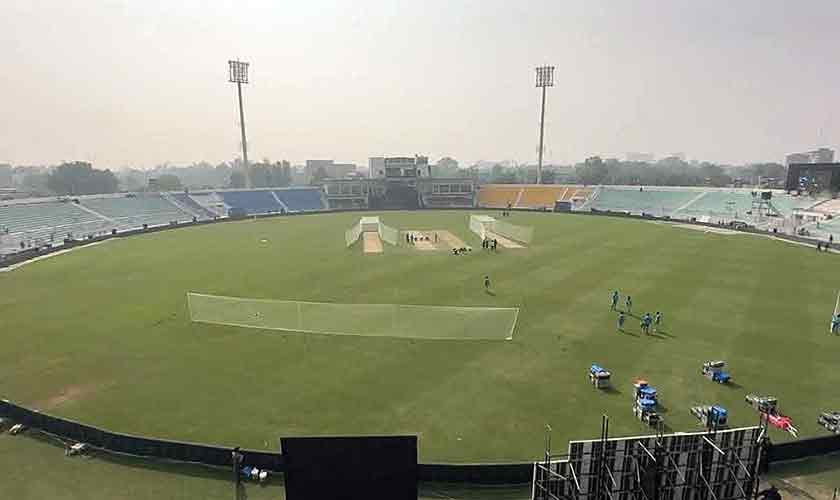
Iqbal stadium resounded with applause as Pakistan won against South Africa. However, some of the spectators said that the event was badly managed.
| P |
akistan has clinched the One Day International series against South Africa at Iqbal Stadium, Faisalabad, marking not only the return of international cricket to the venue after 17 years but also Shaheen Shah Afridi’s first ODI series victory as captain.
The stadium was packed to capacity for all three matches, as Faisalabad’s passionate cricket fans celebrated the long-awaited comeback of international cricket in grand style.
In a heart-warming display of sportsmanship, local fans cheered not only for Pakistan but also for the South African team, creating a lively and welcoming atmosphere. South African players, too, expressed their delight at playing before an enthusiastic crowd.
Despite high expectations, Pakistan’s star batsman Babar Azam struggled to produce standout performances across the series. However, chants of “Babar! Babar!” echoed through the stands during every match. His early dismissal left fans visibly disappointed, with many leaving the stadium before the game had concluded.
While the series was a sporting success, it revealed glaring shortcomings in event management. Security lockdowns around the stadium and Serena Hotel caused significant disruption to city traffic for several days, frustrating residents and commuters.
Parking arrangements were made at Dhobi Ghaat Ground, Agriculture University Ground and the Irrigation Department’s Head Office Ground, from where shuttle buses were supposed to transport fans to the stadium. However, many spectators reported that no bus service was available and they were forced to walk over two kilometres to reach the venue.
Among those affected was Muhammad Arshad, a person with motor disability. He told The News on Sunday that he walked on crutches for over two kilometers to watch the match.
“People like us are not even being taken into account when preparations are made for such events. We love cricket as much as any other Pakistani. There should have been proper facilities to help the differently-abled people reach the stadium and enjoy the match,” said Arshad. He demanded that the PCB chairman Mohsin Naqvi ensure accessibility for people with disabilities at future matches.
Nasir Afridi, a fan from Samanabad, too, was dissatisfied. He said, “We were told the buses would take us to and from the stadium, but we saw none. I paid Rs 3,000 for a VIP stand ticket, but when I arrived there, someone else was sitting in my seat. The police told us to sit on the stairs instead.”
Some fans complained about “exorbitant” food prices inside the stadium. “To make matters worse, the vendors were selling water, soft drinks, chips and snacks at three to four times their standard prices,” Afridi said.
The ODI series was undoubtedly a milestone for Faisalabad, rekindling the city’s cricketing spirit after nearly two decades. But, the poor arrangements, lack of accessibility and unchecked profiteering inside the stadium raised concerns about management transparency and preparedness
President of the Sports Journalists Association Faisalabad, Jamil Siraj, strongly criticised the “substandard facilities and mismanagement” at Iqbal Stadium. He said that the venue did not meet the International Cricket Council standards for hosting international matches.
Speaking to TNS, Siraj said, “Iqbal Stadium cannot be classified as an international-standard venue. According to ICC regulations, venues hosting international matches must have at least a four-star hotel for players and a minimum of sixteen hospitality boxes for sponsors.”
He said the administration had hastily constructed five hospitality boxes on the roof of the players’ dressing rooms. One of the media boxes was converted into a commentary box. This caused serious inconvenience for journalists. “The media persons were squeezed into a single room with wooden benches that are uncomfortable for long-hours seating. There were no proper charging facilities for laptops and the internet speed was extremely slow,” he complained.
Siraj said that proper arrangements were not made for players’ and officials’ press conferences either. “It was embarrassing to see the same space used for dining and press conferences. This is far from international standards.”
He also pointed out crowding in the stands, claiming that, while the official seating capacity of the stadium was 17,000, the actual attendance exceeded 23,000.
“Police officials, traffic wardens and stadium staff allowed hundreds of friends and relatives to enter without tickets,” he alleged.
Siraj said that unless the management of Iqbal Stadium is transferred to the Pakistan Cricket Board, there will be no improvement in facilities for players, fans or the media.
Geo News reporter Hammad Ahmed, who covered the Pakistan-South Africa ODI series, also called for greater transparency in the stadium’s affairs.
“The return of international cricket to Faisalabad is welcome. However, the government must investigate how millions of rupees generated over the past 17 years have been spent and why there have been no upgrades,” he said.
He added that during last year’s Champions Cup, PCB’s executive board had recommended upgrading the stadium before hosting international matches.
He claimed that, in the past, the Iqbal Stadium Management Committee had resisted handing over control to the PCB.
“Iqbal Stadium is a public asset. It is incomprehensible why a semi-private committee composed of government officials controls it. Its management should be handed over to the PCB to ensure financial transparency and resolve the long-standing issues faced by cricket fans and citizens,” Siraj said.
Faisalabad Deputy Commissioner and Chairman of the Iqbal Stadium Management Committee, Nadeem Nasir, told TNS that had had no objection if the Pakistan Cricket Board wished to take control of Iqbal Stadium for an upgrade. However, he emphasised that the PCB must coordinate with the provincial government, as the stadium is the property of the Punjab government.
“I suggested to the PCB that they should demolish the Playland adjacent to the stadium and construct a five-star hotel for players and match officials,” he said. “This will help resolve the traffic and security-related inconveniences faced by citizens during international matches.”
Nasir said that, in the past, the PCB used to share the match revenue with the local administration. However, he said, that practice has been discontinued. He said, the district administration had to incur loans to prepare the stadium for the recent Pakistan-South Africa ODI series in accordance with PCB’s recommendations.
“If the PCB utilises the revenue generated from the recent ODI series to upgrade the stadium, it can easily be transformed into an international-standard venue,” he said. “We have 20-30 shops within the stadium premises. The revenue is quite limited.”
He said that the rent charged for the shops, previously between Rs 5,000 and Rs 6,000 per month, had been recently raised through open auction to Rs 50,000-60,000 per month. “The lease agreements for larger commercial properties such as Playland, Sindbad and Khayyam Qila Restaurant cannot be changed. Those are subject to a 10 per cent annual rent increment,” he added.
The deputy commissioner said, “Since 2023, I have taken special interest in improving Iqbal Stadium. It is because of these efforts that international cricket has returned to Faisalabad after 17 long years.”
He also said that he had taken notice of the complaints regarding mismanagement and overcharging for food during the recent ODI series and promised action against those responsible.
The return of international cricket to Faisalabad after nearly two decades was both a moment of pride and a reminder of persisting institutional shortcomings. While fans filled the stands with passion and energy, the experience exposed the urgent need for modern infrastructure, inclusive facilities and transparent management practices at Iqbal Stadium.
The writer has been associated with journalism for the past decade. He tweets @naeemahmad876