Print Story
X


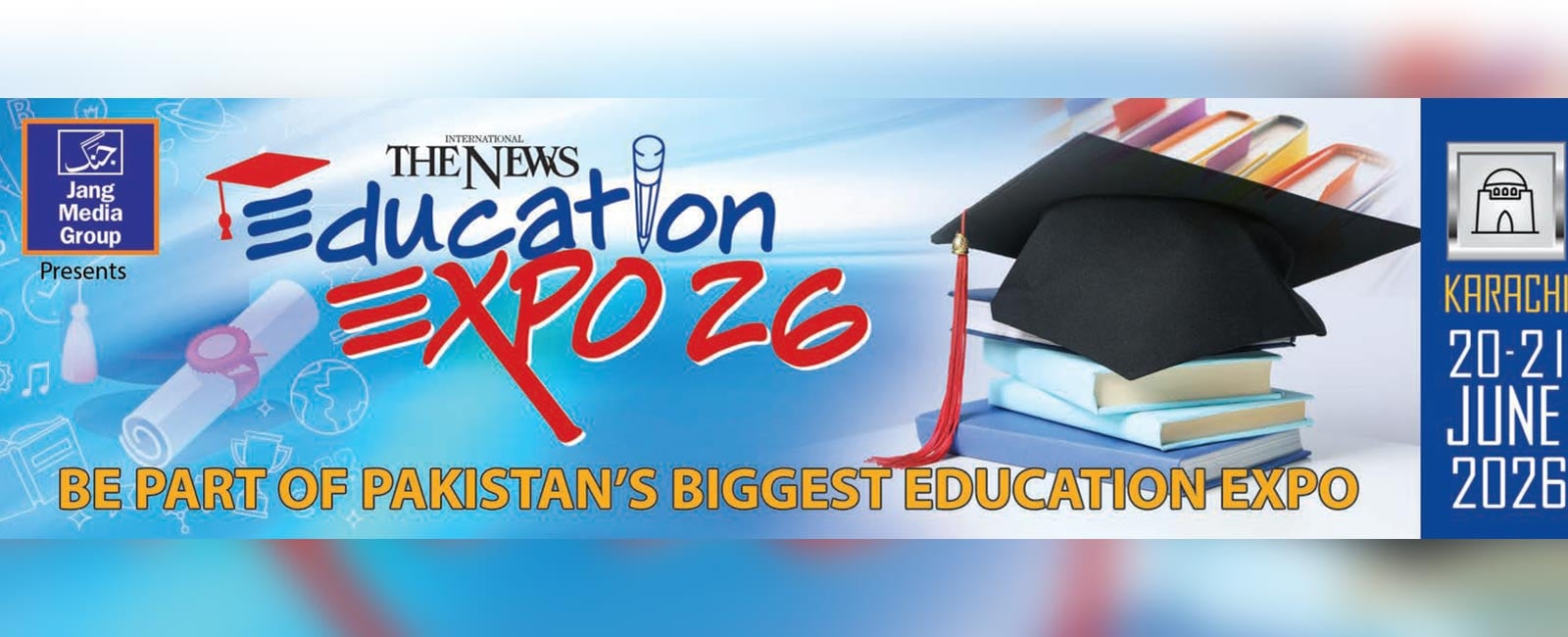
As Pakistan's young population prepares to usher in an era of a competitive and technology-driven world, access to reliable educational guidance has never been more important. Against this backdrop, the Jang Education Expo 2026 returns with a renewed commitment to helping students explore academic pathways, discover career opportunities and interact with leading educational institutions from Pakistan and abroad.
The Expo will once again travel across six major cities, beginning in Karachi and continuing to Islamabad, Faisalabad, Multan, Lahore and Peshawar.
Now in its 20th year, the Expo arrives at a time when higher education worldwide is undergoing unprecedented transformation. Artificial Intelligence, automation, digital learning and changing labour market demands are redefining the skills students need to succeed. Universities are adapting their programmes, employers are prioritising new competencies, and students are seeking guidance on how to prepare for careers that may not even exist today.
The Jang Education Expo bridges this information gap by bringing students face-to-face with representatives of universities, colleges, professional institutes, international education providers and industry experts. Participants will have access to information on admissions, scholarships, financial assistance, emerging academic disciplines, study-abroad opportunities and career prospects across a wide range of fields.
The Expo has demonstrated remarkable resilience over the years. During the Covid-19 pandemic, it successfully transitioned to a virtual format for four consecutive years, ensuring that students continued to receive educational guidance despite unprecedented disruptions.
"Our Virtual Education Expos drew 60,000 to 75,000 visitors annually. Through these, we empowered students with online certifications and global educational access," says Sarmad Ali, Senator and Managing Director, Jang Group, while commenting on the importance of The Education Expo. "This platform has continuously helped bridge the gap between institutions and prospective students, even in the most challenging times."
Pakistan's higher education challenge
The importance of such initiatives becomes clear when viewed against Pakistan's educational realities. Despite having one of the world's largest youth populations, the country's gross higher education enrollment ratio remains below 11 percent, lower than the global average. At the same time, the rapid rise of AI and digital technologies is transforming industries at an unprecedented pace.
Pakistan's universities have made some progress in recent years. More Pakistani institutions are appearing in international rankings, female enrollment has surpassed male enrollment in many universities, and interest in emerging fields such as Artificial Intelligence, Data Science, Cybersecurity and FinTech continues to grow.
However, concerns remain regarding graduate employability, research quality, faculty development and the alignment of academic programmes with market needs.
The need for greater investment
Despite repeated commitments by successive governments, Pakistan's investment in education remains among the lowest in the region. Talking about the issue, Senator Sarmad Ali says, "I have remained an ardent supporter of increasing funding for education. Even in my recent budget speech in the parliament, I have pointed out the low funding on education and health. I find these allocations discouraging. A nation cannot be truly strong if its people remain underserved in education, health, and employment.”
"We must align with global benchmarks or risk losing our competitiveness as a nation. Investing in human as well as technological development should not be an afterthought—it must be the foundation."
Ali believes that quality education extends beyond classrooms and infrastructure.
"In order to ensure quality of education and research activities at higher education level, we need good public expenditure on education in all disciplines. I will also encourage using the latest academic AI tools in universities with responsibility and effectively" he maintains, adding, "all these factors combined will ultimately positively impact economic development in the country."
Ali argues that investing in student support services—counselling, extracurricular, mental health, and faculty retention—yields far-reaching returns. “It’s not just about building infrastructure; it’s about building minds.”
A growing global outlook
The aspiration to seek educational opportunities abroad continues to grow among Pakistani students. According to data from the Bureau of Emigration and Overseas Employment, more than 250,000 Pakistanis left the country for overseas employment during the first four months of 2026 alone, with an average of 75,000 to 85,000 workers departing every month. Saudi Arabia remained the leading destination, attracting over 136,000 Pakistani workers, followed by the United Arab Emirates, Qatar and Bahrain.
This trend reflects both the increasing global ambitions of Pakistani youth and concerns regarding domestic opportunities. The Jang Education Expo addresses this need by bringing together local and international institutions under one roof, allowing students to compare options, understand admission requirements and explore scholarship opportunities.
More than an education fair
According to Sarmad Ali, the Expo's role extends far beyond university admissions.
"The Expo is not just a student fair—it's a nation-building platform. It serves as a great platform to empower students to showcase their projects, connect with industry professionals and access resources leading to their career advancement."
This year's Expo is expected to attract participation from more than 80 educational institutions, universities, colleges and study-abroad consultants across the country.
Way forward
As Pakistan enters an era defined by AI, digital transformation and evolving global labour markets, the importance of informed educational choices has never been greater. The News Education Expo 2026 serves as a bridge between aspiration and opportunity. With extensive coverage across print, television, radio and digital platforms, the Expo continues to fulfil its mission of empowering students. For thousands of young Pakistanis, it may well be the first step towards a brighter future.
Expo 2026 schedule:
• Karachi: June 20-21 (Expo Centre)
• Islamabad: June 30 (Serena Hotel)
• Faisalabad: July 09 (Royalton Hotel)
• Lahore: July 18-19 (Expo Centre)
• Multan: July 22 (Multan Marquee)
• Peshawar: September 10 (Sheraz Arena)



