



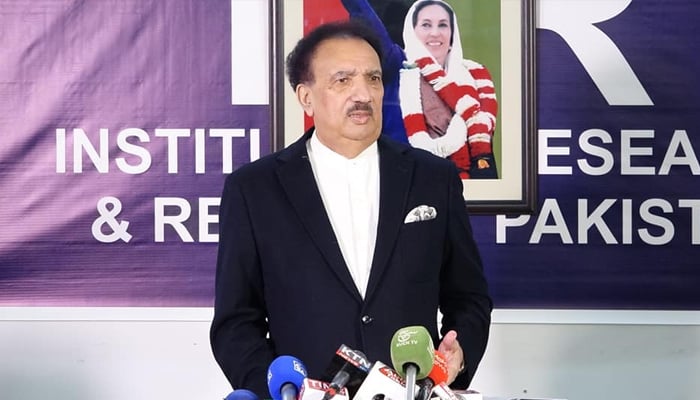
Public life in Pakistan is best remembered for contributions that strengthen institutions and national resilience. On the fourth anniversary of Senator A. Rehman Malik’s passing, a reflection on his career provides an opportunity to recognise service and dedication. It is a moment to understand the efforts of individuals who sought to contribute to the country’s security and governance and to draw lessons from their commitment to public duty. Late Rehman Malik’s journey began in education and professional discipline. As a student of the University of Karachi, he distinguished himself academically and laid the foundation for public service. In recognition of his contributions to national security and peace, the University of Karachi later conferred on him an honorary PhD degree, acknowledging his role in efforts towards stability and institutional strengthening. Intellectual seriousness informed his approach to administration and institutional responsibility. Knowledge and competence remain essential pillars of progress.
His career in law enforcement and investigation reinforced a commitment to procedure and institutional rigour. Rising through the Federal Investigation Agency (FIA), he earned recognition for his understanding of complex investigations and administrative processes.
Advancement in such organisations requires patience and credibility. Malik’s professional trajectory reflected sustained performance and dedication to public security. Service in this domain often demands difficult decisions and a steadfast commitment to the rule of law. During this period, he was awarded the Sitara-e-Shujaat for gallantry and distinguished conduct in the line of duty. Such recognition highlights the principle that public service may require courage and responsibility in challenging circumstances.
The award acknowledged professional dedication and the willingness to uphold institutional obligations.
Rehman Malik later entered politics, viewing it as an extension of public service. As Federal Interior Minister, he assumed responsibility for one of the state’s most demanding portfolios during a period of significant internal security concerns.
Governance in such circumstances requires administrative coordination and institutional capacity. Historical assessment indicates that several structural initiatives undertaken during that time contributed to strengthening security frameworks and improving inter-agency collaboration. National security is a collective responsibility, and institutional development remains essential for long-term stability. His commitment to Pakistan’s international credibility was most visible during his tenure as chairman of the Senate Standing Committee on Interior. He worked tirelessly on addressing the 27-point action plan of the Financial Action Task Force, articulating Pakistan’s compliance efforts with conviction and advocating its case on global forums. Through committee reports, policy papers, a detailed booklet, and correspondence with international dignitaries, including the United Nations and FATF leadership, he contributed to institutional strengthening and international engagement.
His efforts reflected an unwavering commitment to protecting Pakistan’s image and supporting reforms that enabled successful progress in meeting international standards. On issues affecting the country’s reputation, he believed constructive engagement and reform were the path to credibility and national progress.
On regional matters, he consistently advocated for dialogue and peaceful resolution of disputes, particularly concerning Kashmir. His position reflected a belief that durable peace in South Asia requires recognition of historical realities and constructive engagement. Diplomacy and understanding remain vital tools for addressing complex challenges. National interests are best served through efforts that prioritise stability and cooperation. On matters of security and extremism, Malik adopted an unequivocal stance against militancy. He argued that threats to public safety must be confronted with clarity and determination. His emphasis on institutional responses reflected a commitment to protecting citizens and strengthening state capacity. Public security is a shared responsibility, and effective governance requires coordinated action and institutional resilience. Politically, he was associated with the Pakistan Peoples Party, a platform historically committed to democratic continuity and social inclusion. His alignment with these principles shaped his understanding of governance and public responsibility. Democratic systems thrive on participation and accountability, and his career reflected engagement with these ideals. The legacy of Shaheed Mohtarma Benazir Bhutto remains an important part of Pakistan’s political history, emphasising reconciliation and institutional stability.
Beyond office and policy, Senator A Rehman Malik contributed to public discourse through writing and analysis. His books — Modi’s War Doctrine: Indian Anti-Pakistan Syndrome, ISIS, Rising Monster Worldwide, Bleeding Kashmir, Coronavirus: Man-Made or Biowarfare, and Top 100 Investigations addressed themes of security and geopolitical analysis. These works sought to document experiences and contribute to a broader understanding of international and domestic challenges. Intellectual engagement complements public service by enriching discourse and policy perspectives.
His legacy continues through the efforts of his family. His sons, Ali Rehman Malik and Umar Rehman Malik, have chosen to honour their father’s memory through humanitarian initiatives. They prioritise social welfare and community service. Through the Rehman Malik Foundation, they support programmes aimed at humanitarian assistance and societal development. They have also strengthened the Institute of Research and Reforms International, continuing its mission of policy research and institutional improvement. Such efforts reflect the enduring value of service in diverse forms and the belief that societal progress is achieved through collective contribution. Public life is measured by dedication to national development and institutional growth. Malik’s career encompassed law enforcement, ministerial responsibility, parliamentary participation, and intellectual contribution. These dimensions illustrate the multifaceted nature of service in a complex society. Governance requires perseverance and a commitment to improvement. Leaders are evaluated within the context of their responsibilities, and historical understanding benefits from balanced reflection.
On this anniversary, remembrance should emphasise unity and patriotism. Pakistan’s progress depends on collective endeavour and respect for institutional processes.
The contributions of individuals who dedicate themselves to public duty form part of the broader narrative of national development. Recognising service honours effort and reinforces the principle that institutions strengthen through commitment and responsibility. To reflect on his life is to acknowledge that governance and public service are continuous journeys. Institutions evolve through the dedication of individuals who seek to improve them. Malik’s career demonstrates the importance of resilience, institutional responsibility, and national commitment. His work within parliamentary oversight of international compliance and his advocacy for Pakistan’s image at global forums illustrate efforts to strengthen institutional credibility. Such reflection encourages understanding and constructive engagement. Public discourse benefits from respect and shared purpose. The legacy of service is measured by contributions to society and the strengthening of institutions. Senator A Rehman Malik’s life represents an effort to engage with these principles and to serve the nation in challenging circumstances.
The writer is from Parachinar, associated with Pakistan Peoples Party, and a former aide and spokesperson to Senator A Rehman Malik. Reachable on X@RiazToori