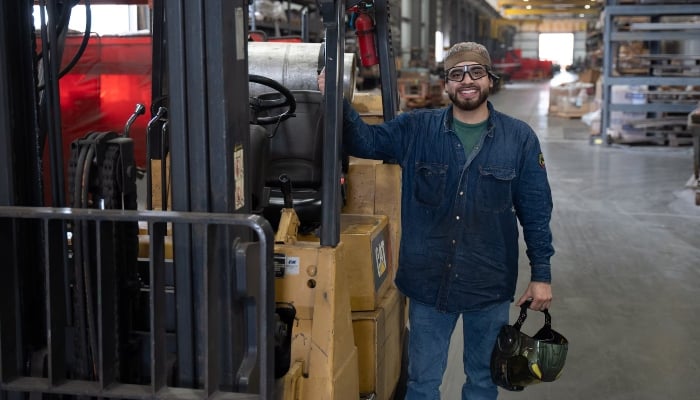
While many young workers wonder whether AI will reshape — or, worse, erase — their jobs, 26-year-old Joseph Parades says he isn’t too worried. As a professional welder, he works five days a week and has earned enough — up to $100,000 a year — to purchase a home and look after his family.
Paredes skipped university and went straight to work due to a lack of a scholarship and not being able to afford the high costs. Though he previously worked as an electrician — a demanding role that required him to travel six days a week between Katy, Texas, where he lives, and Louisiana — he took up welding in the hopes of spending more time with his family. "I've always had a good work ethic and I learned pretty fast,” he says. “I gave it a try, and I was pretty good at it."
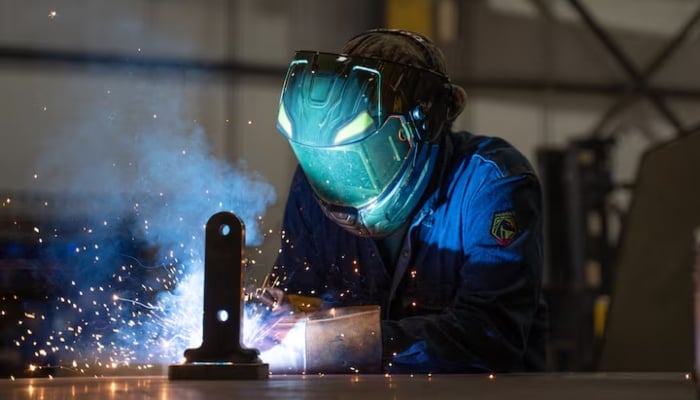
Unlike many of his peers who fear AI encroaching on their careers, Paredes says welding feels more insulated. "We have robots here, (but) we still need a physical person, a human, to make those robots work,” he says.
Paredes's confidence reflects a growing sentiment. A majority of Americans are deeply concerned about the prospect that AI could put large swathes of people out of work, according to a 2025 Reuters/Ipsos poll. Those fears appear to be driving some young people to consider skilled trades that can’t be as easily automated, such as plumbing and landscaping.
Indeed, a 2023 study by Pearson, a UK-based education firm that tracks workforce trends, estimates that AI could perform as much as 46% of tasks in some white-collar jobs by 2032, compared to just 27% for the most-affected blue-collar roles.
Some jobs are more future-proof than others. Skilled trade jobs like welding and plumbing aren’t as easy for generative AI to automate and can provide economic security for those seeking an alternative to the corporate world.
Work-life balance is a decisive career goal. If a job is taking over your life, it’s reasonable to look for something that fits your personal needs. "Make sure that you do what's going to make you happy,” Shafransky says, noting that “You don't want to have that mindset going to work every day, just dreading being there.”
Don’t overlook nontraditional paths. Going to university isn’t the only path to economic mobility. For people like Parades who want to start earning sooner — and, crucially, avoid student debts — trade work can offer long-term stability.