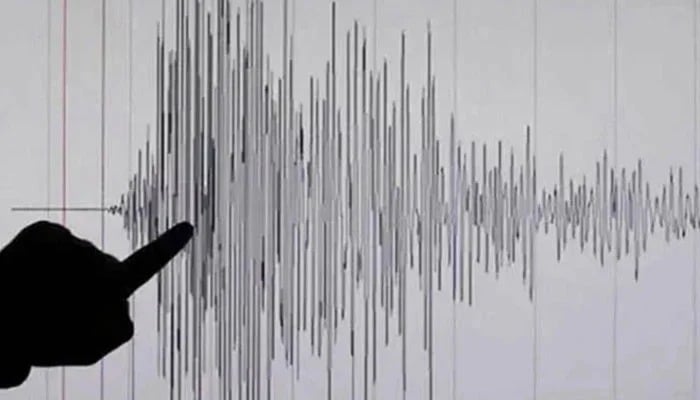
Light tremors of 3.4-magnitude were felt in Loralai and nearby areas early Saturday, briefly sending residents outside as a precaution.
According to the National Seismic Monitoring Centre (NSMC), the shaking was short-lived, ending almost as soon as people realised what was happening.
The seismic office later measured the quake at magnitude 3.4, with its epicentre about 23 kilometres to the south-east of the town.
No damage was reported in those first hours.
Earlier in the week, on Tuesday, Sibi had its own brief shake.
That one came in at magnitude 3.1, shallow and over in seconds, somewhere about 60 kilometres north-east of the district.
Nothing serious came of it, but officials say they’re still keeping an eye on both spots just to be safe.
Parts of the province faced minor tremors earlier this month, also.
The NSMC, which is managed by the Pakistan Meteorological Department (PMD), reported that quake tremors shook Ziarat and surrounding areas, registering a magnitude of 5.0.
The November 8 quake’s epicentre was pinpointed 67 kilometres northeast of Quetta. However, no reports of damage or casualties emerged.
The last major earthquake to hit Ziarat struck in 2008, claiming more than 200 lives and leaving around 500 injured.
Entire villages were flattened, and hundreds of homes and government buildings were reduced to rubble, forcing over 15,000 people from their homes.
The worst-hit areas were the small settlements of Ziarat, where roughly 170 people died, most of them women and children.
While other districts, including Pishin, Bolan, Chaman, and Quetta, also reported casualties and damage, according to reports.
The country has long been vulnerable to natural disasters, from the 2005 northern quake that killed 73,000 to the devastating 1935 earthquake in Quetta, which claimed around 30,000 lives.
Balochistan province largely sits along a seismic hotspot, where the Indian plate pushes against the Eurasian plate.
Balochistan, the country’s largest province, remains sparsely populated, making rescue and relief operations especially difficult.
A 6.3-magnitude earthquake struck near the northern Afghan city of Mazar-e-Sharif early on November 3, killing at least seven people and injuring about 150 others, just months after a quake and strong aftershocks killed more than 2,200 people at the end of August.