ISLAMABAD: Pakistan will open its liquefied petroleum gas (LPG) market to competition, introduce transparent auctions and increase imports through state-run companies to curb profiteering and prevent winter shortages, Petroleum Minister Ali Pervaiz Malik said Tuesday, as consumers face prices of over Rs700 per kilogram amid supply disruptions.
Malik said the government would make every effort to maintain adequate gas supplies during December and January, when demand peaks, including importing expensive liquefied natural gas (LNG) if necessary to meet household requirements.
“Seeing people’s distress and also knowing that from December and January, your winter will be at its peak, and at that time […] even if the most expensive fuel has to be purchased for the piped network, we will bring it in and try to meet demand through LNG.”
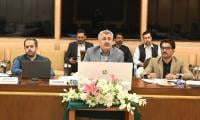
Addressing a news conference in Islamabad alongside Information Minister Attaullah Tarar, Malik said Pakistan consumed around 2.4 million tonnes of LPG annually, with more than half met through imports. The closure of Iranian border crossings had created shortages, allowing some market players to sell LPG at Rs700-800 per kilogram, well above the international-market-based price of around Rs450.
On petroleum prices, Malik said consumers could expect further relief following a recent reduction, adding that international oil markets had closed lower. “Even better news will come before us,” he said, referring to the next revision of petrol and diesel prices.
Malik said Pakistan State Oil (PSO), Sui Southern Gas Company and Pakistan LNG Limited had been directed to import LPG, while local supplies would be auctioned transparently in five-tonne and 10-tonne lots. Companies would also be required to publish their LPG prices on their websites to ensure transparency and competition.
The Oil and Gas Regulatory Authority (Ogra) would also make LPG licensing transparent and audit storage facilities to prevent hoarding, Malik said.
He said additional revenue generated through the auction mechanism would be channelled into a price stabilisation fund and a vulnerable consumers’ protection fund.
The minister said the Competition Commission had also been asked to take measures against cartelisation and anti-competitive practices, while OGRA would strengthen its licensing and audit mechanisms to prevent hoarding and profiteering. The National Explosives Department would oversee safety standards, including the quality and testing of LPG cylinders and transportation bowsers.