ISLAMABAD: The circular debt in Pakistan’s power sector increased by Rs34 billion to Rs1,675 billion by June 30, 2026, while liabilities in the gas sector surged by Rs344 billion to Rs3,631 billion during the same period, according to details presented by the Power and Petroleum Divisions in the National Assembly on Monday.
During the question hour, the Power Division informed the National Assembly that the power sector’s circular debt stood at Rs1,641 billion at the end of the financial year 2024-25 and rose to Rs1,675 billion by June 30, 2026.
The division attributed the increase primarily to non-payment for electricity supplied from the national grid to K-Electric. It informed the House that a case concerning the recovery of outstanding dues from K-Electric was pending before a court.
The Power Division also stated that the government had introduced a hybrid take-and-pay model by terminating take-and-pay agreements with independent power producers (IPPs) as part of its efforts to reduce circular debt.
The increase in circular debt is mainly attributed to non-payment by K-Electric for electricity supplied to it from national grid. It is also worth mentioning that non-payment by K-Electric is due to court case regarding tariff which is sub judice and decision is anticipated soon.
In order to reduce circular debt, the government has taken multiple measures including termination of costly IPPs, shifting from take-or-pay model to the hybrid take-and-pay model, waiver of late payment interest, reduction in late payment interest rate for future contracts, and capping rupee devaluation and annual inflation for tariff indexation.
Further, as a part of circular debt management plan, low-cost CD financing facility of Rs1,225 billion was secured from commercial banks at KIBOR minus 0.9pc, for a period of six years. This facility was utilised to repay previously contracted high-cost loan of Rs.659 billion carrying markup up to KIBOR plus 1pc and to settle overdue payables of IPPs subject to waiver of late payment interest (LPI).
The Petroleum Division informed the National Assembly that circular debt in the gas sector increased from Rs3,288 billion on June 30, 2025, to Rs3,631 billion on June 30, 2026, marking an increase of Rs344 billion over the year.
The total included Rs1,783 billion in late payment surcharges, according to the division. The Petroleum Division also provided details of the country’s recoverable oil and gas reserves and production. It stated that Pakistan had total recoverable gas reserves of 68,803 billion cubic feet (BCF), of which 48,140 BCF was being produced.
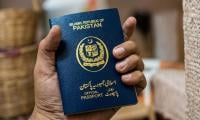
The country’s total recoverable oil reserves stood at 1,378 million barrels, while crude oil production amounted to 1,102 million barrels, the division informed the House. Also, Ministry of Foreign Affairs informed the National Assembly that a total of 21,647 Pakistanis are imprisoned in 71 countries on charges involving various offences, including drug trafficking, currency and human smuggling and forgery.
In a written reply to a question of Tahira Aurangzeb, the Ministry of Foreign Affairs told the National Assembly that 8,569 Pakistani prisoners had been sentenced, while trials of more than 13,000 others were under way in foreign courts.
According to the ministry, Saudi Arabia accounts for the highest number of Pakistani prisoners, with 10,745 nationals behind bars, followed by the United Arab Emirates, where 5,297 Pakistanis are imprisoned.
The report stated that 599 Pakistanis are jailed in Qatar, 578 in Oman, 218 in Bahrain, 190 in Turkiye, 169 in Iran and 141 in the United States. The number of Pakistani prisoners in the United Kingdom stands at 23, while 27 are incarcerated in Australia.
Among other countries, 738 Pakistanis are imprisoned in India, 625 in China, 516 in Greece, 444 in Malaysia, 353 in Italy, 91 each in Kyrgyzstan and Afghanistan, 81 in Iraq and 35 in Thailand.