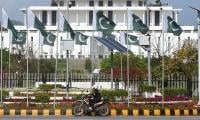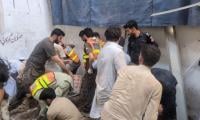

The Makkah pact was signed on August 7 this year, but its text and operational arrangements remain undisclosed. The deployment will shape what members expect of one another in future crises. Pakistan should use this moment to set out how the alliance will honour its commitments, act within international law and consistently extend protection to every member.
The agreement clearly serves Pakistan’s interests. It formalises a long-standing security relationship with Saudi Arabia, strengthens defence cooperation with Turkiye and gives Pakistan a recognised place in Gulf security. Making that partnership work requires clarity on both sides: the state under attack must know what help to expect, and its allies must know the mission’s limits and who can authorise its expansion. Pakistan should support its partners while helping establish these procedures, including how the alliance will respond when Pakistan’s own security is threatened.
Collective defence must operate within the UN Charter. Article 51 recognises states’ right to defend themselves, individually or together, against armed attack. In the Nicaragua case, the International Court of Justice held that collective self-defence requires a request from the attacked state, and that any force used must be necessary and proportionate.
A Saudi request would meet one condition for collective self-defence; any force used must still be necessary and proportionate. Article 51 also requires states acting in self-defence to report their measures to the Security Council immediately. Pakistan must report its actions; a joint report should identify each participating state’s measures and their justification.
These Charter obligations take precedence over conflicting obligations under the pact. Article 103 provides that “in the event of a conflict between the obligations of the members of the United Nations under the present Charter and their obligations under any other international agreement, their obligations under the present Charter shall prevail.” Pakistan should therefore work with its partners to ensure that joint military plans comply with the UN Charter from the outset.
Legal clarity becomes especially important if the deployment to defend Saudi Arabia expands. Any action beyond Saudi territory would require clear evidence and its own legal justification. Even without direct Pakistani involvement, a wider conflict could put pressure on our shared border, strain sectarian harmony at home and undermine Islamabad’s role in easing tensions between Tehran and Washington. Pakistan therefore has a direct interest in keeping the alliance’s response focused on Saudi Arabia’s defence and preventing a wider regional war.
Keeping the response within those limits requires legal scrutiny throughout the operation. US military practice embeds legal advisers in operational planning and targeting; their role extends beyond reviewing the initial deployment. The alliance should adopt a similar approach, with legal advisers examining proposed targets, risks to civilians and changes in the scope of operations before commanders decide. If the targets, territory or objectives change, the legal assessment must address those changes.
Alongside legal safeguards, the alliance must deliver reciprocity: Pakistan must be able to count on its partners’ support just as they count on Pakistan’s. The joint statement affirms that each member’s security is integral to all three. By responding collectively to the Houthis, a non-state armed group, the alliance has accepted that attacks by non-state actors can trigger collective defence. Pakistan is entitled to expect the same protection when it faces attacks by non-state armed groups. Support cannot be withheld merely because its attackers are non-state actors. Equal protection is a mutual commitment, not a concession to Pakistan. Deterrence is stronger when adversaries believe no member will face serious threats alone.
Pakistan faces sustained violence from the TTP, whose operations from Afghan territory are documented in UN monitoring reports. In Balochistan, separatist armed groups, including the Balochistan Liberation Army (BLA) and Balochistan Liberation Front (BLF), have targeted civilians, security forces and infrastructure. Pakistan holds India responsible for sponsoring such violence, citing the conviction of Indian naval officer Kulbhushan Jadhav for espionage and sabotage in support of its case. The networks sustaining these attacks and their funding sources demand international scrutiny.
Therefore, the pact can also provide meaningful support to Pakistan against attacks by the TTP and Baloch separatist armed groups. A standing counterterrorism working group under the alliance’s Strategic-Political and Defence Committee could examine evidence, assess threats and coordinate that support.
Support need not involve troop deployments. Intelligence sharing and action to disrupt the financing, supply networks and cross-border sanctuaries sustaining the TTP, BLA and BLF would give reciprocity practical meaning. Saudi Arabia and Turkiye could also press the Taliban authorities to prevent Afghan territory from being used for attacks on Pakistan and support diplomatic action against external sponsors where evidence establishes their involvement.
Pakistan should help establish these arrangements now, while the alliance is defining how it will act. It must honour its commitment to Saudi Arabia, uphold the UN Charter and demand the same resolve when its own security is threatened.
The writer is a lawyer who writes on public policy matters.