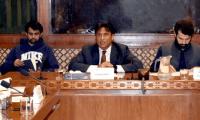
LAHORE: The Punjab government has proposed a new institutional framework to implement the Punjab Human Rights Policy 2027-2036, envisaging a provincial steering committee headed by the chief secretary, mandatory human rights focal persons in departments and districtcommittees to receive and track complaints.
Punjab’s administrative secretaries will meet today (Tuesday) to review the draft policy and suggest amendments before it is finalised. Prepared by the Human Rights and Minorities Affairs Department under the Huqooq-e-Pakistan II Programme, the draft is supported by the United Nations Development Programme (UNDP) with the European Union and has been circulated for stakeholder review.
The proposed Punjab Human Rights Policy Steering Committee would provide province-wide oversight, resolve inter-departmental obstacles and monitor implementation. It would comprise senior officials from key departments, police, prosecution and relevant commissions, along with national commission representatives, observers and four non-government members representing civil society, academia, minorities and persons with disabilities. It would approve annual plans, review district performance and record departmental non-performance for reporting to the chief minister and cabinet.
The Human Rights and Minorities Affairs Department would serve as the lead department and secretariat, overseeing complaints, district committees, monitoring, reporting and coordination on legal and treaty obligations. Each department would appoint a human rights focal person of at least deputy secretary rank and an alternate within 60 days. The Punjab Treaty Implementation Cell, established in 2017, would also be given a stronger role in translating international human rights obligations into departmental action.
The draft proposes a review within six months of the legal and constitutional basis for establishing a Provincial Human Rights Commission, with legislation to be prepared for consideration. It also calls for a review within 12 months of existing human rights committees and task forces to address overlapping mandates.
At district level, committees headed by deputy commissioners and supported by designated additional deputy commissioners (Human Rights) would include police, prosecution and relevant government departments, along with non-government representatives. They would receive and track complaints and flag early warning signs involving communal tensions, bonded labour, gender-based violence, evictions and human trafficking.
The district committees would have no adjudicatory powers and could neither determine guilt nor award compensation. Their role would be to ensure complaints are referred to the competent forums and remain traceable. The draft also proposes closer coordination between the Punjab Interfaith Harmony Policy and the human rights framework through the district panels.