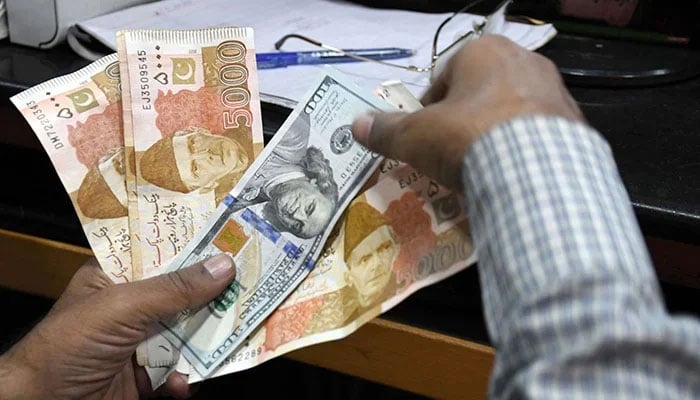
KARACHI: Pakistan’s real effective exchange rate (REER) soared to its highest point in more than seven-and-a-half years in May due to the country’s inflation being significantly higher than that of its trading partners, making exports appear more expensive abroad despite minimal fluctuations in the currency.
The REER index appreciated to 106.2 in May, its highest level since September 2018, according to data published from the State Bank of Pakistan on Wednesday. REER was 105.8 in the previous month.
Saad Hanif, head of research at Ismail Iqbal Securities Limited, said that the May REER reading shows the rupee is now stronger than its fair value in real terms.“This did not happen because of the currency itself, since USD-PKR stayed broadly stable near 279,” Hanif said.
“It happened because Pakistan’s inflation is much higher than its trading partners, which makes our exports look more expensive abroad even when the exchange rate barely moves,” he said.
“On the positive side, a firmer REER reflects better stability, healthier reserves near $17 billion, and a controlled external account,” he added.“But if it stays above 105, it slowly hurts our export competitiveness and could widen the trade gap over time. This leaves the SBP with a tricky balance: protecting hard-won stability and falling inflation on one side and keeping exports competitive on the other, a tension that will grow if the rupee’s real value keeps rising.”On Wednesday, the rupee closed at 278.27 against the dollar in the interbank market, slightly up from its close at 278.3 in the previous session.