LAHORE/KARACHI: Farm leaders have condemned what they term a total absence of incentives for agriculture in Budget FY27.
“The prime minister of Pakistan invited representatives of agriculture sector a few days back for seeking recommendations for uplift of the agriculture sector. However, it seems that the finance ministry has ignored the demands raised at the stakeholders budget meet,” said Khalid Khokhar, president of the Pakistan Kissan Ittehad (PKI) on Friday.
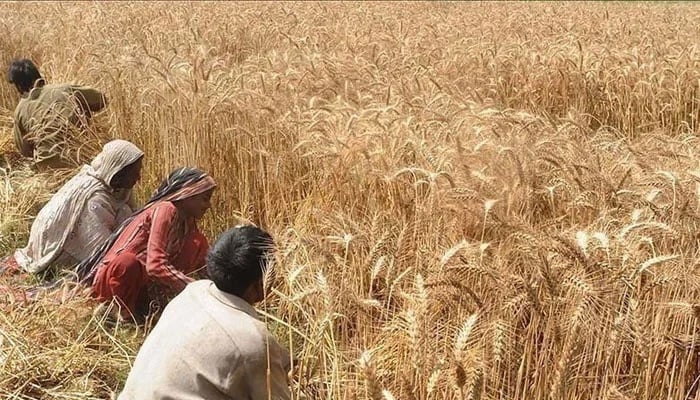
“We are at a total loss as higher authorities fail to pay heeds to our demands for the revival of agriculture. It simply implies that agriculture is no more a priority area for the government,” Khokhar said adding that the farming community played a central role in the development of the agriculture sector. However, he added, growers themselves are trapped in poverty due to one-after-another losses on selling of various produces.
“The government could have lessened the financial burden of farmers by cutting their cost of production,” he said and mentioned the power tariff, adding that the tariff is costlier than that for industry and other categories. A farmer cannot run his tubewell on electricity due to high cost while price of diesel is also at record levels, he bemoaned.
Talking about the spiralling rates of fertilisers, he said, Center could have announce subsidy on DAP fertiliser to make it affordable to some extent for the farmers but to no avail.
Farooq Bajwa, founding president of the Water Council regretted that allocation for water sector projects could not be increased despite climatic pressure and challenges posed by India on flows of trans-boundary rivers. He particularly mentioned low budgetary outlay under the public sector development for the water sector, saying at least 20 per cent funds of total development expenditures could have accelerated dams and other crucial under-construction water infrastructure in different parts of the country.
He noted that rural areas of the country have been left behind as far as development work is concerned. He demanded that at least 60 per cent of NFC share should be spent on rural areas of Punjab in order to given equal opportunities to the people living in these backward areas.
Bajwa also wary of the fact that withholding tax paid by farmers have not been adjusted. “If I pay WHT on my power bills, it simply submitted to the national exchequer, which is against the spirit of this taxation measure.” He asked the authorities concerned to take remedial steps in this connection.
Ebadur Rehman, a progressive farmer, was perturbed over what he called silence by the government functionaries over losses faced by growers on sale of wheat in the last three successive seasons. Against high cost of production of wheat growers, the government was adamant to keep procurement price to Rs just 3,500 per maund — much below to farmers expenditures.
He also shows dismay over what he called plight of cotton growers. There is no focus by the authorities over root-cause of extremely low production of cotton in the country. He stressed that the cotton crisis began with the CLCV virus. However, there is no plan to eradicate virus from the fields. Farmers got temporary relief when they somehow obtained and grew BT cotton seeds. However, our research institutions failed to use that opportunity. Instead of developing proper solutions, they approved pirated seed material under different brand names to cover their own failure.
Patron-in-Chief of the All Pakistan Fruit and Vegetable Exporter Association (PFVA) Waheed Ahmed has raised serious concerns about the budget saying the agriculture sector has largely been overlooked despite facing significant challenges.
Ahmed acknowledged that the government has reduced the minimum tax and advance tax on exports to improve competitiveness. Still, he said the decision not to abolish these taxes fully remains a disappointment for exporters.
He welcomed the allocation of Rs88 billion under the Export Refinance Scheme, describing it as a positive step that would enable exporters to access financing at lower costs. He also appreciated the Rs1 billion development funding allocation, noting it represents an increase over the previous year.
On taxation, he welcomed the abolition of super tax on income between Rs150 million and Rs500 million, but stressed that for income above Rs500 million, the tax has only been reduced rather than eliminated, falling short of industry expectations. He also raised concerns that exports have not been included in the fixed tax regime.
Ahmed further criticised the budget for failing to offer any incentives for alternative energy, which he said is critical for reducing production costs and improving competitiveness amid the ongoing energy crisis.
He urged the government to take immediate and practical steps to address the challenges facing the agriculture and export sectors, particularly horticulture, to fully realise Pakistan’s export potential.