MIRPUR/ISLAMABAD: The Azad Jammu and Kashmir Supreme Court has issued its opinion on a Presidential Reference, declaring that the 12 refugee seats in the AJK Legislative Assembly enjoy constitutional protection and cannot be altered through administrative decisions.
The court stated that any change to these seats can only be made through a constitutional amendment, as required under the relevant provisions of the Constitution. The opinion effectively endorsed the government’s stance on the issue and rejected attempts to resolve the matter through protest politics.
The Presidential Reference had been filed by the president of Azad Kashmir under Article 46-A of the Constitution on the advice of the government. In its opinion, the Supreme Court held that the 12 refugee seats are protected under Article 22 and therefore cannot be modified or redistributed through executive or administrative action.
The court further observed that any alteration to the refugee seats would require a constitutional amendment under Article 33. It stressed that constitutional changes must be carried out through public mandate, parliamentary debate and the prescribed constitutional process.
In a significant observation, the Supreme Court stated that the decisive force in Azad Kashmir is not street protests but the supremacy of the Constitution. The court advised that all remaining constitutional matters should be addressed by the elected Legislative Assembly.
The opinion also stressed that the administration is constitutionally bound to maintain public peace, constitutional order and the rule of law.
The Presidential Reference was heard over two days by Chief Justice Raja Saeed Akram Khan and Justice Khawand Yousaf Chaudhry. Following the conclusion of arguments, the court reserved its opinion and subsequently sent its sealed decision to the president of Azad Kashmir.
The ruling is being viewed as a significant constitutional development, providing clarity on the legal status of refugee representation in the Azad Jammu and Kashmir Legislative Assembly.
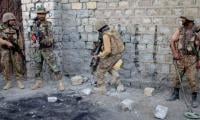
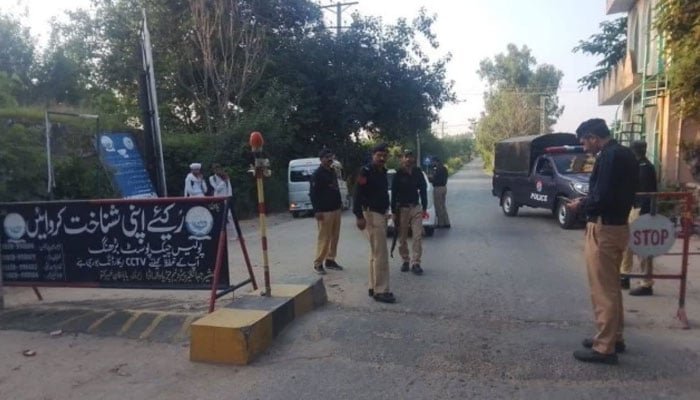
Meanwhile, two law enforcement personnel were killed and more than 20 police and security officials injured after armed individuals allegedly linked to the banned Joint Awami Action Committee (JAAC) opened fire on security personnel in Rawalakot, according to a statement issued by the Office of the Inspector General of Police, Azad Jammu and Kashmir (AJK), on Sunday.
The police statement strongly condemned what it described as a pre-planned attack by armed miscreants associated with the outlawed organisation, alleging that the incident was aimed at disrupting law and order and included an attack on the Combined Military Hospital (CMH) Rawalakot.
According to the statement, armed participants gathered under the guise of a protest and deliberately targeted law enforcement personnel performing their duties. As a result of the firing, two officials were killed, while more than 20 police and security personnel were injured. Police said the casualties suffered firearm and gunshot wounds.
The IGP said the incident could not be regarded as a continuation of peaceful political protest, describing it as an organised and armed action targeting state authority, public order, law enforcement institutions and a medical facility.
He said the attack on CMH Rawalakot endangered patients, medical staff, injured personnel and civilians, and constituted a serious violation of the law.
He termed the direct firing on law enforcement personnel and the subsequent attack on the hospital as acts of terrorism, adding that legal action would be taken in accordance with the Constitution and the law.
Paying tribute to the slain officials, the police said their sacrifice was for the protection of public safety, peace and the rule of law in Azad Jammu and Kashmir. The department also pledged support for the bereaved families and said all necessary measures were being taken for the treatment of the injured.
The police and civil administration reiterated that no compromise would be made on public safety, law and order, or the writ of the state, and said the law would take its course.
Separately, Deputy Commissioner Mirpur Chaudhry Sajid Aslam has reaffirmed the administration’s commitment to maintaining law and order, stating that protection of citizens’ lives, property and public assets will be ensured at all costs and that there will be no compromise on the rule of law.
Speaking to the media, he said strict legal action was being taken against individuals involved in supporting a banned organisation, the JAAC, spreading misleading and provocative content on social media, and engaging in propaganda against state institutions. He warned that those found involved would face serious criminal charges in accordance with the law.
Sajid Aslam disclosed that more than 40 members of the banned JAAC had been arrested during joint operations, conducted by the district administration and law-enforcement agencies. Efforts were also underway to monitor and apprehend additional suspects.
The DC reiterated that the writ of the state would be upheld under all circumstances and that no leniency would be shown towards elements attempting to disrupt peace and public order. He stressed that those taking the law into their own hands would be dealt with firmly.
According to the deputy commissioner, public awareness efforts were being strengthened through announcements in mosques, while revenue officials and other government officers have been directed to effectively communicate the government’s message to citizens.
He also called upon the media to report only verified information.
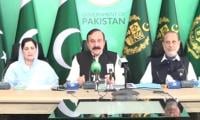
Meanwhile, Federal Minister for Parliamentary Affairs Dr Tariq Fazal Chaudhry Sunday accused the proscribed JAAC of attempts to create instability despite the government accepting most of the group’s demands.
Addressing a press conference alongside Azad Jammu and Kashmir (AJK) political leaders in Islamabad, the minister recalled that Prime Minister Shehbaz Sharif had constituted a high-level committee to hold negotiations with the JAAC.
A monitoring committee had also been formed to ensure implementation of all agreed points, he said, adding that the government implemented all clauses of its agreement reached with the group. The banned group had again called for protests despite implementation of the agreement, he said.
The minister’s remarks came two days after the AJK government declared the JAAC a proscribed organisation under anti-terrorism laws ahead of the group’s planned protest on June 9.
The group had previously organised large-scale protests over economic issues and political rights, some of which turned violent and resulted in fatalities during clashes with law-enforcement agencies in May 2024 and September 2025.
During Sunday’s presser, Chaudhry highlighted ongoing social and development projects in AJK, saying the region was being provided electricity at Rs3 per unit and subsidies were being extended on flour and other essential commodities.
He maintained that the government had fulfilled commitments made to the families of those martyred and injured during previous protests, while 170 cases registered during the demonstrations had also been withdrawn.
The minister said that the AJK Assembly had completed its term, alleging that efforts were being made to sabotage free and fair elections in the region.
Referring to JAAC’s demand to abolish 12 refugee seats in the AJK Legislative Assembly, he said that the court had made it clear that these constitutional seats could not be abolished without legislation. The AJK Assembly has 12 seats reserved for refugees from Indian Illegally Occupied Jammu and Kashmir (IIOJK) who migrated to Pakistan after 1947.
Chaudhry said that practical steps had been initiated on agreed points relating to infrastructure development, but noted that major projects, including tunnel construction, could not be completed within a few days. He said that local employment opportunities would be ensured in development projects, stressing that frequent protests were not an appropriate approach for medium- and long-term development plans.
In a related development, PPP Chairman Bilawal Bhutto Zardari Sunday pledged to take up issues concerning Azad Jammu and Kashmir (AJK) with Prime Minister Shehbaz Sharif, stressing that political disputes should be resolved through dialogue and parliamentary consultation rather than confrontation.
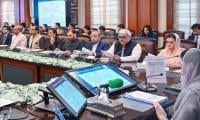
He was chairing a meeting of the PPP’s AJK Parliamentary Party in Islamabad to review the political situation in the region and discuss possible ways forward.
Reiterating the party’s longstanding commitment to democratic and constitutional means, Bilawal said political challenges in Azad Kashmir must be addressed through dialogue and due process. He underscored that the PPP has always prioritised the Kashmir cause and remains committed to safeguarding the rights and interests of the Kashmiri people.
The meeting was attended by members of the PPP AJK Parliamentary Party, along with PPP Women Wing President Faryal Talpur, who also serves as the party’s in-charge for political affairs in Azad Jammu and Kashmir.
Participants briefed the leadership on recent developments and presented various proposals regarding governance and political stability in the region. Bilawal and Faryal listened to the recommendations and exchanged views with members on the evolving situation.
Expressing concern over the current state of affairs in AJK, the PPP chairman stressed that democratic engagement remains the most effective way to address differences. He said he would soon meet Prime Minister Shehbaz Sharif to discuss the issues and seek solutions through parliamentary and political channels.
Meanwhile, foreign missions in Pakistan have advised citizens of their countries to exercise caution when going to Azad Jammu and Kashmir (AJK), with some restricting travel to the region amid rising tensions ahead of street protests planned by the Jammu Kashmir Joint Awami Action Committee.
The AJK government has already issued a travel advisory, urging visitors not to come to the Indian-bordering region until June 20 due to security concerns linked to the planned demonstrations. It has also asked tourists and other outsiders already present in the region to leave immediately to prevent potential trouble.
In a post on her X account, UK High Commissioner Jane Marriott shared a travel advisory from the UK’s Foreign, Commonwealth & Development Office (FCDO), advising British citizens against all but essential travel to AJK. The FCDO warned that travel insurance could be invalidated if citizens acted against its advice.
The FCDO said that in the past, such strikes in the area had led to road closures, travel disruption, suspension of mobile and internet services and clashes between protesters and security forces.
Also, the High Commission of Australia in Islamabad advised Australian citizens against travelling to the troubled AJK until June 22. “Protests, possibly violent, in Azad Jammu and Kashmir, are forecast from 6-20 June 2026, and travellers should avoid the entire area due to the situation,” read a Facebook post from the high commission.
Likewise, the US Mission in Pakistan said it was monitoring reports of the JAAC’s June 9 protest. In a ‘Demonstration Alert’, it noted that local authorities had issued a travel warning discouraging tourism in the region from June 5 to June 20.
The mission further said that JAAC had previously led large-scale protests that periodically brought parts of Azad Jammu and Kashmir to a standstill, and that the group planned a long march on June 9 starting in Rawalakot and moving towards Muzaffarabad.
It advised US citizens in AJK to monitor local news, maintain personal security precautions, avoid large gatherings, ensure STEP [Smart Traveller Enrolment Program] registration is updated, keep a low profile and cooperate with authorities.