PARIS: A UN report on Wednesday urged artificial intelligence firms to disclose their environmental footprint, warning that the AI boom is putting growing pressure on power grids, water supplies and land resources.
The study also urged governments to require standardised environmental reporting from AI providers, and called on users to choose less energy-intensive tools that can accomplish the same task.
“What we are showing here is probably just the tip of the iceberg,” Kaveh Madani, director of the United Nations University Institute for Water, Environment and Health (UNU-INWEH), told AFP.
“We need to require more transparency. We need the providers to provide that information,” Madani said.
The authors of the report, “Environmental Cost of AI’s Energy Use: Carbon, Water and Land Footprints”, used primary data from a range of sources to make their estimates, Madani said.
The global AI market is expected to grow from $189 billion in 2023 to $4.8 trillion by 2033, the UNU-INWEH report said.
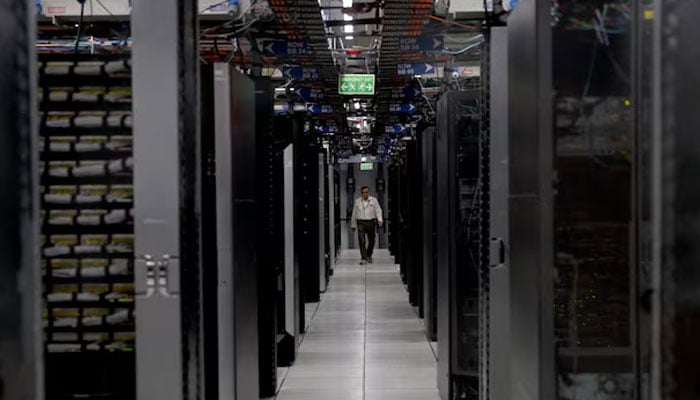
Data centres, the warehouses of servers that power AI and other digital services, consumed 448 terawatt-hours (TWh) of electricity in 2025.
If data centres were a country, their consumption would have ranked in 11th place -- just under France with 468 TWh, the study said.
AI workloads accounted for a fifth of the total electricity use at data centres last year, and they are expected to rise to 40 percent by 2030.
Consumption by data centres is projected to exceed 945 TWh by 2030, ranking sixth among countries and emitting 399 million tonnes of CO2 equivalent. By comparison, the UK’s net emissions reached 367 million tonnes last year.