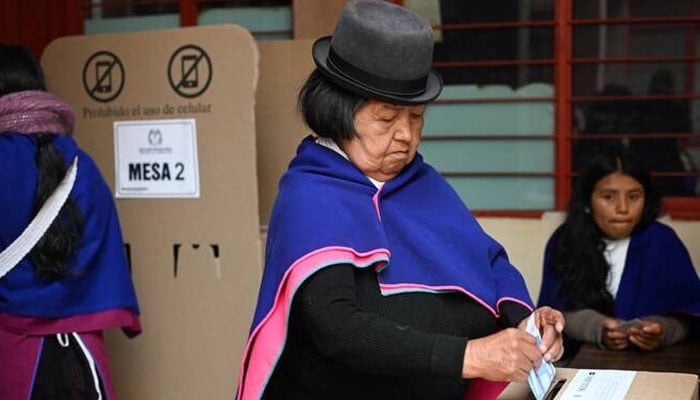
BOGOTI: Colombians began voting on Sunday in a presidential election that could shift the country´s response to rising guerrilla violence, choosing between extending spluttering peace talks or turning to a hard?right military crackdown.
Pre election polls showed left wing senator Ivan Cepeda leading, but facing a strong challenge from hard right lawyer Abelardo de la Espriella, a pro Trump outsider.
The vote is in part a referendum on Colombia´s first-ever leftist government and “total peace” -- a policy of holding talks with dissident guerrilla groups.
Experts say guerrillas and other armed groups have used peace overtures to strengthen their positions and to produce record amounts of cocaine.
The campaign has been marked by car bombs, attack drones and the assassination of a leading presidential candidate.
De la Espriella, the self-styled “Tiger” wants to confront armed groups in the air, on land and at sea, echoing hard?line security rhetoric behind recent right wing wins in Latin America.
“This government really strengthened armed groups by being so soft,” said Catalina Devia, a 42 year?old advertising executive and mother of two, who is considering emigrating if Cepeda wins.
“We fear that if a left wing government remains things will get even worse,” she said.
Incumbent President Gustavo Petro cannot run again and has backed Cepeda -- the son of a slain senator, killed by right-wing paramilitaries.
His backers fear a right-wing victory would spark a return to decades of war between the state and armed groups.
Cepeda´s popularity is anchored in support from lower?income voters, grateful for falling joblessness and a rising minimum wage.
“I like the direction the Petro government took,” said Pedro Barragan, a 52 year?old teacher voting in central Bogota.
“I think we´ve done quite a lot in terms of education... protecting the environment, social justice, and defending human rights.”
If, as expected, no candidate wins an outright majority on Sunday, a run-off between the two poll-toppers will be held on June 21.
Whoever replaces Petro will have to reckon with an alphabet soup of criminal groups engaging in drug trafficking, illegal mining and extortion.