MOSCOW: Russia and China said in a joint declaration on Wednesday that attempts by some countries to dominate global affairs in the spirit of the colonial era had failed but that the world was in danger of a return to the “law of the jungle”.
“The global situation is becoming more complex,” they said in a declaration released by the Kremlin in Russian. “The global peace and development agenda is facing new risks and challenges, and there is a danger of fragmentation of the international community and a return to the ‘law of the jungle’.”
“Attempts by a number of states to unilaterally manage global affairs, impose their interests on the entire world, and limit the sovereign development of other countries, in the spirit of the colonial era, have failed.”
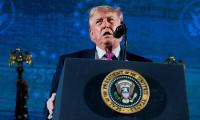
China and Russia condemned US President Donald Trump’s Golden Dome missile defence shield plans and Washington’s “irresponsible” nuclear policy at a summit on Wednesday, a week after President Xi Jinping hosted Trump in Beijing.
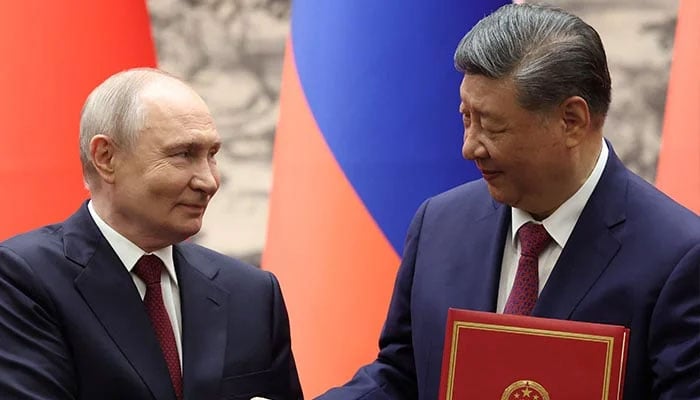
A joint statement issued after Xi’s summit with Russian President Vladimir Putin served to underline that, while the Chinese leader seeks stable and constructive relations with Trump, he differs fundamentally with him on key issues where China’s position is closely aligned with Russia’s.
The statement said Trump’s plan for a ground- and space-based missile interceptor system threatened global strategic stability and criticised Washington for allowing a treaty restricting the US and Russian nuclear arsenals to expire.
“Xi does appear to hold the stronger position relative to both Putin and Trump. Both leaders are grappling with conflicts of their own making that have proven far more difficult to resolve than initially anticipated,” said Patricia Kim, a foreign policy fellow at the Washington-based Brookings Institution. “Xi, meanwhile, has been able to focus more squarely on strengthening China internally while projecting an image of a stable and confident great power on the global stage.”
Russian Deputy Prime Minister Alexander Novak said China was interested in long-term Russian oil supplies and increasing volumes, which he said were up 10 per cent in four months.
Xi said the countries should focus on long-term strategy and promote a “more just and reasonable” global governance system, according to Chinese state news agency Xinhua.