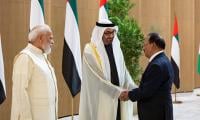
DUBAI: After facing barrages of Iranian missiles that threatened its economic future, the UAE has moved closer to Israel, widening a split with ally-turned-rival Saudi Arabia and placing it in defiant opposition to Tehran.
This gamble granted the UAE, a tourism hub where 90 per cent of the population is foreign, access to Israeli air defence systems to help fend off more than 2,800 drones and missiles -- effectively placing protection above all else to preserve a model based on stability, analysts said.
But its closer cooperation with Israel risks further antagonising Iran, which the UAE views as its biggest threat, and puts Abu Dhabi at even greater odds with Saudi Arabia, which along with much of the Gulf has come to see Israel as the region´s main rogue actor.
The UAE has doubled down on US and Israel ties even as it was hard-hit in a war triggered by the pair that it had long sought to avoid.
“The UAE is thinking about the future and sees Israel as the best security partner that can provide cover for its economic recovery,” said Sanam Vakil, director of the Middle East and North Africa Programme at Chatham House.
Their bet appears to have paid off in terms of security and defence.
On Tuesday, the US ambassador to Israel, Mike Huckabee, confirmed the country had sent its Iron Dome air defence batteries and personnel to the UAE during the war.
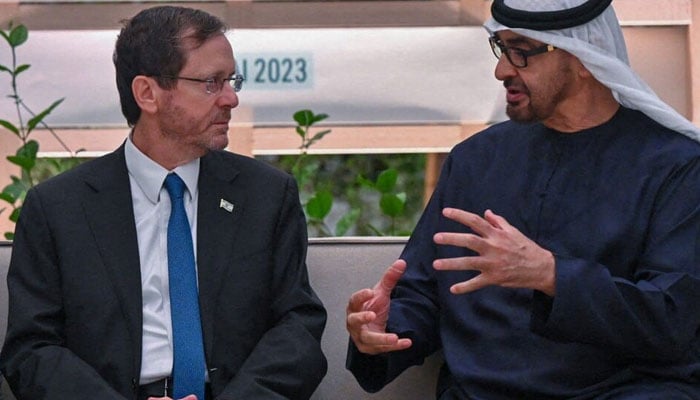
The UAE became the first Gulf country, alongside Bahrain, to recognise Israel in 2020 under the US-mediated Abraham Accords.
Throughout the war, Emirati officials have lambasted unnamed Arab countries for showcasing hollow solidarity as attacks rained.
“There wasn´t enough of a sense of urgency, while this is the most existential threat that we have dealt with since the inception of the country,” said Nadim Koteich, a Lebanese-Emirati media executive and policy adviser close to the UAE government. “But in this war, the Israelis have showed up for the UAE when they had to show up.”