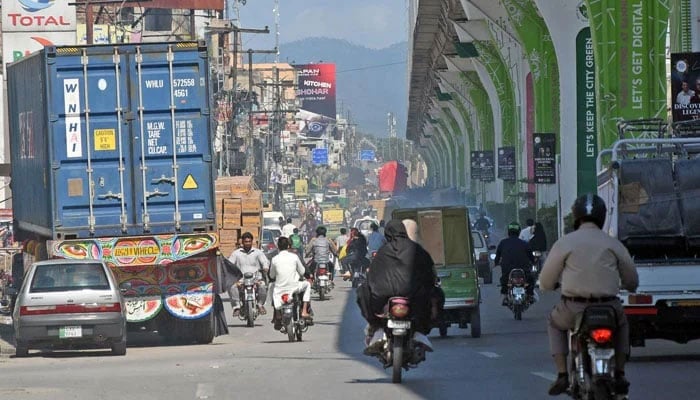
RAWALPINDI: At first light, the call to prayer rises over the dense rooftops of the old quarters, echoing through lanes that have witnessed empires arrive, recede, and return in memory. In Rawalpindi, history is not curated behind glass; it breathes in the bustle of bazaars, in fading havelis, and in the rhythm of a city that has long lived in the shadow -service — of the federal capital.
“Long before it became the garrison city of modern Pakistan, Rawalpindi’s story was shaped by its geography. Sitting at the crossroads of the Potohar plateau, it connected trade routes stretching from Central Asia to the plains of the subcontinent. Archaeologists trace its deeper past to the ancient region of Gandhara, where Buddhist monasteries and learning centers flourished, leaving behind relics that still surface in nearby sites like Taxila,” says Naveed Hussain.
“The city as it stands today began to take shape under the Sikh Empire in the early 19th century, when it was developed as a strategic outpost. Its transformation accelerated under the British Raj, which established Rawalpindi as a major cantonment town. The imprint of that era lingers in Saddar’s colonial architecture, tree-lined avenues, and institutions that continue to function with quiet resilience,” says Masud Zaidi.
“Yet, Rawalpindi’s civic identity cannot be reduced to barracks and bureaucracy. It is equally defined by its commercial heart—Raja Bazaar—where the city’s pulse is loudest. Here, traders speak in the shorthand of generations, bargaining over spices, fabrics, and electronics, while above them hang signboards that have survived political upheavals and economic shifts alike,” says Furqan Naqvi.
“Partition in 1947 redrew borders but also reshaped Rawalpindi’s social fabric. Waves of migration altered neighborhoods, languages, and livelihoods, embedding stories of loss and renewal into the city’s collective memory. In the decades that followed, Rawalpindi became inseparable from the rise of nearby Islamabad, functioning as its older, more chaotic counterpart—where Islamabad plans, Rawalpindi adapts,” says Semeen Tehrani.
“Despite rapid urbanization, civic challenges persist. Congested roads strained public services, and the pressure of unplanned expansion test the city’s infrastructure daily. Yet, residents often display a pragmatic resilience. Community networks compensate where formal systems falter and a culture of enterprise thrive in small workshops and family-run businesses,” says Zainul Abideen.
“Cultural life, too, continues to assert itself. From traditional truck art studios tucked into side streets to contemporary cafés that cater to a younger demographic, Rawalpindi negotiates its past and present with a certain defiance,” says Ansar Rizvi.
“Urban historians argue that Rawalpindi’s greatest strength lies in its continuity. Unlike planned cities that impose order from above, Rawalpindi evolves organically, absorbing change without entirely discarding what came before. Its streets may be crowded, its systems imperfect, but its identity remains unmistakably intact,” says Jafar Sadsiq.
Safeer Hussain says, “As dusk settles and bazaar lights flicker on, the city does what it has always done—carry on. In Rawalpindi, history is not a chapter concluded; it is a conversation, ongoing and unresolved, written daily in the lives of those who call it home.”