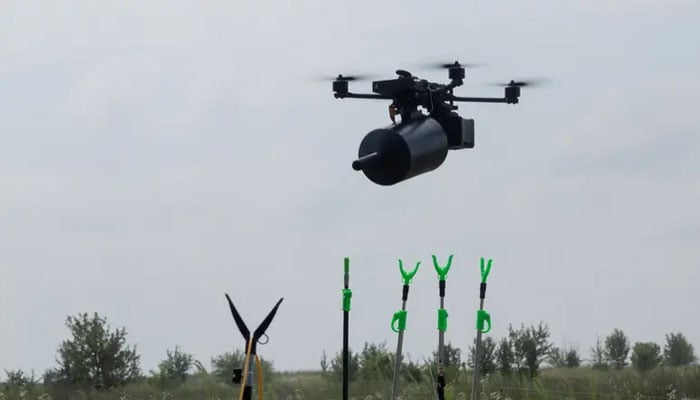
JERUSALEM: Hezbollah’s cheap fibre-optic drones are creating new challenges for Israeli troops in southern Lebanon, forcing the military to adapt its tactics against an increasingly lethal threat.
The Israeli military -- considered one of the most advanced in the world -- has confirmed two soldiers and one civilian contractor killed in explosive drone attacks in under a week, with several others wounded despite a ceasefire in place since mid-April.
The devices are small, cheap and readily available, like “children’s toys”, explained Orna Mizrahi, a senior researcher at Israel’s Institute for National Security Studies (INSS).
The military “does not have nowadays any response for that, because they didn’t prepare themselves for such low-tech explosives”, she told AFP.
Israel has been fighting Lebanese Hezbollah since early March, deploying troops into the neighbouring country’s south to confront the Iran-backed militant group. Since then, violence has continued, with both sides accusing each other of breaching the ceasefire.
Unlike conventional drones guided by GPS or radio, which can therefore be jammed, Hezbollah is using devices linked to their launch site by a thin fibre-optic cable that can stretch for dozens of kilometres.
Operators pilot the drones in first-person view (FPV) using screens or virtual reality goggles that require limited training.
“Since the drone does not transmit the image via radio broadcast and does not receive guidance commands via a radio receiver, it cannot be detected by electronic intelligence means or blocked through electronic warfare,” said Arie Aviram, an expert who has written on the subject for the INSS. The drones’ speed and precision means they can cause considerable damage to Israeli targets, and their lack of electronic traces leaves troops reliant on radar or visual detection, which often comes too late.