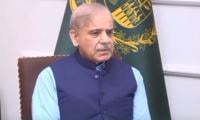
TEHRAN/DUBAI: Iran’s Deputy Foreign Minister Kazem Gharibabadi said Saturday that it was up to the United States whether to pursue a negotiated settlement or to return to open war, but that Tehran was ready for either outcome.
“Now the ball is in the United States’ court to choose the path of diplomacy or the continuation of a confrontational approach,” Gharibabadi told diplomats in Tehran, according to state broadcaster IRIB. “Iran, with the aim of securing its national interests and security, is prepared for both paths,” he said.
The Wall Street Journal reported on Friday that Iran has signalled greater flexibility while indicating readiness to resume talks in Pakistan as early as next week if Washington responds positively to its revised proposal aimed at reviving stalled negotiations.
The Wall Street Journal, citing people familiar with the matter, reported that the new Iranian proposal takes a step towards the US by offering to discuss Tehran’s conditions for opening the Strait of Hormuz at the same time as US guarantees to end its attacks and unwind its blockade of Iranian ports.
This marks a shift from Iran’s earlier stance, which required the removal of the blockade and agreement on ending the war as preconditions before any broader talks.
The proposal further suggests that negotiations on Iran’s nuclear programme would take place at a later stage, in exchange for relief from US sanctions, the report stated.
Iran has indicated to mediators that it would be ready to sit down for talks in Pakistan by early next week if Washington is open to the new proposal, it added.
A senior Iranian official said that an Iranian proposal so far rejected by President Trump would open shipping in the Strait of Hormuz and end the US blockade of Iran while leaving talks on Iran’s nuclear programme for later.
Trump, who has said repeatedly that Iran can never have a nuclear weapon, said on Friday he was not satisfied with the latest Iranian proposal for talks, while Iran’s foreign minister said Tehran was ready for diplomacy if the United States changes its approach.
Trump said on Friday that “on a human basis,” he did not prefer the military course of action against Iran and told leaders in the US Congress that he did not need their permission to extend the war beyond a deadline set by law for that day because the ceasefire had “terminated” hostilities.
Later on Friday, during a speech in Florida, Trump said the United States would not end its confrontation with Iran early “and then have the problem arise in three more years.”
Trump spent Saturday in Florida -- at his Mar-a-Lago resort and the Trump National Golf Club in nearby Jupiter. In the evening he was due to visit another of his golf resorts, Trump National Doral outside Miami, which is hosting the PGA Cadillac Championship.
Speaking on condition of anonymity to discuss confidential diplomacy, the senior Iranian official said Tehran believed its latest proposal to shelve nuclear talks for a later stage was a significant shift aimed at facilitating an agreement.
Under the proposal, the war would end with a guarantee that Israel and the United States would not attack again. Iran would open the strait, and the United States would lift its blockade.
Future talks would then be held on curbs to Iran’s nuclear programme in return for the lifting of sanctions, with Iran demanding Washington recognise its right to enrich uranium for peaceful purposes, even if it agrees to suspend it.
“Under this framework, negotiations over the more complicated nuclear issue have been moved to the final stage to create a more conducive atmosphere,” the official said.
Reuters and other news organisations already reported over the past week that Tehran was proposing to reopen the strait before nuclear issues were resolved. The official confirmed that this new timeline had now been spelled out in a formal proposal conveyed to the United States through mediators.
However, a senior Iranian military officer said on Saturday that renewed fighting with the US was “likely”. On Saturday morning, Mohammad Jafar Asadi, a senior figure in the Iranian military’s central command, said “a renewed conflict between Iran and the United States is likely”, in quotes published by Iran’s Fars news agency. “Evidence has shown that the United States is not committed to any promises or agreements,” he added.
President Trump said on Friday the US Navy was acting “like pirates” as he described an operation seizing a ship amid the tit-for-tat American blockade of Iranian ports.
“We... land on top of it and we took over the ship. We took over the cargo, took over the oil. It’s a very profitable business,” Trump said at a rally in Florida.
“We’re like pirates,” he added to cheers from the crowd. “We’re sort of like pirates. But we’re not playing games.”
Trump’s comparison of US naval activity to piracy comes as legal experts raise alarms about Iran’s blockade of the vital Strait of Hormuz and its plans to charge a fee for ships passing through it.
The US Central Command, responsible for US forces in the Middle East, said it has redirected 45 vessels to “ensure compliance” with its blockade as of Friday.
Beijing’s commerce ministry said on Saturday that China will not comply with US sanctions against five firms targeted for purchasing Iranian oil.
China is a key customer for Iranian oil, mainly through independent “teapot” refineries that rely on discounted crude from the Islamic republic.
The United States, seeking to choke off revenue to Tehran, has ramped up sanctions on such refineries.
The sanctions “improperly prohibit or restrict Chinese enterprises from conducting normal economic, trade and related activities with third countries... and violate international law and the basic norms governing international relations,” the ministry said in a statement.
The UAE’s aviation authority said air traffic in the country has returned to normal, the state news agency reported on Saturday, after precautionary measures implemented on February 28 at the start of the Iran war were lifted.
Lebanese armed forces commander General Rudolf Haykal and US General Joseph Clearfield met in Beirut to discuss the security situation in Lebanon and regional developments, the army said on Saturday in a statement.
A bulk carrier reported a suspicious approach by a skiff accompanied by a fishing vessel on Saturday, 84 nautical miles southwest of the port of Mukalla on the southern coast of Yemen, Britain’s maritime security agency UKMTO reported.
President Trump’s administration has bypassed congressional review to approve military sales totaling over $8.6 billion to Middle Eastern allies Israel, Qatar, Kuwait and the United Arab Emirates.
The State Department announcements came as the US and Israel’s war against Iran marked nine weeks since its start and more than three weeks since a fragile ceasefire came into effect.
The announcements included approving military sales to Qatar of Patriot air and missile defense replenishment services costing $4.01 billion and of Advanced Precision Kill Weapon Systems (APKWS) costing $992.4 million.
They also included approval of the sale to Kuwait of an integrated battle command system costing $2.5 billion and to Israel of Advanced Precision Kill Weapon Systems costing $992.4 million. The State Department approved a sale to the UAE of APKWS for $147.6 million.
Marshall Islands-flagged tanker Sarv Shakti, loaded with 46,313 metric tons of liquefied petroleum gas for India, crossed the Strait of Hormuz on Saturday, India’s shipping ministry said.
The vessels with 20 crew members on board, 18 of them Indian, is expected to arrive at the Indian port of Visakhapatnam on May 13, it said in a statement said.