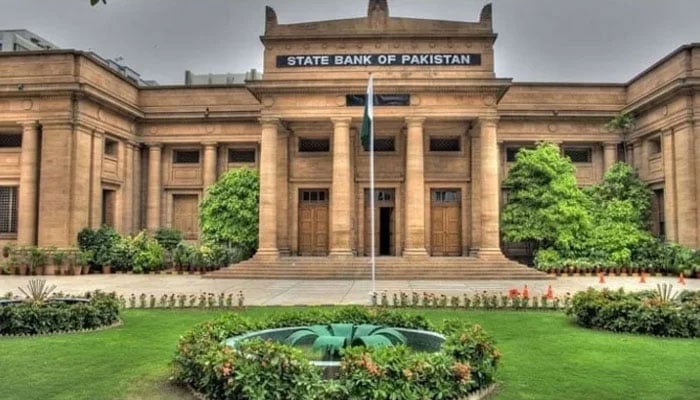
KARACHI: The State Bank of Pakistan (SBP) is expected to hold its benchmark interest rate steady at 10 per cent on Monday, according to most analysts, as improved buffers against external pressures allow it to wait, but some warn that Middle East uncertainty poses upside inflation risks, creating room for a rate hike.
The upcoming decision by the Monetary Policy Committee is finely balanced, with a reasonable case for both holding and a cautious tightening, said Dr Khaqan Najeeb, economist and former adviser to the Ministry of Finance.
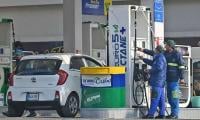
“On the one hand, recent fuel price volatility linked to Middle East tensions has introduced upside risks to inflation, with CPI at 7.3 per cent YoY in March and the sensitive price index rising to about 13.98 percent in the latest week, pointing to near-term price pressures; on the other, these remain largely supply-driven, with limited evidence of second-round effects so far,” Najeeb said.
“Growth, meanwhile, is still in a recovery phase, expanding by 3.63 per cent in Q1 and 3.89 per cent in Q2, with emerging headwinds, including external uncertainty and a Rs173 billion cut in the PSDP, suggesting that aggressive tightening could weigh on momentum,” he added.
“At the same time, the external position has held up relatively well, which reduces immediate pressure for a policy response,” Najeeb said. “Taken together, while a hold at 10.5 per cent appears a reasonable baseline, the decision will ultimately hinge on how the central bank weighs near-term inflation risks against the need to sustain a still-fragile growth recovery.”
The US-Israeli war with Iran has surged oil prices, with Arab Light reaching a high of $135 per barrel, then declining to $102 per barrel and briefly rising to $135 per barrel, subsequently declining to $102 per barrel, and momentarily falling to approximately $77 per barrel, underscoring significant volatility rather than a definitive trend. Although all of this external noise has affected domestic prices, the larger inflation narrative has remained stable.
In March, inflation increased to 7.3 per cent year-on-year (YoY), up from 7.0 per cent in the previous month, exceeding the SBP’s target range of 5-7 per cent. Some analysts cautioned that it can reach double digits in the fourth quarter of this fiscal year.
Mustafa Mustansir, head of research at Taurus Securities Limited, expects the SBP’s Monetary Policy Committee to maintain a ‘status quo’ at its upcoming meeting. “Although forward inflation expectations are likely to be higher than the SBP’s target range for the near term, we believe the MPC remains cognizant of the latter, taking cues from the last monetary policy statement,” Mustansir said.
“Moreover, the uptick in inflation remains driven by supply-side factors rather than a surge in aggregate demand,” he added. The SBP has cut rates by a total of 1,150 basis points (bps) since June 2024, when they reached a historic high of 22 per cent, with the most recent decrease of 50bps occurring in January.
Awais Ashraf, director of research at AKD Securities Limited, anticipates the SBP to adopt a wait-and-see approach, as the current macroeconomic fundamentals are better positioned to withstand the impact of the ongoing conflict in the Middle East.
Ashraf said that Pakistan’s return to the international capital markets after four years and inflows of $3 billion from Saudi Arabia, alongside an increase in the maturity of current deposits, are positive developments. Additionally, improvements in the current account, driven by strong remittance inflows and higher services exports, combined with ongoing dollar purchases from the foreign exchange market, would contribute to an increase in foreign exchange reserves, he added. “We foresee real interest rates averaging 3.6 per cent over the next 12 months, assuming normal rupee depreciation and gradual normalisation of oil prices till December 2026,” he said.
Tresmark said in a note last week that the two obvious scenarios are whether the Middle East conflict is resolved before the monetary policy meeting or remains unresolved. In the latter case, it would represent a worst-case scenario, and rates could move sharply higher. In the more likely scenario where tensions ease before the meeting, the decision becomes much closer than previously expected.
The balancing argument, however, is how global central banks are reacting, whether demand needs to be dampened further, and how much pressure the IMF may be exerting behind the scenes, it said. “In the last three months, the market has gone from expecting a cut to debating a hold to now discussing the possibility of a hike. Our base view of a 100bps rate hike remains unchanged.”
Topline Securities expects interest rates to increase by 50bps in the upcoming monetary policy to absorb the impact of rising oil prices and its indirect and lagged impact on other commodities and to contain nonessential imports.
“While the recent inflation spike is expected to be temporary, likely peaking in the June quarter before easing, the 12-month average is projected to settle around 7.5 per cent,” said Waqas Ghani, the head of research at JS Global. “This suggests the central bank may look past the near-term uptick, refrain from tightening, and maintain a cautious forward-looking policy stance.”
However, Ghani believes uncertainty around how prolonged the Iran conflict may be continued to cloud the outlook, leaving markets divided over the appropriate policy response, particularly given the unclear duration and impact of energy-driven inflation pressures.