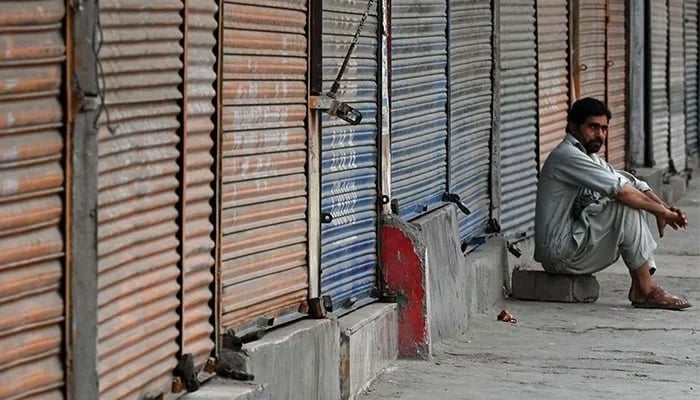
LAHORE: The Chainstore Association of Pakistan (CAP) has called for an urgent review of early retail closing hours, warning the policy has already led to an estimated Rs200 billion loss in economic activity within just two weeks of implementation.
In a formal appeal to federal and provincial authorities, the association said enforcing an 8pm closing time across much of the country is disproportionately affecting the organised, tax-compliant retail sector while delivering limited energy savings.
Citing industry data, CAP said retailers are experiencing a sustained 25-35 per cent decline in daily revenues, largely due to restrictions during peak shopping hours between 8pm and 10pm. In Pakistan’s major urban centres, consumer activity is concentrated in the evening, typically after 7pm, particularly as food outlets, bakeries and other businesses continue to operate beyond these hours.
The association argued the policy has failed to change consumer behaviour and has instead created market distortions. “Customers remain active in the evenings, but formal retail is being forced to shut, effectively turning away business,” it said.
CAP estimates the disruption has resulted in a GDP loss of about Rs200 billion across the retail value chain over the past 15 days. At the same time, the government is believed to have foregone up to Rs50 billion in tax revenues due to reduced documented activity.
The association said the impact is uneven. Organised retail -- comprising documented businesses with fixed costs such as rent, payroll and utilities -- is bearing the brunt of the restrictions, while informal segments remain largely unaffected. This imbalance, CAP warned, penalises compliant businesses that contribute significantly to tax revenues.
CAP Patron-in-Chief Tariq Mehboob questioned the assumption that early closures generate meaningful energy savings. “The commercial sector accounts for a relatively small share of total electricity consumption,” he said. “In practice, reduced retail activity simply shifts energy use to households, which are often less efficient.”
He added that shopping malls and commercial centres frequently continue to operate restaurants, food courts and entertainment facilities until later hours, further diluting the intended impact of early closures.
Chairperson of CAP Asfandyar Farrukh said the policy overlooks ground realities. “Consumer behaviour does not change simply because shops close earlier,” he said. “Without broader structural measures, such restrictions risk undermining business sustainability and reducing tax collection.”
Senior Vice Chairperson Ahsen Mehmood said that in comparable markets such as Saudi Arabia, Indonesia, Malaysia and Turkiye, organised retail outlets typically remain open until at least 10pm to capture peak demand. “The current framework reverses this model and restricts the most formal segment of retail activity,” he said.
Beyond financial losses, CAP warned of wider economic consequences. The retail sector supports around 10 million jobs nationwide, and reduced operating hours are already leading to lower incomes and potential layoffs, particularly among second-shift workers.
CAP proposed extending retail hours to at least 10pm and aligning them with restaurant operations to ensure consistency. It also recommended adopting daylight saving time as a more effective, system-wide energy conservation measure that does not disrupt economic activity.
The association urged policymakers to adopt a balanced approach that safeguards both energy objectives and economic stability, warning prolonged restrictions could further weaken the formal retail sector and erode tax revenues.