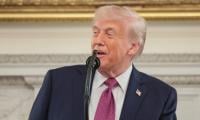
ISLAMABAD: Global financial markets traded in a volatile but broadly resilient range on Wednesday after U.S. President Donald Trump confirmed that direct talks with Iran are expected to take place next Friday. The announcement reinforced expectations of diplomatic engagement in the Middle East, while leaving geopolitical risks firmly in place. The extension of a ceasefire added to hopes of de-escalation, though uncertainty over the outcome of negotiations continued to weigh on sentiment.
Oil markets remained the focal point, with prices holding at elevated levels despite the diplomatic signals. WTI Crude Oil rose to $93.38 per barrel, up 4.14%, while Brent Crude Oil climbed to $101.80, gaining 3.42%. In the Middle East, Murban Crude Oil advanced 4.88% to $101.00, and WTI Midland Crude added 2.64% to trade at $95.25.
The rally reflected a sustained geopolitical risk premium, with Brent and Murban both remaining above the $100 mark amid concerns over supply security and potential disruptions in key shipping routes, particularly around the Strait of Hormuz. Traders said the market was still pricing in “risk rather than resolution,” as uncertainty over the durability and impact of upcoming talks kept oil supported.
Refined fuel markets strengthened even more sharply. Gasoline rose 4.21% to $3.345, while heating oil jumped 5.28% to $3.926. Natural gas also edged higher by 2.11% to $2.754. The stronger performance in fuels signalled tight downstream supply conditions and robust demand, adding to broader inflation concerns.
In contrast, the OPEC Reference Basket slipped 1.87% to $97.74, highlighting a divergence between global benchmark strength and OPEC-linked pricing dynamics.
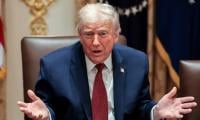
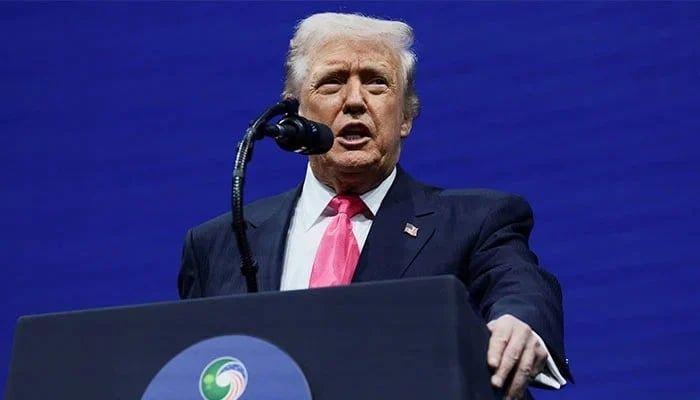
The geopolitical backdrop remained the key driver for markets. Trump’s confirmation that U.S.-Iran talks are expected next Friday was seen as a meaningful diplomatic signal, with reports suggesting the discussions could take place in a neutral venue and involve facilitation through intermediaries. However, analysts noted that while the development reduced immediate panic, it was not sufficient to remove the geopolitical risk premium embedded in oil prices.
In the Middle East, benchmark crude grades reflected mixed signals. Dubai crude slipped to around $100.45 per barrel, shedding roughly $4.5 as geopolitical risk premiums eased. In contrast, Oman crude climbed to about $97.85 per barrel, gaining more than $4, supported by tight physical supply and sustained demand for spot cargoes. “The divergence between Dubai and Oman highlights a market caught between improving sentiment and underlying supply constraints,” an energy trader said.
Global equity markets showed resilience, with investors cautiously navigating geopolitical uncertainty, energy price volatility, and corporate earnings optimism.
On Wall Street, sentiment remained broadly upbeat. Futures linked to the S&P 500 rose 0.5%, while Nasdaq Composite futures gained 0.7%. The gains reflected confidence in corporate earnings and hopes that easing tensions in the Middle East could reduce near-term risks, though sentiment remained fragile.
Across Europe, markets were subdued. Stocks in France and the United Kingdom were flat to slightly lower amid persistent inflation pressures. In the UK, inflation rose to 3.3%, driven partly by higher energy costs, adding pressure on consumer sentiment and monetary policy expectations.
In Asia, trading was mixed. The MSCI Asia Pacific Index slipped around 0.5%, although technology shares provided pockets of strength. In China and Japan, investor appetite for artificial intelligence-linked stocks supported valuations despite broader uncertainty.
Indian equities also edged lower, reflecting caution amid global volatility and fluctuating oil prices, with analysts citing weak regional cues and lingering geopolitical concerns.
In contrast, Pakistan’s market outlook appeared relatively constructive. While detailed index data remained limited, the KSE-100 Index typically responds positively to easing geopolitical tensions. Improved global risk appetite following ceasefire developments is expected to provide modest support to investor sentiment.