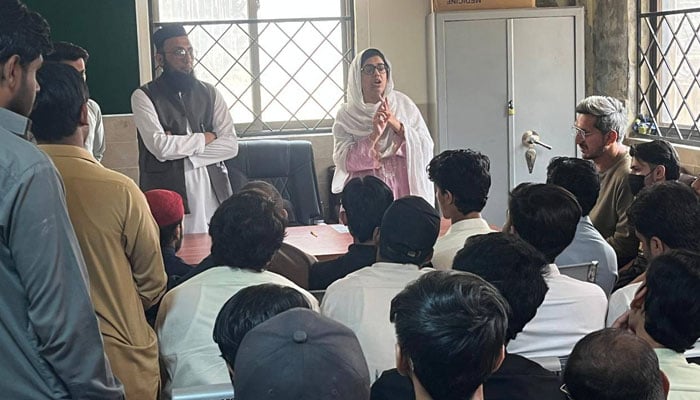
Rawalpindi : The District Health Authority has launched a special 14-day anti-dengue campaign in as many as 20 high-risk union councils and wards in Rawalpindi with the help of around 1000 daily wage staff while the DHA has claimed that a total of 62 entomologists would also help the teams in the filed for carrying out the extensive indoor and outdoor campaign.
The DHA has launched the campaign from April 17th to May 2nd with a focus of controlling the population of larvae of mosquito ‘aedes aegypti’, the vector that causes dengue fever in the high-risk UCs including Dhoke Gangal, Dhoke Munshee, Rehmatabad, Kotha Kalan, Dhama Syedan, Dhamial, Lakkhan, Chak Jalal Din, Girja, Kulyal, Ratta Amral, Dhoke Mangtal, Pirwadhai, Dhoke Ali Akbar along with at least five wards located in Rawalpindi Cantonment Board and Chaklala Cantonment Board.
Data collected by ‘The News’ on Saturday has revealed that 10 of the high-risk 20 union councils are located in Potohar Town, peri-urban areas. It is important to mention here that well over 2800 teams including regular staff from district allied departments and daily wage workers have already started carrying out dengue fever surveillance activities, the identification and elimination of larvae of ‘aedes’ mosquitoes, across the district.
The most important thing, according to health experts, is to sensitize the public and to create awareness among the public on preventive measures particularly to avoid breeding of larvae of mosquitoes inside their houses and outside around them.
To avoid a possible outbreak of the infection in the coming months, individuals must have to play an active role in surveillance as the teams of the DHA have found larvae of dengue vector from nearly 3600 spots or houses this year in the district from March 1 to April 17.
Experts say that control measures of ‘aedes’ larvae are important as epidemiologically, the cases of dengue fever increase proportionally with the larval density. It has been observed during the past 17 years or so that the huge larval density of mosquitoes ‘aedes aegypti’ in a region causes greater incidences of confirmed cases of dengue fever during monsoon and summer.
Chief Executive Officer DHA Dr. Ehsan Ghani informed ‘The News’ that to date, only one confirmed case of dengue fever has been reported from the district, on February 24 this year. The teams of DHA have started working for removal of potential breeding sites of dengue fever vectors in the district as we have already listed hotspots, he said.
In the 20 high-risk union councils and wards of the district from where the maximum number of dengue fever cases was reported last year, the teams have started carrying out door-to-door surveillance activities on a regular basis. As many as 900 female sanitary patrols and 100 male sanitary patrols would carry out ‘sweep up’ activities under which as many as 239637 houses would be checked from April 17 to May 2, said Dr. Ghani.